


Report Examines Crash Fatalities Linked to Distracted Driving
While Texas has the most total crash fatalities of all the states, New Mexico ranks first in the nation as the state with the highest proportion of fatal crashes involving distracted drivers.


In a recent analysis, mobile phone related behavior ranked as the number one distraction linked to fatal crashes—with 384 collisions involving drivers using cell phones.
Photo: Pexels/Breakingpic
Not surprisingly, states with large populations such as Texas and California have the highest number of total fatal crashes — 4,068 and 3,983, respectively, according to a new analysis from the law firm of Heninger Garrison Davis, which draws on data from the National Highway Traffic Safety Administration (NHTSA). The report examines fatal crash numbers in the 50 states.
Florida ranks third for total number of fatal crashes with 3,451 followed by Georgia with 1,670, and North Carolina with 1,535. Other states that ranked among the top 10 for total number of deadly crashes include Ohio which came in sixth with 1,242, Tennessee (1,229), Illinois (1,210), Pennsylvania (1,153), and South Carolina (1,112).
But when the fatal crash data is examined through another lens — deadly crashes that are specifically linked to distracted driving — the picture changes dramatically. In fact, only one of the states mentioned above — Illinois — with the highest total fatalities ranks among the top 10 states with the highest proportion of fatal crashes involving distracted drivers. More about those states later.
Most Common Distractions Linked to Fatalities
To set the stage, the report looks at the most common distractions linked to fatal crashes. The top distraction was mobile phone related behavior — that could mean texting, calling, checking email, etc. Some 384 fatal crashes involved mobile phone distraction notes the report.
Being distracted by an outside person, object or event ranked second with 267 fatal crashes linked to it, while being distracted by other occupants in the vehicle came in third with 151 cases.
Other driver distraction behaviors connected to a deadly collision include reaching for an object inside the vehicle with 117 cases, using other controls or components integral to the vehicle (75), and adjusting audio or temperature controls (43).
Eating or drinking behind the wheel ranked seventh when it came to distracted behavior involved in fatal collisions with 42 cases. Finally, daydreaming (20), distractions from a moving object in the vehicle (13), and smoking (7) also made the top 10 list.
Most Deadly States for Distracted Driving
Deadly crashes occur for many reasons including speeding, drowsy driving, impaired driving, infrastructure issues, and distracted driving. So as noted earlier, it’s not surprising that states with the most total fatalities are not necessarily those with the highest proportion of fatal crashes involving distracted drivers. Only Illinois makes both lists.
According to the Heninger Garrison Davis analysis, New Mexico leads the nation as the most deadly state for distracted driving. New Mexico saw an alarming 40.75% of fatal incidents — or 174 out of 427 — involving a distracted driver. This proportion of fatal crashes involving a distracted driver is more than five times greater than the national rate of 8.12% observed across America.
Hawaii ranks second with 28.72% of its fatal crashes — or 27 out of 94 — linked to a distracted driver. And while there were 381 fatal crashes in Kansas, 81 of those were due to distracted driving — putting Kansas in third place with a rate of 21.26%.
In Louisiana, 173 of its 887 total fatal crashes were linked to a distracted driver, giving The Pelican State a 19.5% rate of fatal crashes involving distracted drivers — the fourth highest in the nation.
New Jersey ranks fifth with a rate of 19.28% of fatal crashes involving a distracted driver. In The Garden State, 129 out of 669 deadly collisions were linked to distracted driving.
Other states that ranked among the top 10 for highest proportion of fatal crashes involving distracted drivers include Washington with a 16.75% rate of fatal crashes involving distracted drivers, Illinois (16.36%), Kentucky (16.35%), Virginia (11.81%), and Idaho (10.66%).
Distracted driving remains a chronic problem on U.S. highways and byways. In 2021, distracted driving took the lives of some 3,522 people in the U.S., according to the National Highway Traffic Safety Administration (NHTSA).
Originally posted on Automotive Fleet
More Safety

Clocks Fall Back Nov. 1. Is Your Fleet Ready for Earlier Darkness?
Clocks fall back Nov. 1. Help your fleet prepare for earlier darkness with quick checks for driver visibility, schedules, fatigue, and seasonal road hazards.
Read More →
Tips for Driving Safely on Halloween Night
This video features a reminder from the Connecticut Department of Transportation (DOT) and the Connecticut Police Chiefs Association, urging drivers to prioritize safety this Halloween.
Read More →
Mercedes Benz Tests CLA Occupant and Battery Protection in Side Impact Crash
Two CLA sedans traveling at 35 mph were used in a Mercedes-Benz crash test examining occupant protection and electric vehicle battery safety.
Read More →
How Technology Can Help Fleet Owners Improve Insurability
Your fleet's telematics data could be the difference between getting insurance coverage and facing higher premiums or non-renewal. Here's what insurers are looking for and how fleets can use that data to make a stronger case at renewal.
Read More →
Simple Tire Checks That Help Keep Your Business Fleet Moving
A survey found that nearly one in every 10 passenger vehicles has at least one bald tire. What's more, 27% -- more than one in four -- of vehicles are driven with one or more severely under-inflated tires.
Read More →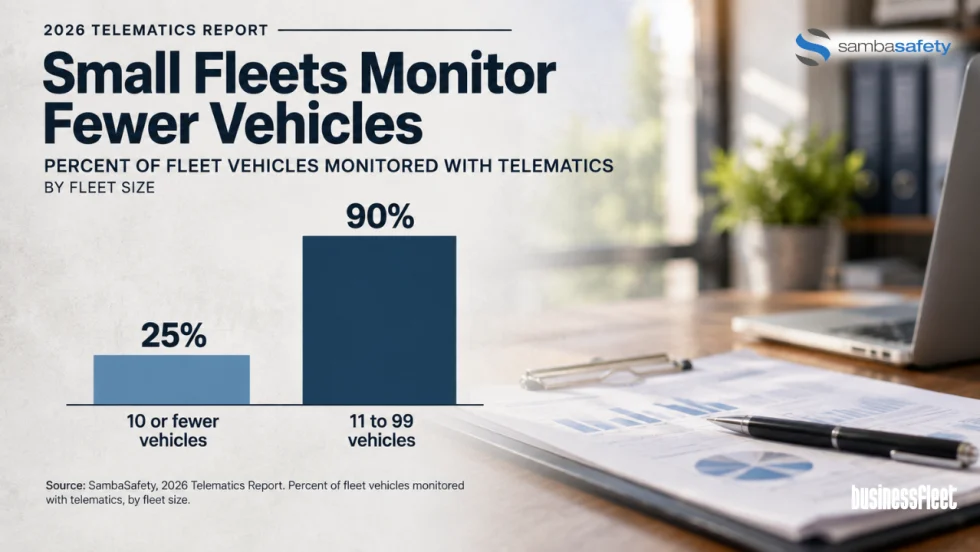
Small Fleets Lag in Telematics Coverage as Industry Moves Beyond Adoption
SambaSafety’s 2026 Telematics Report finds fleets with 10 or fewer vehicles monitor a much smaller share of their vehicles than larger operations, as the industry shifts its focus from collecting data to using it.
Read More →
Back-to-School Traffic Is Not the Risk Fleets Think It Is
Back-to-school traffic does not always mean more crashes. New Empiric Earth data shows why fleets should focus on when and where risk changes.
Read More →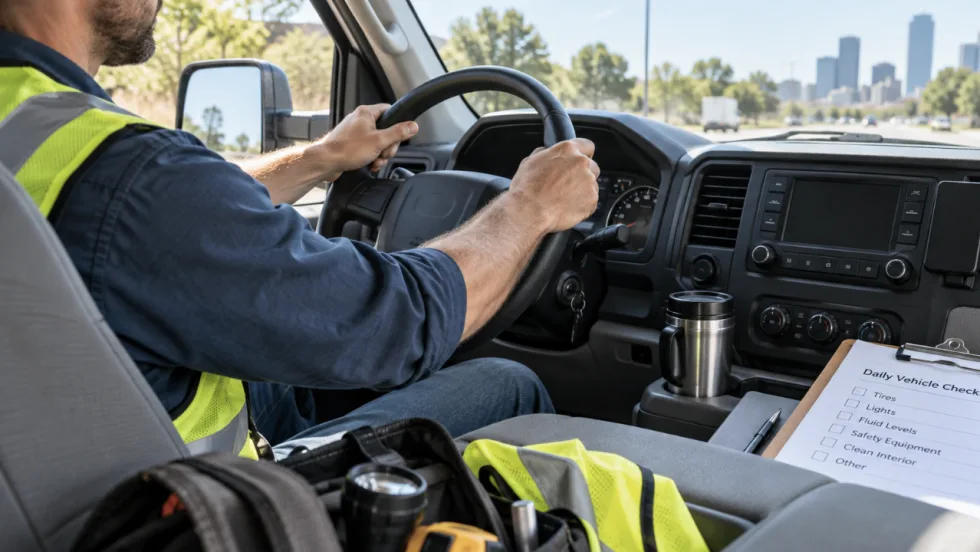
Small Fleet, Big Exposure: How to Reduce Workers’ Comp Risks
For small fleets, one crash can trigger far more than vehicle damage. Here’s how stronger driver safety policies, training, maintenance, and technology can help reduce workers’ comp exposure.
Read More →
Who Makes the Call When Winter Weather Gets Dangerous?
Winter weather can quickly change a small fleet’s plans. Knowing when to reroute, delay, or stop can matter just as much as preparing the vehicles themselves.
Read More →
API Issues Refueling Safety Guidelines
The American Petroleum Institute offers a list of safe vehicle refueling guidelines, including ways to avoid potential problems with static electricity discharges in fall, winter, and early spring.
Read More →