


Related: U.S. Postal Service Awards Delivery Vehicle Contract to Oshkosh Defense
A Roadmap for U.S. Postal Service Electrification
There are many unanswered questions regarding Oshkosh Defense’s $6 billion contract with USPS, including whether an electric prototype or a “swappable” drivetrain even exists. Yet there are ways to achieve electrification of the USPS fleet and avoid living with Postmaster General Louis DeJoy’s ham-handed decision for decades to come.
by Dr. Kelly Fleming [Commentary]
April 1, 2021
One path to correcting the problem is to work within the current contract and require a higher percentage of EVs. The second is to demand a new fully-electric RFP as requested by U.S. Senate Appropriators.
Photo courtesy of USPS.
7 min to read
Dr. Kelly Fleming is policy director for the Zero Emission Transportation Association (ZETA).
A History of Innovation, Not to Be Squandered
The United States Postal Service (USPS) has always exemplified innovation in transportation. Our first Postmaster General, Benjamin Franklin, set this tone when he oversaw communications between Congress and military commanders during the Revolutionary war. The USPS would continue to build on this legacy at pivotal moments in US history, from its early adoption of the first automobiles and aviation to playing an essential role in the Civil Rights Movement. The United States Postal Service has come to symbolize progress, and its mark is woven into America’s fabric.
At odds with this innovative history, USPS Postmaster General Louis DeJoy recently signed a $6 billion contract with Oshkosh Defense, locking the next generation of mail delivery into decades of antiquated, carbon-intensive transportation. Far from embracing the low-carbon future envisioned by President Biden and millions of Americans, Oshkosh is well-known in the defense world as a manufacturer of Humvee-like, heavy-duty military vehicles – none of which use zero-emission technology.
The Postal Service’s decision has perplexed electric vehicle (EV) advocates, industry experts, and policymakers alike. Meanwhile, private-sector competitors continue to ditch gas-guzzling vehicles in favor of EVs. We just have to look at FedEx’s recent 100% EV commitment and similar moves by UPS, Amazon, and DHL
In parallel, Congress is looking to incentivize widespread EV adoption in upcoming infrastructure plans, while President Biden seeks to make good on his commitment to electrify the entire federal fleet.
The Case for Electric Mail Delivery
The Postal Service has an opportunity to lead once again by becoming the first U.S. federal agency to electrify its delivery fleet. Not only does this demonstrate innovative thinking – but it also saves taxpayers’ money. EV lifetime operating costs (charging and maintenance) are as low as one-third of the analogous costs associated with gas-powered vehicles. USPS delivery vehicles comprise 30% of the federal fleet and present the most obvious use-case for electrification – stop-and-go idling, fixed routes, short driving range, and convenient parking hubs.
There is also a substantial public health case for electrifying the Postal Service. The current diesel-powered fleet produces more harmful particulate emissions than traditional internal combustion engine (ICE) vehicles. These harmful emissions exacerbate adverse health conditions in low-income and frontline communities, many of which are situated along heavy-traffic corridors. The severity of COVID-19 is directly linked to air pollution. As America begins to recover from the deadly respiratory virus (one that disproportionately impacts frontline communities nationwide), electrifying the largest government fleet sends a meaningful public health message and demonstrates a commitment to addressing these concerns in an equitable manner.
Questions Unanswered
Despite Postmaster Louis DeJoy’s testimony claiming that the USPS is open to converting some of these delivery vehicles to electric, the clouded secrecy of his cost assessment and criteria for this decision should give us all cause for concern. Congressional leaders have asked for more details, and so far, the USPS has failed to disclose them.
In particular, DeJoy’s stated cost analysis raises a series of questions. When pressed by Representative Jackie Speier (D-CA) in a Congressional oversight hearing, DeJoy claimed that 10% of the new fleet could be electrified but gave little information about the Postal Service’s decision to select Oshkosh’s “convertible” delivery fleet. He alluded to a 15-year cost assessment showing the need for $4-5 billion in additional funding to achieve 50% electrification but did not explain these figures. More transparency is needed, and it must include a total cost of ownership (TCO) analysis and the parameters and assumptions used in DeJoy’s decision-making.
DeJoy alluded to enormous charging estimates, but only Level 2 charging would be required for a delivery fleet with overnight charging hubs instead of the more expensive Direct Current Fast Charging (DCFC) or supercharging option. Without further details, it is reasonable to assume that DeJoy’s inflated numbers for additional funding may have been a price tag for supercharging, which is several orders of magnitude more expensive and unnecessary for USPS use. Further, the supplemental benefits to local communities and employees (not just to the USPS) stemming from upgrades to transmission lines and charger installation should be quantified and considered in any cost analysis.
More importantly, the USPS has yet to demonstrate to the public that a “swappable” drive train model from Oshkosh Defense exists. Neither a prototype nor digital rendering has been made available. If a prototype to demonstrate the “swappable” drive function does exist, the specifications, including fuel efficiency, emissions profile, and maintenance costs should be disclosed. The cost of transitioning the “swappable” drive to electric should also be considered in the vehicle’s total cost. Without a prototype or any publicly disclosed specifications, Congress should continue pressing the USPS to answer whether EVs are genuinely a viable part of its plan or just a talking point amidst pressing public concerns.
The Postal Service must answer the following questions for policymakers to determine whether they are committing billions of taxpayer dollars to lock the USPS into the technology of the past or are capable of turning toward the future:
How much does it cost to “swap” out the gas-powered drive train? Was this considered in the total cost of ownership for the agency?
Does an electric prototype to replace the combustion engine model exist?
What was the total cost of ownership comparison between combustion and electric, and why did the assessment only consider a 15-year lifespan when replacing 30-year old vehicles?
How do the fuel, maintenance, and service costs of the selected vehicles compare to those for EVs?
Was the social cost of carbon included in the cost analysis?
The Path Forward: It's Not Too Late for an All-Electric Postal Fleet
Full electrification of the postal fleet is inevitable, and the USPS and the general public will save money and reap societal benefits if it is done sooner rather than later. There exist multiple levers of influence to compel electrification. Congress, the USPS Board of Governors, and the Administration all provide opportunities to chart an EV future for the U.S. Postal Service.
In a recent Fast Company article, ZETA Executive Director Joe Britton makes the case that it’s “not too late for the USPS to change course.” And with this once-in-a-generation opportunity to lead and innovate, it is high time we pull out all the stops when it comes to the USPS.
There are two paths to demand full-electrification and avoid living with DeJoy’s ham-handed decision for decades to come. The first is to work within the current contract and require a higher percentage of EVs. However, this existing approach comes with a vendor, Oshkosh Defense, which has publicly doubted its competencies in vehicle electrification.
The second is to demand a new fully-electric RFP as requested by U.S. Senate Appropriators. This option presents two funding levers. Congress can compel Postmaster DeJoy to electrify the fleet by providing funding that is legally binding and contingent on electrification. For example, the Postal Vehicle Modernization Act, sponsored by Representative Jared Huffman (D-CA), would provide an additional $6 billion for the USPS should they commit to electrifying at least 75% of the delivery fleet. This avenue would give the USPS even more funding for electrification, in excess of the estimated necessary figure provided by Postmaster DeJoy.
Alternatively, the Biden Administration can work with the independent USPS Board of Governors to realign the next-generation vehicle contract with his Administration’s fleet electrification goals. President Biden’s Treasury Department has authority over a $10 billion loan provided to the USPS in the first COVID relief package, and could make its disbursement contingent on electrification. Whether under the President’s direction or pressure from watchful appropriators in Congress, DeJoy should not be given a blank check. Policymakers have the tools to help the USPS adopt a fully electric delivery fleet.
Electrifying the USPS fleet will serve as a model for federal leadership, demonstrate the Postal Service’s commitment to progress, and continue its legacy of revolutionary public service. The impact of this decision extends not only to USPS employees but also to the general public and to communities disproportionately impacted by polluted traffic corridors. The Biden Administration and Congress have the power to ensure that mail delivery vehicles are serving everyone, not just invested interests wanting to heighten our carbon dependency. Righting this wrong would restore the credibility and spirit of a once-innovative American institution.
The Zero Emission Transportation Association (ZETA) is a non-partisan group coordinating public education and federal policy development to promote the goal of 100% electric vehicle sales by 2030.
Originally posted on Automotive Fleet
More Green Fleet & Sustainability

Fleet Forward Conference Introduces One-Day Passes for 2026
New one-day registration gives fleet professionals the flexibility to attend Tuesday, Wednesday, or Thursday, with passes available for $199 through Sept. 18.
Read More →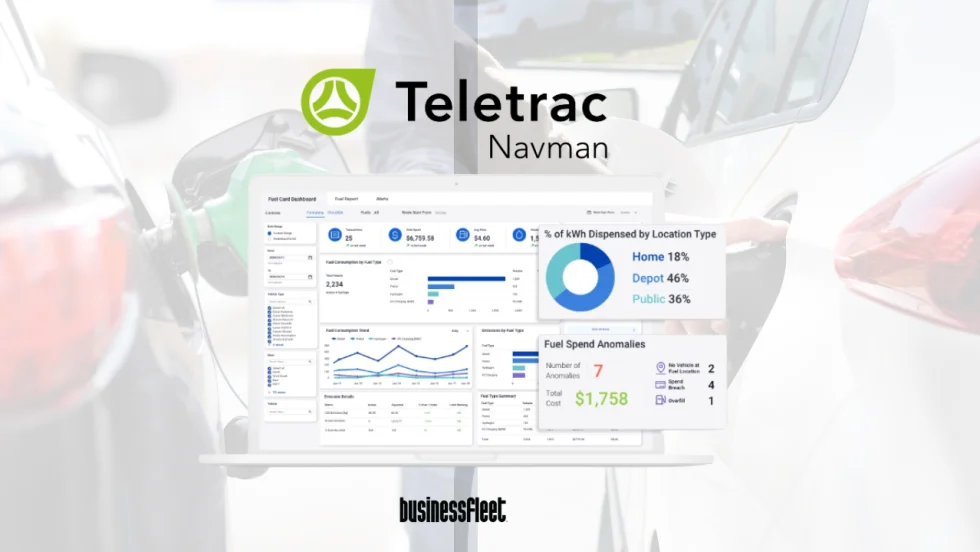
Teletrac Navman Adds Mixed-Energy Tracking to TN360
Energy Hub combines fuel card data, EV charging activity, reimbursements, and vehicle energy use in one dashboard for fleets operating gasoline, hybrid, and electric vehicles.
Read More →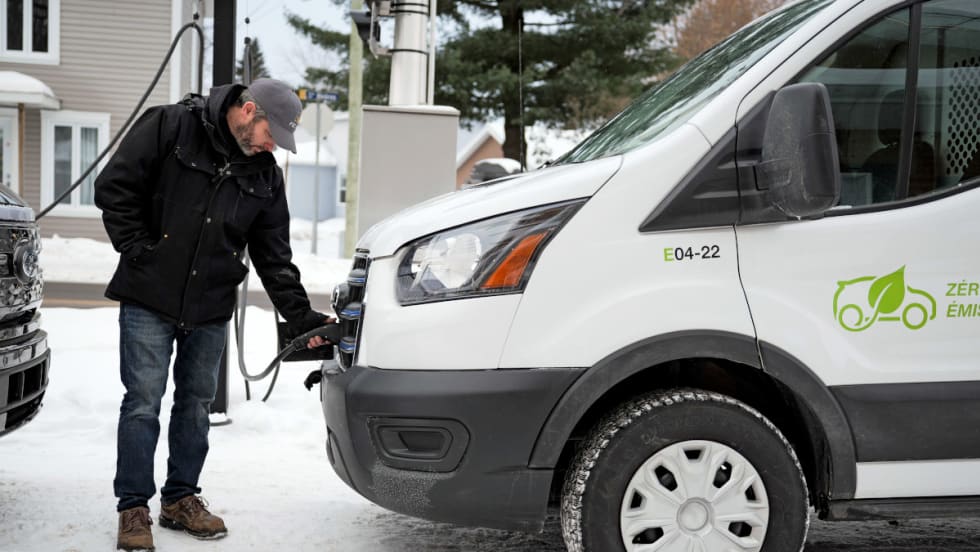
Ford Pro e-Telematics Helps Fleet Track E-Transit Efficiency
Canadian electrical contractor Fize Electrique shares how it uses Ford Pro e-Telematics to drive and track efficiency in the battery-electric Fords in its fleet, mostly comprised of E-Transit vans, even in the brutal cold of winter.
Read More →
How to Maximize Benefits of PHEVs In Fleets
Plug-in hybrid vehicles can reduce fleets’ carbon emissions as well as range anxiety. This analysis shows the positive impacts of proper PHEV use, and the negative environmental and financial consequences if your drivers aren’t plugging them in.
Read More →
How Increased CAFE Standards Will Affect Fleets
The year 2026 will mark a turning point with multiple regulations converging to push for greater fuel economy in cars and trucks.
Read More →
How To Reimburse Electric Vehicle Drivers for Charging at Home
Calculating reimbursement for at-home EV charging requires lots of precision, but several options are available ease the process for fleets.
Read More →
Buying vs. Leasing Electric Vehicles: Pros & Cons
As your fleet plans out its electrification roadmap, consider whether buying or leasing EVs make sense for your needs. Here’s what to consider.
Read More →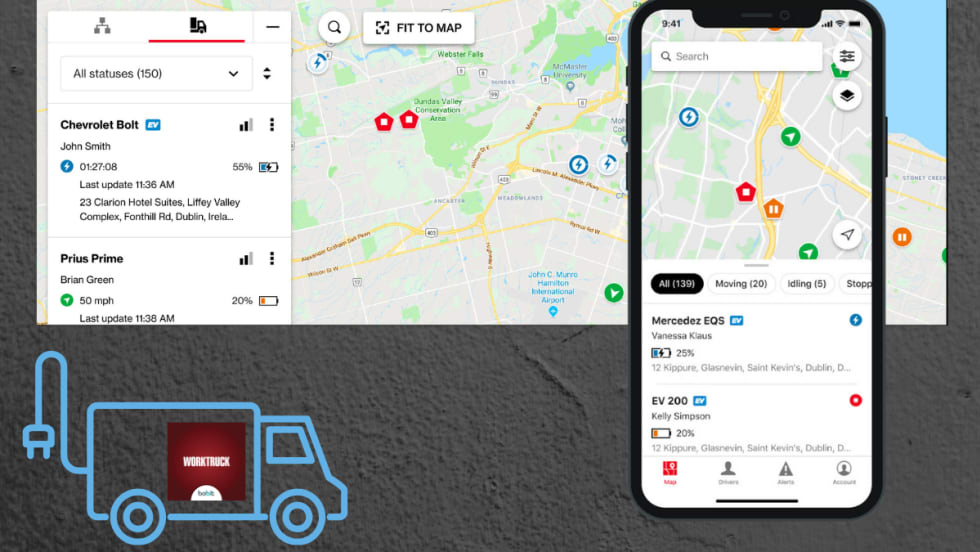
Verizon Connect Adds New EV Features to Reveal
Beginning next month, Verizon Connect Reveal customers in the U.S. and Canada will be able to more effectively support various vehicle types – both gasoline-powered and EVs – in one pane of glass.
Read More →
Jeep Reveals Plan for SUV Electrification
With an eye on becoming a zero-emission SUV leader, Jeep unveils its plans for four new all-electric SUVs in North America and Europe by 2025.
Read More →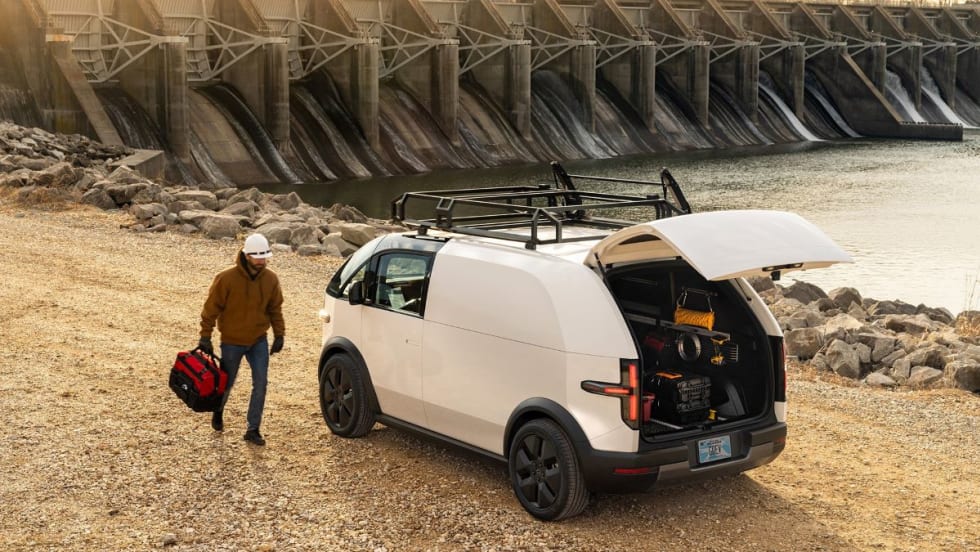
Canoo Vehicles Added to Fleet Forward Tour Dallas
Attendees will be able to ride along in the electric Canoo Lifestyle Vehicle (LV) and the Canoo Lifestyle Delivery Vehicle (LDV), along with electric passenger cars, trucks, and vans from eight other automakers.
Read More →Subscribe to Our Newsletter