


Do You Qualify for Fleet Status?
If your company’s fleet has grown, you may qualify for fleet status. If you do, the savings on work vehicles can be substantial.

Graphic by Staff
Graphic by Staff
You may have “graduated” but you don’t even know it. We’re not talking about getting your degree after sleepwalking through college; in this context, it means having enough vehicles in your company to qualify for fleet status under the guidelines of the auto manufacturers. When you do, you’re eligible for a host of benefits and options.
Are you awake now?
Becoming Eligible
The first step to understanding if you’re a fleet is to know each manufacturer’s qualifications, which vary slightly by manufacturer. Generally, for most of the domestic manufacturers, companies qualify by having 15 vehicles registered in the company name or by having purchased or leased five or more new vehicles during the current or preceding calendar year, model year or preceding 12-month period.
Foreign and luxury manufacturers have different requirements on the minimum number of vehicles in service, though the threshold is always 15 or fewer.
For further details on qualifications, go online to the manufacturers’ websites or check with your dealer. You can also check the bottom of this story for contact information. You’ll be working through your dealer or leasing company to submit the applications and supporting documentation to the manufacturers.
Upon qualification, your company receives a fleet number, which remains in effect as long as your company meets the eligibility requirements. The terminology varies by manufacturer: Ford offers a FIN (Fleet Identification Number), while General Motors and Chrysler provide a Fleet Account Number (FAN). Toyota also has a FIN (Toyota Fleet ID Number) or Toyota Customer ID (CID); Mercedes calls its number a CAN (Corporate Account Number).
After obtaining your fleet number, consider yourself a graduate. Like most graduates, your next question is probably, “What’s next?”
Adding the Incentives
The primary benefit to becoming a fleet centers on cost savings on fleet acquisitions. First and foremost, fleet customers are eligible for fleet incentives, or monetary rebates only available to fleets.
Fleets can either take the larger of the fleet or retail incentive (“fleet or street”). While retail rebates can change monthly, fleet incentives usually stay the same for the model year.
Another financial benefit to fleets is the ability to waive regional advertising fees. Advertising fees are legitimate costs passed onto the retail customer to cover the dealer’s expense for local or regional advertising. Retail customers can’t avoid this fee, nor can commercial customers buying out of dealer stock. The only way to avoid the fee is through ordering with a fleet account.
Ad fees are a percentage (usually 1.5-2%) of the vehicle’s invoice and can vary by region. Some manufacturers don’t charge ad fees at all, and some vehicle types, such as cab and chassis trucks, cargo vans and one-ton pickups, don’t have this fee. For the vehicles that carry an advertising fee, waiving it can save some good money — as much as $800 on a $40,000 truck, for instance.
Another benefit to fleet status is that fleet incentives are stackable with other rebates and benefits already in place for the small business customer.
Small fleets should already be aware of manufacturers’ dealer-based sales and service programs such as GM’s Business Elite, Ford’s Business Preferred and Chrysler’s BusinessLink. Associated with these programs are incentives specifically for smaller commercial accounts, such as cash back, upfit allowances, maintenance plans and gift cards to retail hardware stores such as Lowes or Home Depot.
In addition to keeping those benefits, manufacturers’ rebates offered through industry or trade associations are stackable as well.
To give you an idea of possible incentives if your fleet grows further, manufacturers offer versions of a Competitive Assistance Program (CAP) to fleets making even larger orders. “CAP” money is negotiated directly on the deal. Its value is greater than the combined published incentives and supersedes them. Traditionally, these programs were in effect for orders larger than 50 units. Over time, that threshold shrunk to 25 units and has gone even lower today, dealers say.
Ordering is Essential
Small companies may be accustomed to buying out of dealer inventory, and thus are all too familiar with the compromises made based on a “need-it-yesterday” mentality. While requests for common vehicles, such as ½-ton pickups, cargo vans or trucks with standard utility bodies are easily satisfied, finding more specialized units often does not yield exact results.
Rene Schoonbrood, fleet director for Folsom Chevrolet in Folsom, Calif., says that ¾-ton trucks, extended cabs and diesels can be “as scarce as hen’s teeth” to find. “It’s because the dealers aren’t ordering them for their inventory,” he says.
A good dealer will do his level best to locate the vehicle from another dealer or a third-party upfitter’s pool. “We’ve sent people four states over to get a vehicle,” says Rick Nicoletti, general manager for Napleton Fleet Group. “Especially if it’s something in short supply, such as medium-duty Ford or Ram trucks.”
Nonetheless, if you can even find the unit you need in dealer’s stock, it often comes with popular retail options and accessories such as alloy wheels, leather or an upgraded entertainment system that you may not want — or the options you do want are packaged with unneeded extras. This is alleviated through ordering fleet vehicles, one of the biggest benefits to achieving fleet status. By ordering, you get exactly and only what you need.
Nicoletti points to common fleet requests for Bluetooth hands-free that allows drivers to talk legally on the phone in many states while driving or power driver seats. “Dealers don’t or can’t stock base sedans with these options,” he says. “In many instances these are ‘fleet only’ options and the only way to get them on a base fleet sedan is to order the vehicle with a fleet account number.”
Manufacturers will also only allocate models with or without certain options, such as sunroofs or four-wheel drive, to certain regions of the country.
Roy Durham Jr. of RP Automotive-SoCal Penske, a multi-franchise company based in West Covina, Calif., recalls a request by a leasing company for a fleet customer in his area that wanted an out-of-stock vehicle without a sunroof. “The retail customer who walks onto a dealership lot [in Southern Calif.] will only see these vehicles with a sunroof,” he explains. “The only way to get that vehicle without it would be to order through fleet.”
When ordering, some models also come with the ability to delete certain options (called “fleet delete”) that come standard on some retail units, such as GM’s OnStar or satellite radio.
While ordering vehicles can incur substantial savings for your fleet (see an example below), it also takes some planning and forethought on the part of the fleet. Order-to-delivery times vary per model and generally range from seven to 12 weeks, or more for some models. “It’s one of the toughest things for the small fleet customer to understand, to order a vehicle as opposed to buying out of stock,” Nicoletti says.
But dealers understand that sometimes buying out of stock is unavoidable. “You can easily save $2,000 by ordering,” Schoonbrood says. “Of course, if you don’t get that truck for the job you could lose $2,000 in two days.”
Fleet Savings Example:
2013 Chevrolet Silverado 2500HD 2WD Regular Cab Work Truck:
Retail Non-Business Purchase | Ordered with GM Fleet | |
Negotiated Base Price | $27,542 | $27,542 |
Additional GM Accessories | $1,000 | $1,000 |
Vehicle Subtotal | $28,542 | $28,542 |
Advertising/Dealer Contributions | $603 | $0.00 |
Destination Charge | $995 | $995 |
Subtotal | $30,140 | $29,537 |
Retail incentive | ($2,000) | n/a |
Fleet incentive | n/a | ($3,000) |
Business Choice GM Accessory Cash | n/a | ($1,000) |
Association Discount (ABC/AGC) | n/a | ($1,000) |
Grand Total | $28,140 | $24,537 |
Find a Fleet Dealer
One hesitation you may have upon “graduating to fleet” is how it would affect your relationship with your dealer.
Essentially, if you’re already using a fleet-minded dealer, that relationship won’t change. With your fleet number you can log on to the manufacturers’ fleet websites to configure a vehicle. But you’ll still negotiate the price of the vehicle with the dealer and you must still place the order through the dealer.
You may find, however, that you’re using a dealership that does not focus on fleet. This may not have been an issue in the past — you bought or leased your vehicles for a fair price and kept your dealer “honest” by shopping around from time to time. But now that you have your fleet number, your present dealer might not be the best fit anymore.
“All dealers aren’t necessarily knowledgeable on fleet,” Schoonbrood says. “It’s not that they don’t want to help you, but they may not have the answers.”
Moreover, that dealer may be concentrated more on retail sales.
“If a company has grown from two cars to 15, [the company] is probably dealing with one sales manager through the years that isn’t thinking about fleet,” Nicoletti says. “He’s thinking about moving something off his lot right now, as opposed to someone who is fleet minded who knows the best way is to order the vehicle and wait eight weeks, saving the customer some money to get the vehicle they want without compromise.”
To find a fleet-minded dealer, Durham suggests contacting the local OEM fleet representative. The fleet representative can suggest two or three fleet dealers in the fleet’s area. Manufacturers’ fleet websites will also have a contact list of fleet dealers in your area.
Today, fleet dealers don’t even have to be in the same area to service a client. Deals can be made over the phone and units can be ordered through the fleet system, and the selling dealer can have units “drop shipped” to your local dealer that takes courtesy deliveries.
Gaining fleet status provides companies with work vehicles a host of benefits and savings. If you’ve made the grade, it’s time to graduate!
Originally posted on Work Truck Online
More Operations
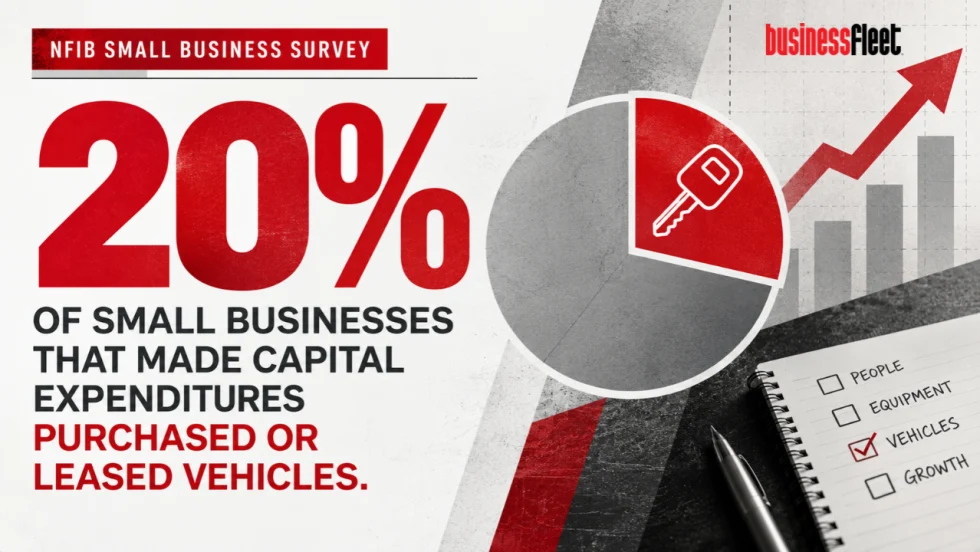
Small Business Vehicle Purchases Slip as Owners Pull Back on Expansion
New NFIB survey data shows fewer small businesses purchasing or leasing vehicles as inflation, hiring challenges, and borrowing costs weigh on expansion plans.
Read More →
Growing Fleets, Bigger Challenges | Business Fleet Brief
From growing pains and weather risks to workers' comp, new vehicles, and telematics gaps, this month's Business Fleet Brief covers what small fleets need to know.
Read More →
Your Business Grew, Did Your Fleet Management Program Grow With It?
Small fleets often grow faster than the processes supporting them. Here’s how to recognize when informal fleet management has stopped working and what to formalize first.
Read More →
Small Fleet Lessons That Can Make a Big Difference | Business Fleet Brief
From used-vehicle costs and lost keys to safety tech and replacement planning, this Business Fleet Brief breaks down practical lessons that can make a big difference for small fleets.
Read More →
Automotive Fleet Opens 2026 Personal Use Survey for Commercial Fleet Managers
Less than two weeks left! Commercial and corporate fleet managers are invited to share how their organizations handle company vehicle personal-use policies, charges, and driver eligibility.
Read More →
You Do Not Have to Be a Big Business to Build the Next Generation
Small businesses may not have the biggest budgets or the biggest fleets, but they do have something powerful. They are close to the communities they serve, and that makes them uniquely equipped to help shape the next generation of automotive and fleet talent.
Read More →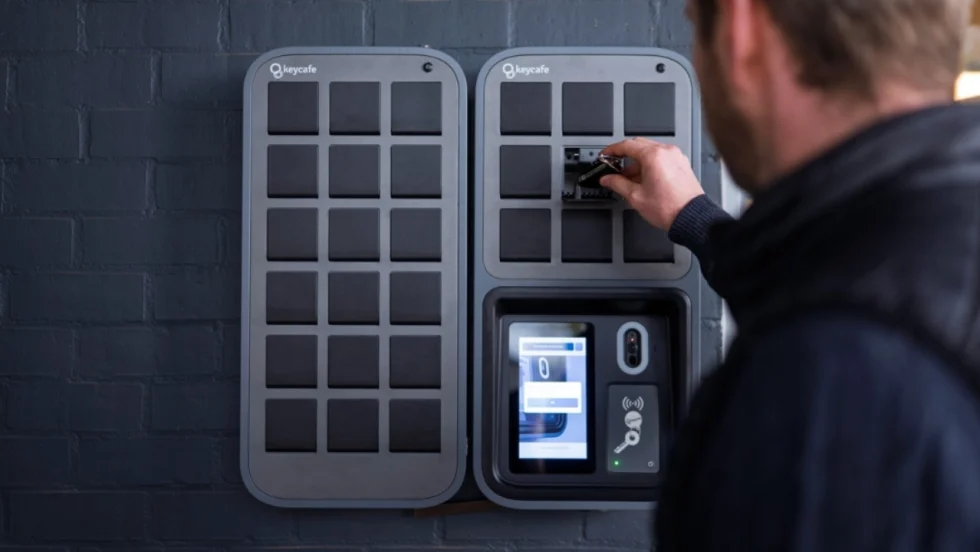
How Small Fleets Can Stop Losing Time to Lost Keys
Lost keys can mean delayed jobs, idle vehicles and unexpected replacement costs. See how small fleets are using digital key management to keep vehicles moving and improve accountability.
Read More →
How to Build Custom Fleet Tools With AI and Vibe Coding [Webinar]
A new Automotive Fleet webinar explores how fleet managers are using AI and vibe coding to automate routine work and create simple operational tools without traditional programming skills.
Read More →
You May Be a Fleet Manager (Even If No One Told You)
Managing vehicles may not be your full-time job, but the costs, risks, and responsibilities are still very real. Business Fleet In Motion is here to help small and growing businesses make smarter fleet decisions without needing a full fleet department.
Read More →
Fleet Management Without a Fleet Department?
No fleet department? The work still has to get done. Learn how to prioritize your most critical vehicles, catch problems before they become downtime, and build a simple routine that keeps your small fleet moving.
Read More →