


Fleet Telematics 2023: A Saturated Market?
Clem Driscoll’s latest survey on fleets’ buying intentions and use of GPS fleet management systems reveals new trends in overall penetration, growth sectors, system benefits and dislikes, and why users switch systems.


Across all fleet categories, larger fleets are “very likely” to use a GPS fleet management system, while penetration lags in smaller fleets.
Photo: Automotive Fleet
Clem Driscoll has asked himself this question for the past few years: “Is the telematics market in the U.S. saturated?”
Driscoll just completed his “2023-24 Survey of Fleet Operator Interest in MRM Systems and Services,” one of the telematics industry’s leading research studies that surveyed over 300 fleet respondents on their buying intentions, use, and satisfaction of GPS fleet management systems.
After analyzing the study’s results, he answers, “It depends.”
While Driscoll won’t divulge exact percentages from the survey, “Penetration of GPS fleet management systems has grown quite a bit. It’s higher than most people realize,” he says.
Across all fleet categories, larger fleets are “very likely” to use a GPS fleet management system, while penetration lags in smaller fleets. (The study, available for purchase, identifies more precise percentages.)
Defining Growth
Today, most GPS fleet management systems sales are conquest — in which one telematics company poaches a fleet client using another company’s system.
According to the study, over half of existing users have replaced at least one previous solution, and some are on their third system. “There's a lot of churn going on,” Driscoll says.
What’s more, Driscoll says the new vendor will often buy out the existing contract for the fleet, even with multiple years left on the contract.
However, the percentage of fleets that install a system and abandon telematics entirely is very low. “Fleets are switching systems but are not usually dropping the technology,” he says.
Another form of market expansion is the addition of modems to new vehicles as a fleet grows or increased spend based on the uptake of new features and functions.
Overall, the growth of video telematics, the hottest industry trend over the past five years, “hasn’t slowed down,” Driscoll says. The primary uptake is through fleets adding video capabilities to their existing systems with their current providers.
He says another market trend is the growth of portable, handset-based solutions for field service and work order management.
With trucking fleets, system penetration was driven by the ELD (electronic logging device) mandate that took effect in December 2019. While ELD systems have often been sold as part of larger GPS fleet management systems, many trucking fleets say they use telematics. Still, their singular use is ELD compliance, according to Driscoll.
However, in the trucking sector, the study reveals that some fleets use a traditional third-party installed system and the truck maker’s factory system, which is mainly used for engine diagnostics.
If these findings on growth and penetration don’t yet warrant the “saturation” moniker, they’re at least the sign of a mature market, Driscoll says.
Why Switch Systems?
The study reports that customer satisfaction with GPS fleet management systems is high and has always been high. So why would users switch?
Driscoll cites continuous improvement of competitors’ systems with new features, price competitiveness, and the lure of better customer service.
And as vendors mature in the market, they’ve developed robust sales teams and processes. “In many instances, successful suppliers have learned how to take customers away,” Driscoll says.
Latent Resistance to Telematics
Awareness of telematics and GPS fleet management systems is at an all-time high, though resistance to implementation continues in pockets for various reasons.
When it comes to small fleets, the president or owner of the company often says their drivers would push back on being tracked by telematics. “We’re like family; we don't need to track them. We know what they're doing,” is a common refrain.
Resistance from larger fleets could be split by types: high-paid salespeople in company cars don’t want to be tracked, and fleet managers have less of a need to keep tabs on them than other types of fleets, such as trucking or service.
For trucking fleets, the driver shortage is cited. “They are having a hard time finding drivers, and they don't want to risk losing them because of a Big Brother reaction,” Driscoll says.
Regarding video, which is seen as more invasive than just vehicle tracking, the percentage of respondents that took issue with driver-facing cameras “wasn't as high as I thought it would be,” Driscoll reports.
The overall specter of Big Brother isn’t cited as frequently as in earlier reports. “Resistance has certainly declined, but it hasn't disappeared entirely,” he says.
Video Telematics Still Growing
According to the survey, a high percentage of trucking fleets are now using video. Uptake is growing in service fleets, but the overall penetration is lower.
Respondents also cite insurance discounts as a “significant” benefit to a video telematics system. Insurers offer discounts to fleets using traditional non-video systems, but the percentage receiving discounts is smaller.
The most important reason for employing video telematics is to determine liability for incidents and crashes. Monitoring distracted driving is a factor as well.
In addition to privacy concerns, some respondents have resisted video telematics because it’s too expensive; they don't think video adds value to the business, and they don't want to deal with a separate video solution besides other systems used to manage the fleet.
Some respondents reported that their video cameras break down frequently. They wanted better video stream resolution, longer clips, and more data storage. Nonetheless, overall user satisfaction with video telematics remains consistently high, on par with traditional GPS tracking system satisfaction.
What’s Important to Users?
In the study, vehicle, and asset location remains “by far” the primary benefit of a GPS fleet management system. Among the other benefits noted were safety and security.
Regarding system functionality, what’s important to users? Anecdotal responses to the survey offer a window, though trends are hard to note as system features vary significantly by fleet category.
A snapshot of survey responses shows that fleets — not surprisingly — want features such as:
ease of use -- an intuitive system
excellent customer service
customizable reports
What They Don’t Like
What do fleets want from their systems that they don’t have? Driscoll says the answer is hard to reach because users don't know what else they could get. “They don't know what they don’t know,” he says.
However, respondents can identify what they don’t like about their systems. And, similar to what they want, this is defined by their systems’ functionality and individual experience.
Insights into dislikes include:
Telematics units can’t be repaired on the road.
Customer service isn’t based in the U.S.
The app isn’t user-friendly.
The system flags too many false events.
In terms of how the devices are installed, since the last survey, the scales have been tipped from hardwired to plug-in (such as through the OBD-II port). The study does not track the proliferation of light-duty automakers’ proprietary systems using factory modems.
Not surprisingly, a prevalent dissatisfaction with plug-in devices was that drivers could take them out. “They may be easier to install, but are also easier to remove,” Driscoll says.
Financial Benefits
Quantifying the organization's financial benefit from using a GPS fleet management system is also a hard target, as it needs to be put in the context of fleet size and ratios of fleet spend in various categories.
Responses included:
“Insurance went down $300,000, which paid for the system. Also, accidents are down and, yes, it saves money.” (Electrical contractor, 68 vehicles)
“I save $5,000 a week. Better ability to manage.” (Agricultural hauler, 55 vehicles)
“Maybe $50,000 a day in savings across the fleet. We can tell when people are idling when they are not supposed to be, so big savings in fuel cost. We can also shut people down immediately to save on citation costs.” (Long-haul trucking, 262 vehicles)
“We average an additional $600-1,000 (in savings) weekly per vehicle. We are a dedicated carrier, and our GPS fleet management system saves and benefits us by watching the hours and getting the load off sooner, and we can pull one extra load per week, per truck.” (Long-haul trucking, 155 vehicles)
Originally posted on Automotive Fleet
More Telematics & Tech

Samsara Driver Perks Gives Small Fleets a Ready Made Driver Benefit
Small fleets can offer drivers discounts from more than 50 brands without building or managing their own employee rewards program.
Read More →
Smith System Says Small Fleets Need a Safety Cadence Not More Data
Smith System’s new Driver Risk Management program aims to help smaller fleets turn telematics and camera data into a repeatable coaching process without building a dedicated safety department.
Read More →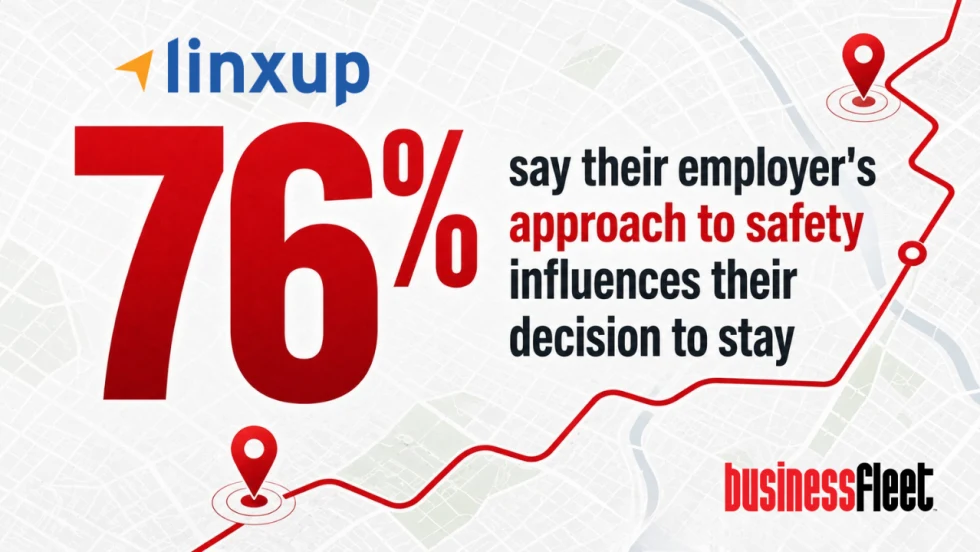
Dash Cams May Be Doing More Than Protecting Your Fleet Vehicles
Dash cams and GPS tracking may do more than improve safety. New survey findings link fleet technology to driver protection, employee retention, and customer confidence.
Read More →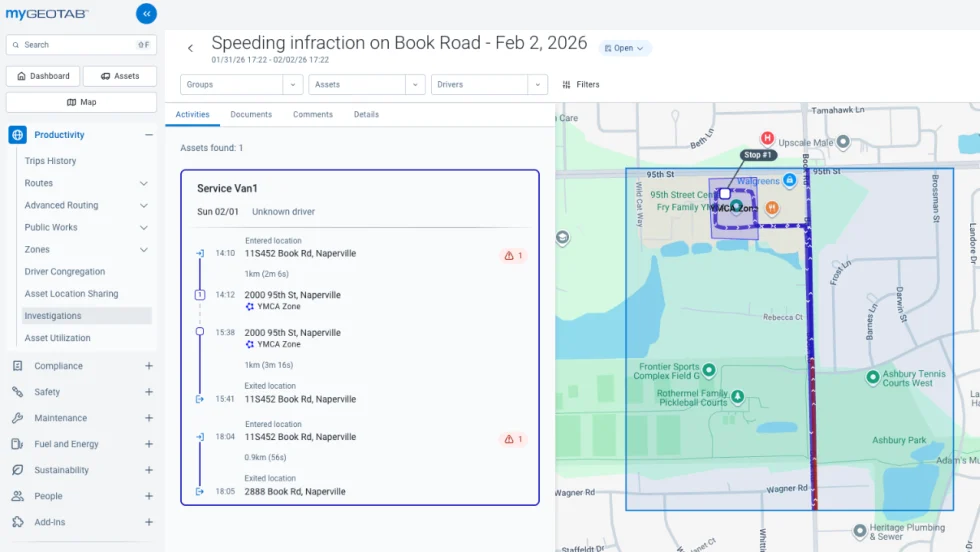
Geotab Adds Investigation Tools to Cut the Post-Incident Paper Chase
When a company vehicle is involved in a crash or complaint, Geotab Investigations brings telematics data, photos, reports, and other records into one case workflow.
Read More →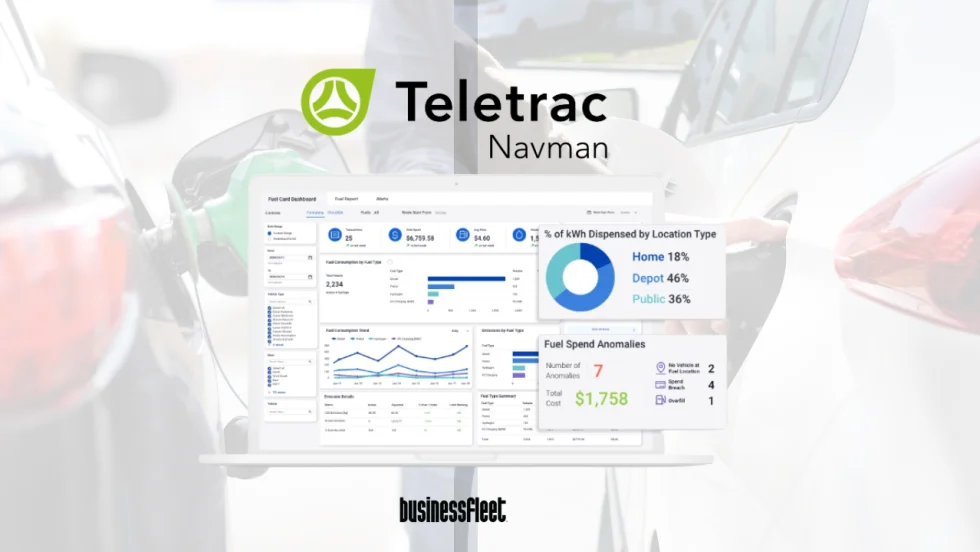
Teletrac Navman Adds Mixed-Energy Tracking to TN360
Energy Hub combines fuel card data, EV charging activity, reimbursements, and vehicle energy use in one dashboard for fleets operating gasoline, hybrid, and electric vehicles.
Read More →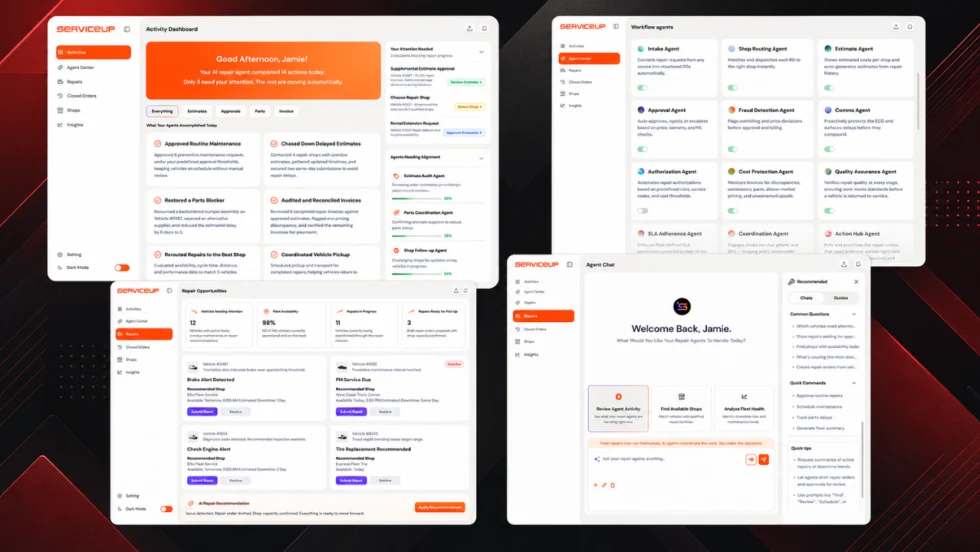
ServiceUp Brings Automated Repair Coordination to Small Fleet Operators
New AI repair agents handle shop calls, estimate reviews, status checks, and invoice validation so business owners can spend less time coordinating vehicle repairs.
Read More →
Pro-Vision Expands AI Fleet Safety Beyond the Cab
Pro-Vision's new AI camera and processing module extend real-time exterior hazard detection while integrating with leading fleet telematics platforms.
Read More →
Trimble to Add Hotel Booking Capabilities to Fleet Products Through Engine Partnership
Trimble is adding hotel-booking capabilities to its fleet tools, helping drivers and small fleets find lodging faster during trips and breakdowns.
Read More →
TruckDocsAI Launches AI-Powered Compliance Platform for Owner-Operators and Small Fleets
Can AI simplify DOT compliance? TruckDocsAI launches a new platform for owner-operators and small fleets facing audit pressures.
Read More →
Geotab Says Fleet AI Success Depends More on Data Than the AI Model Itself
Geotab's new AI connector links fleet data with ChatGPT and other platforms, helping organizations turn AI investments into business results.
Read More →