


6 Game Changers for Work Trucks
At NTEA’s 2014 Work Truck Show, manufacturers, conversion companies and parts manufacturers introduced advances in work vehicles along with better ways to produce them.

Here are a few trend lines collected from walking the show floor at the annual Work Truck Show, held in Indianapolis every March by the National Truck Equipment Association (NTEA).
We’ve compiled three photo galleries from the 2014 Work Truck Show: announcements and people, products and vehicles.
• The 4-cylinder (diesel) truck arrives.
And you thought that engine downsizing stopped with the migration from eight cylinders to six? Think again. GM’s redesigned Chevy Colorado and GMC Canyon midsize pickups will get a 4-cylinder 2.5L Duramax diesel for the 2016 model year. Though not a turbo, this diesel generates 193 horsepower and 183 lbs.-ft. of torque, tows up to 3,500 lbs. and carries 1,450 lbs. in payload. Not bad for a four banger!
GM expects 40% of Colorado/Canyon sales to be 4-cylinder engines, according to Anita Burke, chief engineer for midsize trucks at GM. Compact pickups such as the Toyota Tacoma and Nissan Frontier have traditionally offered 4-cylinder engines. Yet with a box-delete and crew cab options, GM expects plenty of real fleet and work use out of its new trucks.
In van land, the Mercedes-Benz Sprinter gets a 2.2L 4-cylinder turbo diesel powerplant for 2014. It churns out 161 hp and 267 lbs.-ft. of torque while improving fuel economy by 18% over the V6 diesel, helped by the new 7-speed transmission. Klaus Tritt, Mercedes’ general manager of commercial vans, says that more than half of Sprinter sales will be for the 4-cylinder. “Our planning assumptions were wrong,” said Tritt in regards to underestimating 4-cylinder demand.
Of course, many work truck users have already migrated to the plethora of small vans such as Ford Transit Connect and Nissan NV200 that run on four cylinders.
• The alt-fuel upfit process evolves.
The alternative fuel market is on a quest to be more logistically efficient. CNG (compressed natural gas) and propane conversion companies are collocating with traditional truck body upfitters. The conversion company ships parts to the upfit companies’ installation centers, where a team employed by the upfitter does the conversions.
In a Ford scenario, alt-fuel converter Landi Renzo will send its CNG conversion kit to a Knapheide installer, and a Knapheide technician trained by Landi Renzo will perform the conversion. “It saves tremendously in order-to-delivery time,” said Richard Cupka, commercial vehicles sustainability for Ford.
In terms of the conversion process itself, traditionally trucks are factory prebuilt with standard parts (such as fuel tanks) that are removed during the conversion process. Freightliner Custom Chassis has streamlined this process with two purpose-built chasses for propane autogas, with a dedicated propane injection system, 48-gallon propane tank and other systems integrations. This shortens order-to-delivery times and alleviates creating an unnecessary fuel tank.
• OEM-installed telematics are here.
Telematics provider Telogis announced a partnership with GM in which fleets can factory order the Telogis telematics system with any GM vehicle that comes with OnStar.
In terms of the business model for telematics and fleet tracking, this is the future. A factory-installed system eliminates the need for third-party aftermarket hardware and installation and the associated hassles, time and money. “This is potentially GM’s biggest differentiator in the market,” Ed Peper, head of fleet and commercial operations, said of the partnership.
The Telogis system is a cloud-based software platform that connects with OnStar, which means that fleets with existing GM vehicles with OnStar can sign up for Telogis and turn it on remotely. Of course, fleets can install Telogis in non-GM vehicles to cover the entire fleet.
While the GM partnership promises unprecedented scope and scale, factory-installed fleet telematics isn’t brand-new: since 2011, Telogis has been powering the Ford Crew chief system for Ford F-150, Super Duty, E-Series and Transit Connect models. Telogis also has partnerships with truck maker Mack and Volvo to launch an integrated system from the factory this spring.
• Gasoline – the new alt fuel?
With so much talk of natural gas, propane, diesel and electric vehicles, gasoline could be called “the new alternative fuel.” The new Ford F-650 and Ford F-750 Super Duty haulers are available with gas engines, which will sell for about $8,300 less than the diesel engines. “We have customers who were staunch diesel who are now going to gas,” said Todd Kaufman, Ford’s marketing manager.
When it comes to fuel economy of gas versus diesel in the medium duties, Kaufman said Ford has made engine improvements that have shrunk the difference to only about 15% in favor of diesel, while maintenance on the gasoline engines is half as costly as diesel. Work truck users are more amenable to choosing gasoline over diesel in medium-duty applications today, Kaufman said, not only because of the favorable price point but also because the transmission has been optimized in the gasoline engine to give similar drive capabilities to diesel.
• Transmissions get smart.
Allison Transmissions launched a “smart” transmission called Fuel Sense, which promises up to 20% in fuel savings over traditional transmissions. Allison claims Fuel Sense is a first of its kind, because it can be calibrated to a duty cycle through software and electronic controls.
The transmission calibrates to the four components of duty cycles: acceleration, cruise, deceleration and stop. If you think about the vastly different duty cycles of school bus, transit bus, over-the-road hauling and vocation-specific applications, having a transmission that can be tuned to factors such as average speed, shifts per mile, average stop times and load changes seems like a no-brainer.
Freightliner will be the first OEM in North America to get Fuel Sense in its medium-duty trucks.
• It’s the electric conversions that make sense.
The electric truck market has stalled compared to the frenzy of five years ago. As the saying goes, “payback is a bitch.” In other words, for fleets, the ROI for electrification doesn’t add up. Nonetheless, OEMs and third-party conversion companies have some developments worth mentioning, as we wait for the big battery breakthrough.
It was bound to happen: Nissan has put the Leaf’s all-electric powerplant into its small van, the NV200. The e-NV200 is in testing right now and “a year away from deciding on a release in the U.S. market,” said Peter Bedrosian, Nissan product planning manager, though Nissan is going to market with the e-NV200 in Japan and Europe.
But it might be the electric and hybrid-electric conversions that make more sense.
XL Hybrids retrofits trucks and vans with an electric motor and lithium-ion battery pack, with a promise to reduce emissions and fuel use by 20%. The conversion costs $10,000 for a van, so you can do the math on 20% fuel savings based on your driving characteristics. Similar to the natural gas converters, XL Hybrids has partnered with upfit companies, such as Knapheide, to do the conversion.
The problem with larger work trucks, according to a representative from Lightning Hybrids, is that today’s battery packs don’t have power density to accelerate and decelerate in larger vehicles. Enter Lightning Hybrids’ hydraulic hybrid system, which uses hydraulic pumps and an accumulator tank to store braking energy and release it upon acceleration. “You can’t charge a battery that fast,” said Tim Reeser, the company’s president and co-founder.
Remember Bright Automotive, the company that promised plug-in electric vans? A victim of the federal grants process for electrics, Bright shuttered in 2012. The Bright management team has resurfaced in a company called Echo Automotive, producers of the EchoDrive bolt-on hybrid electric kit for fleet vehicles. The system won the 2014 Work Truck Show’s “Green Award.”
EchoDrive is a plug-in system that includes an advanced battery, electric motor, inverter and charger. The components work together to provide torque assistance and recover braking energy. While other hybrid systems replace or alter the OEM powertrain, EchoDrive bolts directly to the vehicle without altering the powertrain or the OEM warranty. The system is transferable.
Echo Automotive claims an ROI of 36 to 48 months in a half-ton van that goes 30,000 miles per year with a 1,000 lb. payload and $4 per gallon fuel. The system is scheduled for release later this year and will cost $12,500 plus install (about $500).
More Blog Posts
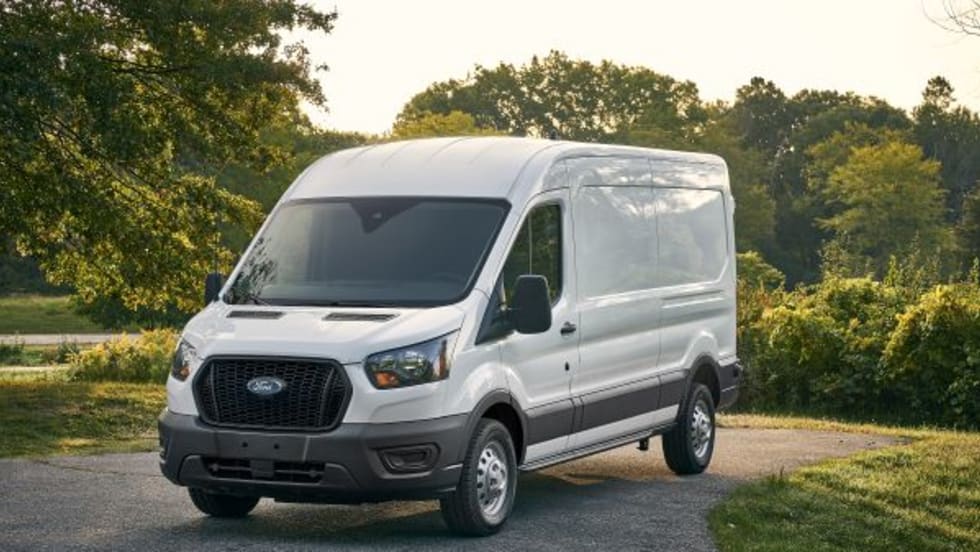
2021 Ford Transit Offers Versatility for Fleets
For the 2021-MY, Ford made ergonomic enhancements for drivers and added an available Parcel Delivery Package. This follows a major refresh in 2020, which added a Crew version, a new standard engine, standard active safety technologies, and embedded telematics to the Transit van family.
Read More →
Recognizing the Other Essential Drivers
Vocational and business fleet drivers don’t get the attention that truckers do. Yet they too are on the front lines, and their jobs often bring them into uncontrolled environments every day.
Read More →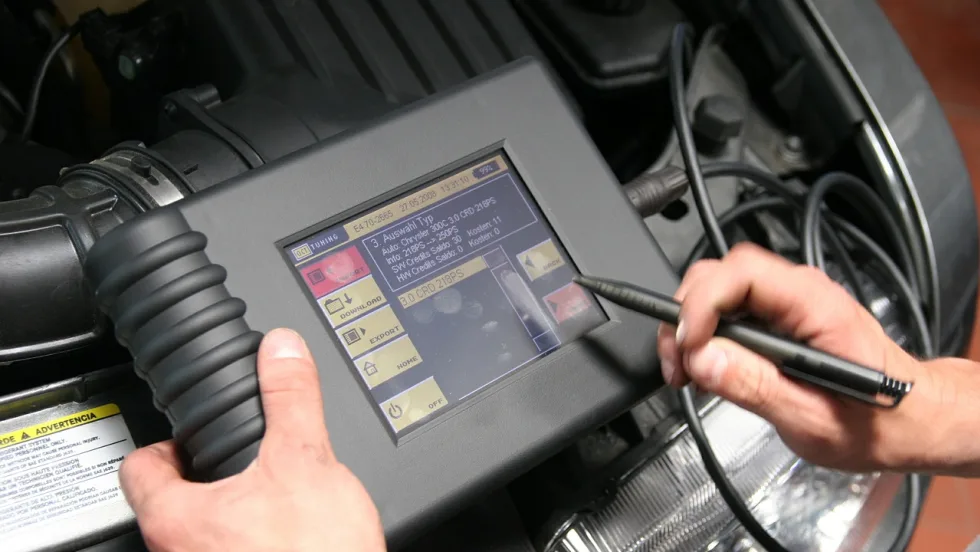
It’s Time to Formulate an ADAS Game Plan
As proliferation of Advanced Driver Assistance Systems (ADAS) increases, skilled labor, equipment, and training costs will increase as well. Fleet operators can’t mitigate these financial burdens by cutting corners on ADAS recalibration and repairs.
Read More →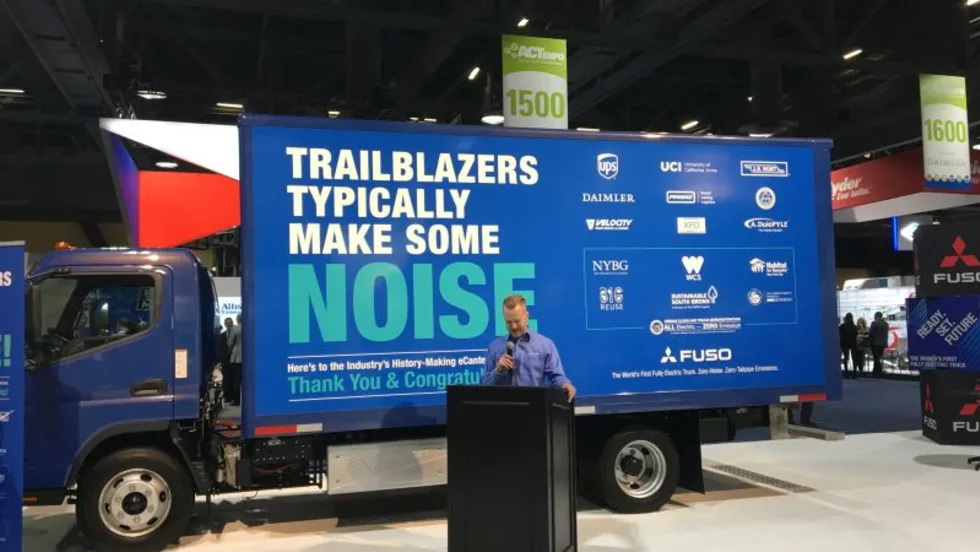
The Future is Electric, But…
With an increasing emphasis on emissions reductions mandates, will fleet operators get caught between clean technologies on their way out and an electric future that hasn’t yet arrived?
Read More →
6 Trend Lines from the 2019 Work Truck Show
From giant leaps in torque and towing to heavy duty truck personalization and chassis cab styling, these trends emerged from this year’s Work Truck Show in Indianapolis.
Read More →
They’re Coming for Your Diesel
In Southern California and other parts of the world, regulators are coalescing to ban, or severely curtail, diesel vehicles. There’s a growing disconnect with the mandates to green the environment and the availability of products and technologies to get us there.
Read More →
Hey Cannabis Companies, Welcome to Fleet
An industry is forming, and it needs help with fleet. In the meantime, the fleet industry should know that these new businesses are navigating extraordinary circumstances, which is forcing them to be better fleet operators pretty darn quick.
Read More →
Takeaways from the Fleet Forward Conference
Most attendees — from established fleets and vendors to new players that were only formed five years ago — didn’t know anyone. But that’s exactly the point.
Read More →
Is it Time to Rethink How Drivers Are Paid?
With the ELD rule affecting miles driven, and drivers’ duties increasingly including more than just driving the vehicle, what can be done to more accurately and fairly reflect a driver’s workday?
Read More →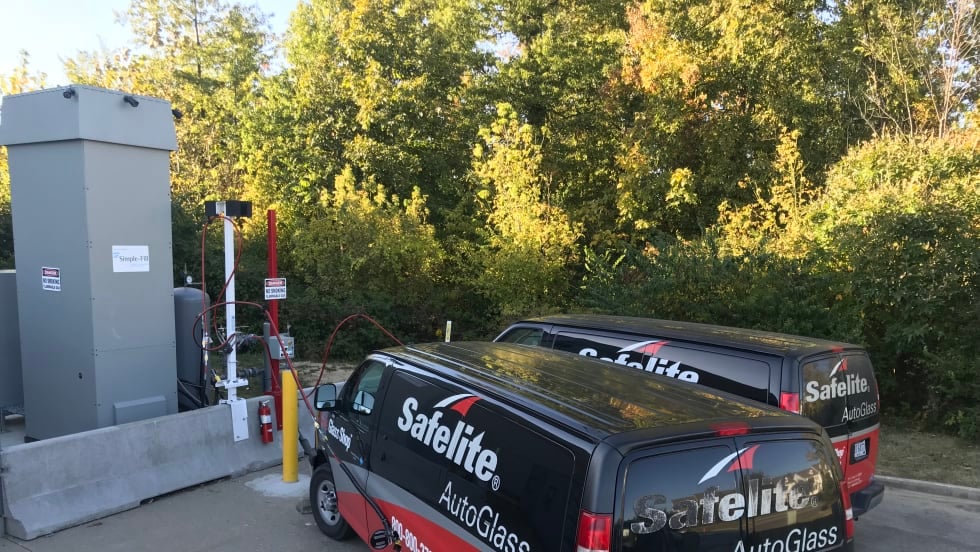
Whatever Happened to CNG?
While the light-duty market for compressed natural gas vehicles has almost evaporated, new near zero emissions technology and drastic reductions in infrastructure costs have reinvigorated the market for medium- and heavy-duty applications — even for smaller fleets.
Read More →