


7 Reasons Not to Fear the Used Car Market
You may have heard about all those lease returns coming back to the market and what they might do to residual values. It’s not as bad as you think.

Whether you’re a large commercial fleet manager or a car rental consignor, you’ve been reading the headlines for the past year portending the influx of post-recession lease returns into the wholesale market. The talk, of course, is what it’ll do to used car values. “We’re getting back to the shark-infested waters again,” says a large independent rental consignor, meaning he’s expecting to take a beating at auction.
With that in mind, a fleet vehicle broker said he’s anxious to get his cars to auction as soon as he can because he thinks pricing might drop further in the coming weeks.
Here’s what is raising eyebrows: auction prices for the first half of 2013 are down about 3% from a year ago, according to Manheim and ADESA. Though the faucet on those lease returns has already started, most predict the majority of those cars will hit the market toward the end of this year and into next.
ALG has revised its forecast to include more supply and has thus revised its overall 36-month residual value projection downward by 0.8 points, compared to its previous outlook.
Midsize and compact cars experienced the largest drop in prices over last year, at 4% and 5.4% respectively, according to Manheim data. These new vehicle segments are pretty crowded right now.
But it helps to put all this in context and to understand that this is best viewed as a market correction to “normalcy.” Here’s why you shouldn’t be too worried:
• New vehicle transaction prices have been strong in 2013, and it’s based on real demand, as incentive activity has remained restrained. This will benefit the back end. “There is no indication that I see that those things are going to change,” said Tom Webb, Manheim’s chief economist, on the company’s most recent conference call.
• The pricing declines represent a better alignment of prices between the wholesale and retail market. The influx of units is not outsized relative to retail demand compared to past cycles, Webb says, but an increase from a severe drought in wholesale supply. “The decline from the all-time high in May of 2011 should not be regarded as a bad thing or an alarming thing,” Webb said.
• The certified pre-owned (CPO) market is expected to hit record sales this year. Most rental risk units and many off-lease units qualify for CPO programs, which bodes well for pricing.
• The last major spike in off-lease returns, in the middle of the last decade, was a result of overproduction and thus manufacturers looking to move metal that they couldn’t retail. Today, dealers say that the leased vehicles coming back are very much in demand. These are cars people want. Moreover, Webb predicts there will be a shorter spike in lease returns than other prognosticators, in contradiction to ALG’s upward revision.
• Financing is available, at least for now. Webb has some concerns regarding the fact that close to 50% of all used vehicle retail contracts are for more than 60 months, and longer contracts lead to more repos. Would this lead to a tightening of financing? Perhaps, but Webb doesn’t see that happening for at least a year.
• While most rental risk units are compact and midsized cars, the weakness in these segments is in the three- to four-year-old band. This may cause concern for off-lease consignors, but it shouldn’t for rental consignors, who are selling more against the new vehicle market and those higher transaction prices. Wholesale risk car pricing remains strong.
• If you’re selling pickups, you’re in good shape. The revitalization of the housing market has created demand in both new and used truck markets. While housing starts are rising, volume is nowhere near pre-recession, meaning more pent-up demand will drive further growth.
Ricky Beggs of Black Book thinks we may see a little greater depreciation than last year in the coming quarter. Beggs is watching the compact and midsized segments closely. “New models and fewer incentives (on new compacts and midsized cars) will keep wholesale prices okay, but mitigating that is the fact that so many new models are out there, which will push more trade-ins and so more volume,” he says.
Nonetheless, “There’s nothing out there that has anyone scared or shocked or surprised,” Beggs says.
It’s true; fleets could feel a squeeze with higher new vehicle transaction prices and moderating wholesale values. In a vacuum, this would drive holding costs up. At the very least, there are options within a fleet’s control to moderate that.
More Blog Posts
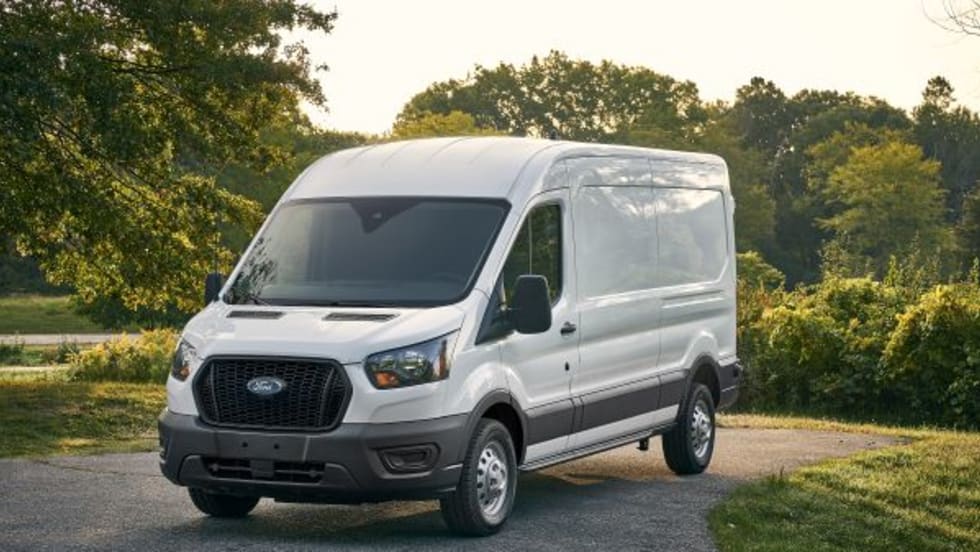
2021 Ford Transit Offers Versatility for Fleets
For the 2021-MY, Ford made ergonomic enhancements for drivers and added an available Parcel Delivery Package. This follows a major refresh in 2020, which added a Crew version, a new standard engine, standard active safety technologies, and embedded telematics to the Transit van family.
Read More →
Recognizing the Other Essential Drivers
Vocational and business fleet drivers don’t get the attention that truckers do. Yet they too are on the front lines, and their jobs often bring them into uncontrolled environments every day.
Read More →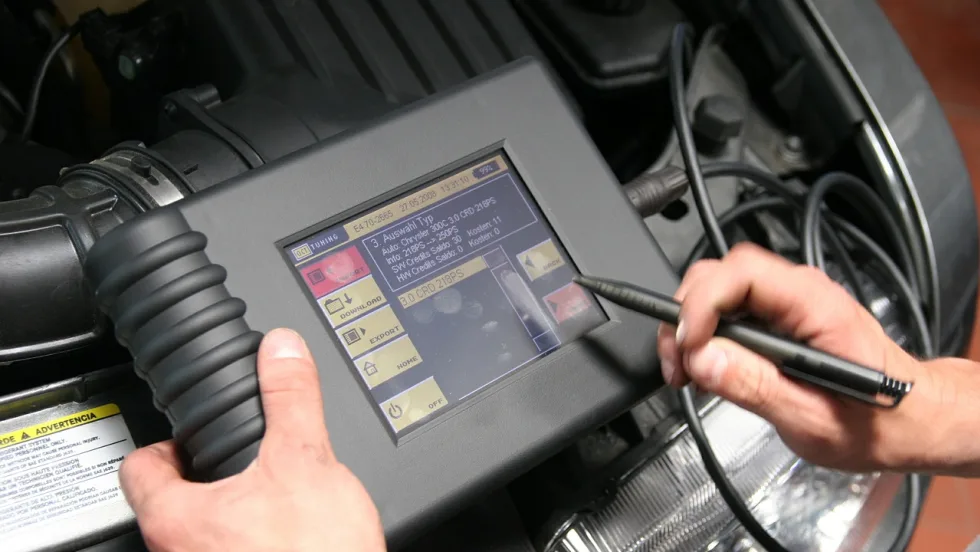
It’s Time to Formulate an ADAS Game Plan
As proliferation of Advanced Driver Assistance Systems (ADAS) increases, skilled labor, equipment, and training costs will increase as well. Fleet operators can’t mitigate these financial burdens by cutting corners on ADAS recalibration and repairs.
Read More →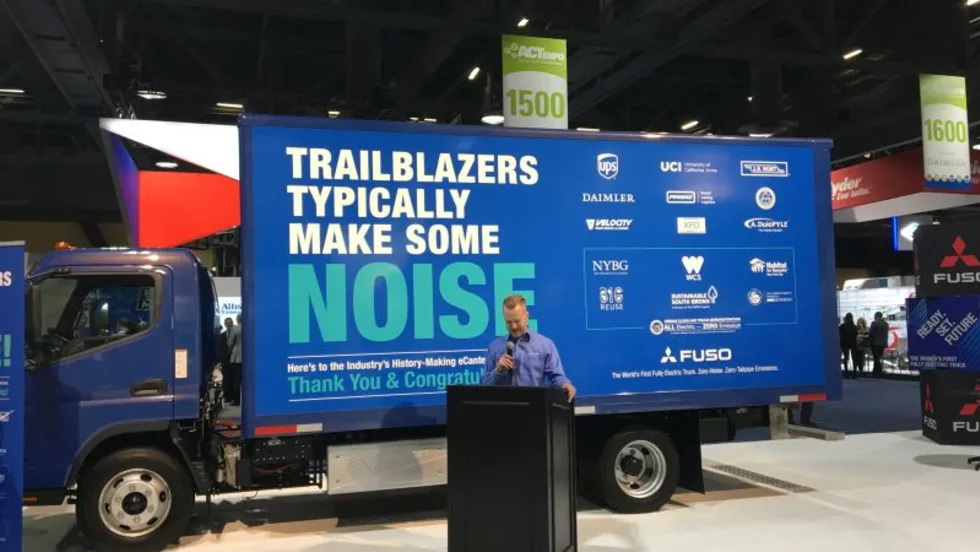
The Future is Electric, But…
With an increasing emphasis on emissions reductions mandates, will fleet operators get caught between clean technologies on their way out and an electric future that hasn’t yet arrived?
Read More →
6 Trend Lines from the 2019 Work Truck Show
From giant leaps in torque and towing to heavy duty truck personalization and chassis cab styling, these trends emerged from this year’s Work Truck Show in Indianapolis.
Read More →
They’re Coming for Your Diesel
In Southern California and other parts of the world, regulators are coalescing to ban, or severely curtail, diesel vehicles. There’s a growing disconnect with the mandates to green the environment and the availability of products and technologies to get us there.
Read More →
Hey Cannabis Companies, Welcome to Fleet
An industry is forming, and it needs help with fleet. In the meantime, the fleet industry should know that these new businesses are navigating extraordinary circumstances, which is forcing them to be better fleet operators pretty darn quick.
Read More →
Takeaways from the Fleet Forward Conference
Most attendees — from established fleets and vendors to new players that were only formed five years ago — didn’t know anyone. But that’s exactly the point.
Read More →
Is it Time to Rethink How Drivers Are Paid?
With the ELD rule affecting miles driven, and drivers’ duties increasingly including more than just driving the vehicle, what can be done to more accurately and fairly reflect a driver’s workday?
Read More →
Whatever Happened to CNG?
While the light-duty market for compressed natural gas vehicles has almost evaporated, new near zero emissions technology and drastic reductions in infrastructure costs have reinvigorated the market for medium- and heavy-duty applications — even for smaller fleets.
Read More →