


Car Rental at the Halfway Point: How Are We Doing?
Looking at the first half of 2013, rates are up and the used car market is down but stabilizing. Pay attention to developments that portend the long-term future of car rental.

“How’m I doing?” This was the signature line of Ed Koch, New York City’s mayor-celebrity of the late ‘70s and 1980s. Now that the car rental industry has six months of 2013 under its belt, the car rental industry can ask itself the same question. As is a quarterly tradition, we can look for guidance to the conference calls and financial results of Hertz and Avis Budget Group, the remaining public car rental companies, and Manheim’s monthly prognostications. (Remember, Enterprise Holdings is privately held.)
There are three big storylines to follow: the buoyancy in car rental rates, the managing of lower used car values and the integration of acquisitions such as Dollar Thrifty, Zipcar and Payless.
By most accounts pricing — which to regular folks means rental rates — has been better than expected. Our six-city rate quote averages show month-on-month gains for eight of the last nine months over 2012.
For Hertz, revenue per day (RPD) was up in the first and second quarters. Leisure RPD led the way, but more importantly, commercial pricing was up 1.8% in the second quarter. Hertz and Avis Budget have been vocal in the past few years regarding stagnant pricing for corporate accounts. In Hertz’s case, this gain might only be the tip of the iceberg, as it is most likely only seeing the beginning of the leverage the Dollar Thrifty acquisition could bring in the commercial arena.
Avis Budget has seen higher leisure pricing as well, with commercial pricing essentially flat to improving, as modestly lower corporate pricing is being balanced by gains in the small business and mid-market channels, which more closely reflect the leisure market. Note to corporate accounts: moving forward, Avis said in its first quarter conference call that it will “question the profitability of an account over success in renewal rates.”
As to the causality of higher rates, common wisdom (the general media being “common wisdom”) has it that these gains are the direct result of the Hertz and Dollar Thrifty merger. Note that the Dollar Thrifty merger was completed at the end of 2012, while the positive pricing trend predates that by a few months. Certainly, Hertz didn’t start realizing synergies from the acquisition on day one.
We need to factor in a couple more levers: The trend of the softening in used car prices, which began in the second half of 2012, has a natural effect on pricing as rental companies look to maintain fleet costs. As well, higher new car prices are keeping rental fleet levels in check with demand, which also help to keep rates in check. These macro trends should compound any further synergies that the industry should realize from consolidation moving forward.
Speaking of the wholesale market: Lower used car values have been baked into forecasts for more than a year, as the surge in off-lease volume loomed like a tidal wave on the horizon. Talk about tough comps on 2012 — Hertz made $44 million in car sales gains last year in the second quarter versus taking an $11 million loss in this year’s quarter.
At Avis, depreciation expenses as a percentage of revenue rose to 24%, from 18% in the second quarter of 2012. Avis expects per unit fleet costs in North America to increase by 15% to 20% for the year.
Look for the comps to soften, while the future of the used car market appears manageable, even bright. Auction values were hit hard, but values for cars sold through retail channels such as Hertz’s Rent2Buy were essentially flat.
The Manheim Used Vehicle Value Index has risen for the last two months. For July, it stood at 120.9, a drop of only 0.2% compared to a year ago. Unadjusted prices for rental risk units sold at auction actually increased in July, contradicting the normal seasonal decline.
To understand the future, Tom Webb, Manheim’s chief economist, made the point that used car pricing should be viewed in relation to new car pricing, as opposed to the anomaly of the balloon of units coming through wholesale channels today. The off-lease and off-rental cars of today are more desirable models with better configurations than in prior cycles. New car incentives are in check and credit for used cars is readily available, all of which should support strong demand for used rental cars.
In terms of the effects of the acquisitions, Hertz said it realized lower utilization in the second quarter as it was still transferring the Advantage fleet off the books while it had already taken on the Dollar fleet. Hertz said that the fleet and back-office integration with Dollar Thrifty won’t be completed until the end of the first quarter next year.
Hertz reported that although direct operating expenses increased 21.3% in the second quarter primarily due to the acquisition of Dollar Thrifty, they declined by 150 basis points as a percent of revenue. In simple terms, this means that these all-important synergies — a major impetus for the merger — are being realized.
Avis Budget’s announced acquisition of Payless gives Avis a position in the discount leisure market. This is important, as the largest profit growth area in car rental is coming from the discount end. Though Payless only contributes about $80 million in annual revenue, it gives Avis a discount player in eight corporate-owned stores in the top 10 U.S. airports. Franchised locations in the Americas and Europe will add to earnings. We’re only at the beginning of seeing how this integration will play out.
Avis is using its footprint to position recently acquired Zipcar in unique ways. Zipcars are now available at major airports and soon could be on corporate campuses as well as available for one-way rentals. More than 1,000 units in Avis Budget’s fleet are being outfitted with Zipcar’s technology in order to deploy underutilized vehicles as Zipcars on the weekend.
Between the acquisition of Zipcar, the world’s largest car sharing company, and Hertz’s 35,000 vehicles in its U.S. fleet that were recently installed with telematics systems (and Enterprise’s forays into car sharing), traditional car rental has officially taken over the car-sharing market. But more importantly, it signals a long-term trend in car rental, the automation and decentralization of the process. This integration of technology will take some time, and we’re a long way off from seeing the demise of the rental counter. However, the days of reserving a car from virtually anywhere and picking it up virtually anywhere, I believe, is the future of car rental.
More Blog Posts
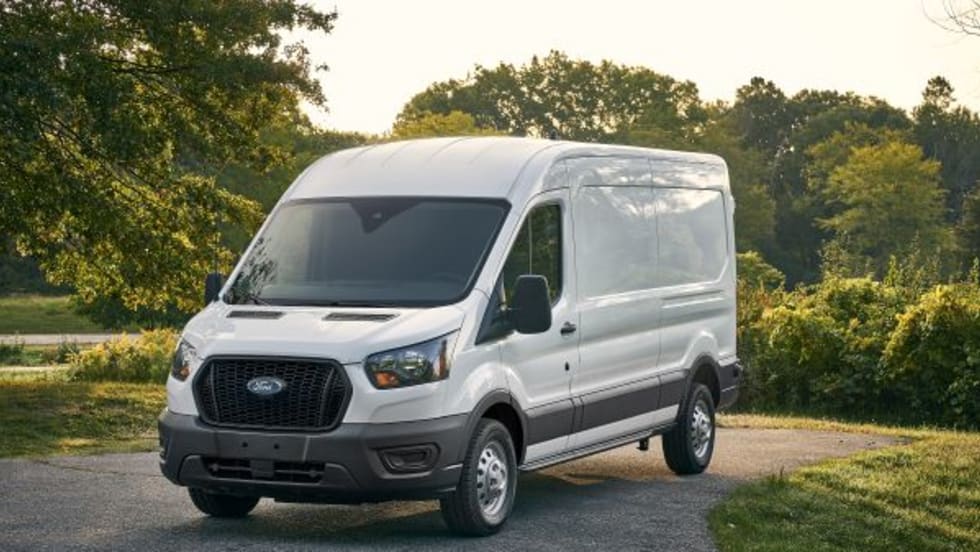
2021 Ford Transit Offers Versatility for Fleets
For the 2021-MY, Ford made ergonomic enhancements for drivers and added an available Parcel Delivery Package. This follows a major refresh in 2020, which added a Crew version, a new standard engine, standard active safety technologies, and embedded telematics to the Transit van family.
Read More →
Recognizing the Other Essential Drivers
Vocational and business fleet drivers don’t get the attention that truckers do. Yet they too are on the front lines, and their jobs often bring them into uncontrolled environments every day.
Read More →
It’s Time to Formulate an ADAS Game Plan
As proliferation of Advanced Driver Assistance Systems (ADAS) increases, skilled labor, equipment, and training costs will increase as well. Fleet operators can’t mitigate these financial burdens by cutting corners on ADAS recalibration and repairs.
Read More →
The Future is Electric, But…
With an increasing emphasis on emissions reductions mandates, will fleet operators get caught between clean technologies on their way out and an electric future that hasn’t yet arrived?
Read More →
6 Trend Lines from the 2019 Work Truck Show
From giant leaps in torque and towing to heavy duty truck personalization and chassis cab styling, these trends emerged from this year’s Work Truck Show in Indianapolis.
Read More →
They’re Coming for Your Diesel
In Southern California and other parts of the world, regulators are coalescing to ban, or severely curtail, diesel vehicles. There’s a growing disconnect with the mandates to green the environment and the availability of products and technologies to get us there.
Read More →
Hey Cannabis Companies, Welcome to Fleet
An industry is forming, and it needs help with fleet. In the meantime, the fleet industry should know that these new businesses are navigating extraordinary circumstances, which is forcing them to be better fleet operators pretty darn quick.
Read More →
Takeaways from the Fleet Forward Conference
Most attendees — from established fleets and vendors to new players that were only formed five years ago — didn’t know anyone. But that’s exactly the point.
Read More →
Is it Time to Rethink How Drivers Are Paid?
With the ELD rule affecting miles driven, and drivers’ duties increasingly including more than just driving the vehicle, what can be done to more accurately and fairly reflect a driver’s workday?
Read More →
Whatever Happened to CNG?
While the light-duty market for compressed natural gas vehicles has almost evaporated, new near zero emissions technology and drastic reductions in infrastructure costs have reinvigorated the market for medium- and heavy-duty applications — even for smaller fleets.
Read More →