


Key Takeaways from the Green Fleet Conference (Part 1)
Here’s what you missed in San Diego.


Attendees at a Green Fleet Conference presentation
The Green Fleet Conference was held this week in rainy San Diego. Weather issues aside, in three short years the Green Fleet Conference has evolved as the must-attend event specifically for those in the fleet world.
Here's why: the conference is based on real-world environmental solutions from the mouths of fleet managers who are greening their fleets with an eye on the business ROI. "Environmental sustainability goes hand in hand with economic sustainability," summed up Dennis Beal, vice president of global vehicles at FedEx Express, in his Tuesday morning address.
This continues to be a prevailing theme in the education, product introductions and drive opportunities at the show. Here is a Part One of what I got out of the various presentations, exhibits and networking:
You Can Green Your Fleet without Alt Fuels
At this point Abbott Labs has no active strategy to implement alt-fuels into its fleet. Yet Catherine Tillman, who runs fleet and travel programs for the healthcare product maker, reported on the company's downsizing initiatives that paid big dividends in fuel (and greenhouse gas) savings.
In the past three years the company has restricted 4x4 SUVs to drivers in winter states, has moved from six- to four-cylinder SUVs and assessed a per-mile personal use charge for drivers that choose SUVs or minivans. Tillman's next initiative is to limit minivans to business use only. With rental vehicles, drivers are switching from full size by default to "the smallest possible to do the job."
Abbott augments these initiatives by buying carbon credits through the Chicago Climate Exchange. Tillman said Abbott was the first large company to go carbon neutral with its U.S. fleet in July 2007.
In another seminar, Chuck Kukal, who runs the fleet at Infinity Auto Insurance, replaced his 2007 Jeep Liberty units with the 2011 Jeep Compass. His cents per mile for fuel dropped from 16 to 12.
Electric Trucks and Hope for the ROI
There is a compelling environmental case - no, an environmental need - to get hybrid-electric (HEV) and all-electric (battery, or BEV) trucks on the road. But making a pure business case for HEV and BEV trucks is not part of the conversation for right now.
(HEV refuse trucks are the happy exception. Because of their stop-and-go and PTO requirements, fleets are seeing a non-incentive based payoff in five to six years and an annual fuel cost savings of up to 30 percent.)
Larger fleets with the ability to absorb the costs, such as FedEx, UPS and Frito Lay, have been leaders in working with manufacturers to develop hybrid-electric trucks.
Dennis Beal of FedEx said the company is trying to reach a point where it is paying a 20-percent premium for hybrid trucks, but is not there yet. "The biggest barrier is in acquisition cost," he said. "There is no ROI right now; it's strictly an investment in technology."
Wayne Farley of American Electric Power Company in Columbus, Ohio is running 20 medium-duty hybrid units right now and will have 60 in fleet by the end of 2010. At a $50,000 premium per truck, a dollars-and-cents ROI is not being measured at this point, he said.
But there is hope for that ROI - Beal said to look for a 40-percent reduction in battery cost in the next four to five years.
And there is a lot of money out there for fleets that want to give it a shot right now. If you're in California, check out the Hybrid Truck and Bus Voucher Incentive Project (www.californiahvip.org). The program provides about half the incremental cost of the electric version, or about $15,000 to $40,000 per vehicle depending on GVW. The program has already doled out $20 million for more than 650 hybrid truck and bus purchases, with more money available. Or e-mail Mike Ippoliti directly: mippoliti@calstart.org.
EV Products are Real and on Sale Now
That being said, we've come along way from HEV and BEV theory to production in a few short years. "Hybrid trucks are real and in production and are expanding in type and application," said Ippoliti of Calstart.
UPS has 250 HEVs in its fleet right now. Michael Britt of UPS reported that the fuel economy of HEV package truck is 35 percent better than standard diesel.
I got a chance to drive the EStar, Navistar's first purpose-built BEV. The EStar has a 100-mile range and a 50 mph top speed. It's a fine electric vehicle in functionality, looks and drive characteristics. In a short test drive I did not get any thrilling off-the-line acceleration, but that's a good thing for a work truck. It took me up a steep hill at a steady 30 mph without hesitation.
The Estar is available now, but it costs $150,000 (net $110,000 after government help). This is for a vehicle with a payload comparable to a Sprinter. Navistar is looking at a 1,000-unit production run for 2011.
However, if your needs are only on low-speed roads, look into the ZAP XL electric pickup truck. The XL has a 1,900-lbs payload, comparable to a Ford F-150, with a cabin about the size of Ford Ranger. With a top speed of 33 mph, you get 40 miles per charge using a standard lead acid battery. Retail price: $14,500.
Will the grid be able to handle the EV infrastructure?
In a presentation by GE, Greg Blake of GE Energy referenced a Pacific Northwest Labs study that contends that 84 percent of the country's light-duty fleet can be powered by existing electrical generation, transmission and distribution - assuming a "smart grid" that will coordinate charging off peak.
Mary Beth Stanek, director, federal environmental and energy affairs for GM, said the present grid can handle "up to a few million vehicles." She believes renewable fuels (solar, wind, biofuels) will play a key role in the transition to the smart grid. Renewables will act as a buffer, as the smart grid will be able to draw power from them to augment traditional fossil fuel power. However, this requires interoperability standards, Stanek said.
Look for "smart" appliances to come into the fore, which will be able to draw power off-peak and store it for when needed.
Stanek referenced how the grid was able to handle the rapid proliferation of air conditioning in 1960s. She believes the larger issue is cyber terrorism and making sure access to the grid is secure.
Don't Forget the Internal Combustion Engine
Stanek believes there's room for technological advances to improve the internal combustion engine by as much as 20 percent. But efficiency can only get to a certain point, she said, and this is motivating our need to move on to other technologies.
Part 2: CNG, propane, building EV infrastructure and our hydrogen future.
More Blog Posts
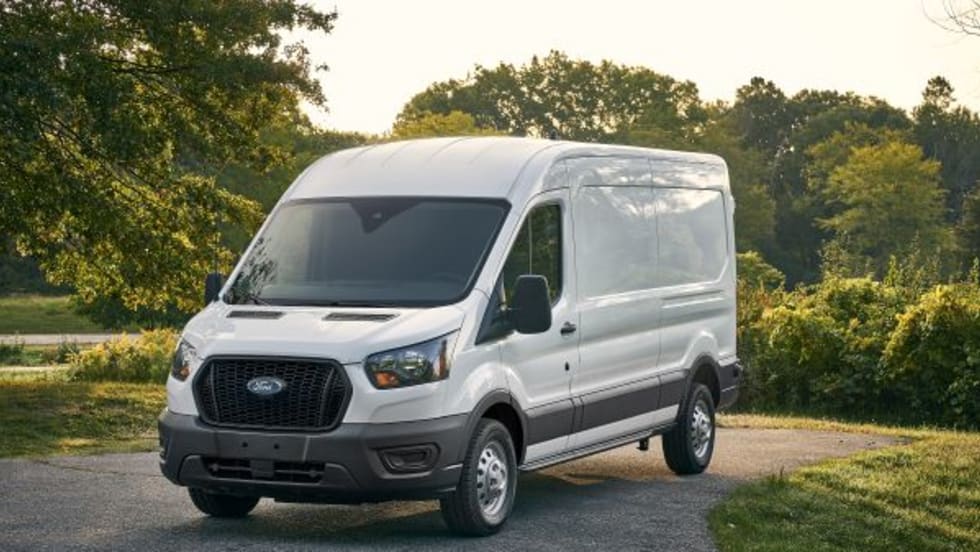
2021 Ford Transit Offers Versatility for Fleets
For the 2021-MY, Ford made ergonomic enhancements for drivers and added an available Parcel Delivery Package. This follows a major refresh in 2020, which added a Crew version, a new standard engine, standard active safety technologies, and embedded telematics to the Transit van family.
Read More →
Recognizing the Other Essential Drivers
Vocational and business fleet drivers don’t get the attention that truckers do. Yet they too are on the front lines, and their jobs often bring them into uncontrolled environments every day.
Read More →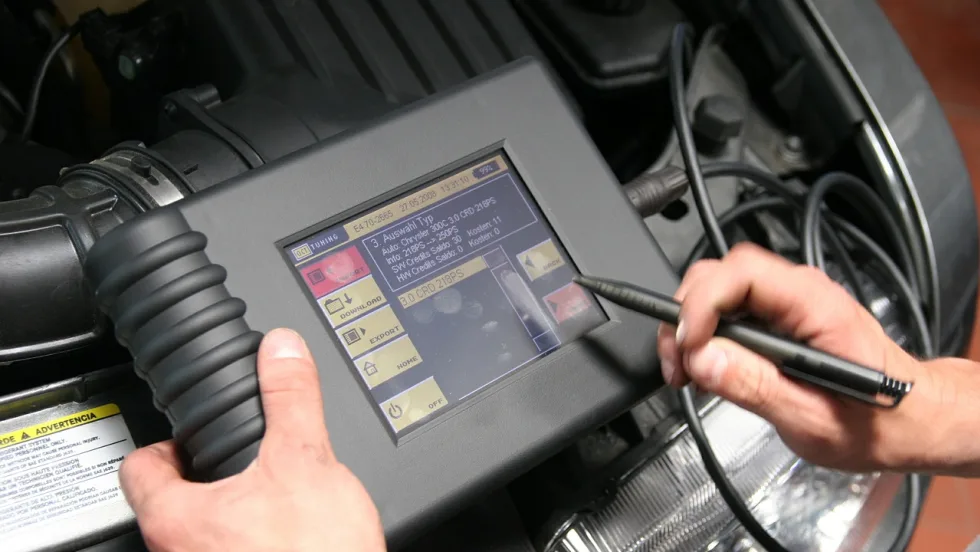
It’s Time to Formulate an ADAS Game Plan
As proliferation of Advanced Driver Assistance Systems (ADAS) increases, skilled labor, equipment, and training costs will increase as well. Fleet operators can’t mitigate these financial burdens by cutting corners on ADAS recalibration and repairs.
Read More →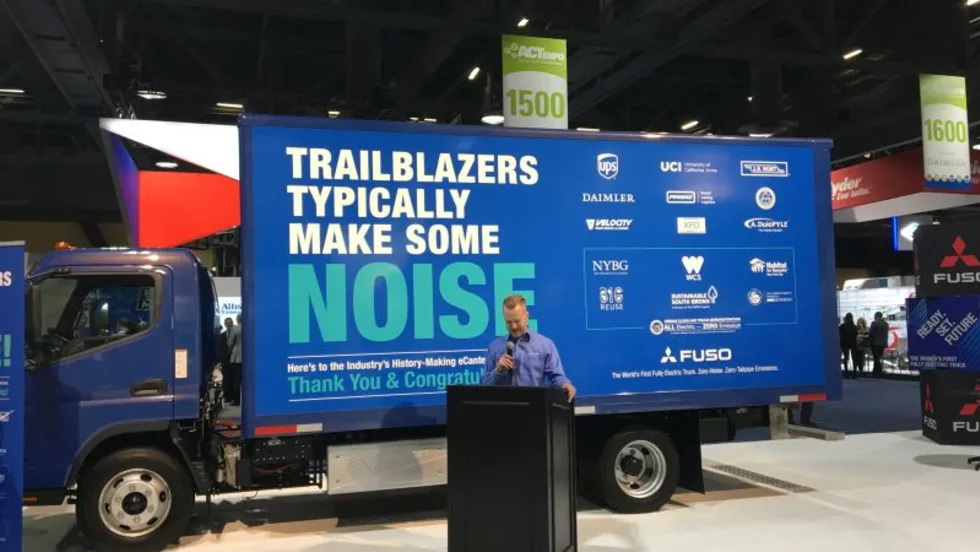
The Future is Electric, But…
With an increasing emphasis on emissions reductions mandates, will fleet operators get caught between clean technologies on their way out and an electric future that hasn’t yet arrived?
Read More →
6 Trend Lines from the 2019 Work Truck Show
From giant leaps in torque and towing to heavy duty truck personalization and chassis cab styling, these trends emerged from this year’s Work Truck Show in Indianapolis.
Read More →
They’re Coming for Your Diesel
In Southern California and other parts of the world, regulators are coalescing to ban, or severely curtail, diesel vehicles. There’s a growing disconnect with the mandates to green the environment and the availability of products and technologies to get us there.
Read More →
Hey Cannabis Companies, Welcome to Fleet
An industry is forming, and it needs help with fleet. In the meantime, the fleet industry should know that these new businesses are navigating extraordinary circumstances, which is forcing them to be better fleet operators pretty darn quick.
Read More →
Takeaways from the Fleet Forward Conference
Most attendees — from established fleets and vendors to new players that were only formed five years ago — didn’t know anyone. But that’s exactly the point.
Read More →
Is it Time to Rethink How Drivers Are Paid?
With the ELD rule affecting miles driven, and drivers’ duties increasingly including more than just driving the vehicle, what can be done to more accurately and fairly reflect a driver’s workday?
Read More →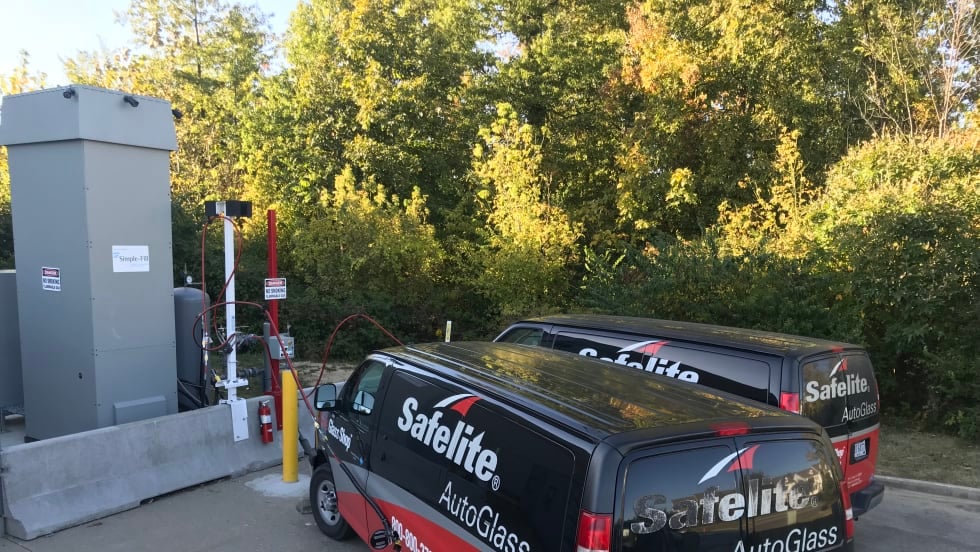
Whatever Happened to CNG?
While the light-duty market for compressed natural gas vehicles has almost evaporated, new near zero emissions technology and drastic reductions in infrastructure costs have reinvigorated the market for medium- and heavy-duty applications — even for smaller fleets.
Read More →