


My Number One Takeaway from ICRS 2017
This year’s International Car Rental Show (ICRS) opened the door to new business models facing transportation today — yet adapting to these new technologies is not the first key to survival.

Two years ago at the International Car Rental Show (ICRS), I joked onstage: “And I promise you, we won’t be talking about driverless vehicles.” We’re not joking now. At this year’s show, convened this week in Las Vegas, we addressed the disruptive forces in transportation head-on.
My key takeaway from this year’s event, ironically, isn’t that the car rental industry needs to adapt new technology and new business models to survive the apocalypse. It does. My takeaway is a lot more low-tech; more on that later.
The theme of “mobility” weaved its way through many presentations, much of it from a global perspective. In our Latin American Meeting, Paulo Gaba of FENALOC, the Brazilian car rental association, spoke to the transportation issues in Sao Paulo, one of the world’s largest cities. Getting through its main airport is a hassle — traffic cameras deliver electronic fines, parking is expensive, and driving after one beer could get you arrested. In this environment, ride hailing makes sense. However, “Brazil is an extremely regulated transportation market, but Uber is hardly regulated,” Gaba said.
In another Latin American seminar, Javier Garcia of Mex Rent-A-Car echoed Gaba’s points on the lack of transportation options in the Mexico City megalopolis, which has fueled Uber’s growth, though with a similar lack of regulation compared to traditional modes. But this should surprise no one — regulations have always lagged behind the implementation of new business models, said Wes Hurst and Leslie Pujo in their seminar.
While regulations are lacking in some areas, seemingly draconian ones are forcing new solutions in others: In 2020, no diesel cars will be allowed to enter Paris, while Helsinki is considering banning all cars except electric ones. Sao Paulo and Bogota, Colombia, have similar emissions restrictions. Learning that a London driver loses 101 hours a year in traffic, the impetus for change becomes clear.
For Europcar — part of the ICRS agenda for the first time — these restrictions represent opportunity. Europcar’s Marcus Bernhardt presented the company’s various mobility initiatives, which include app-based door-to-door delivery (ToMyCar), all-electric carsharing (ecar), and a corporate ride-hailing service (Brunel). Europcar even has its own incubator, Europcar Lab, where “young innovators are sitting on the floor and drawing on the walls,” said Bernhardt, “to understand the future.”
Our opening keynote panel assembled representatives from a manufacturer (North Holbrook of Volvo), a tech provider (Mark Thomas RideCell), and Dan Langford of the Nevada Center for Advanced Mobility (NevadaCAM), where the nexus of government, mobility, and data meet.
While the keynote panel discussion ended with autonomous vehicles — and yes, driverless cars will be available in only a few years — it focused more importantly on the shifting dynamics today. In this environment, technology doesn’t need to be seen as enabling disruption. Instead, technology is enabling present processes to become more streamlined, which allows traditional companies a customer-friendly path forward without rethinking the world.
Three trends to keep an eye on are “asset light,” Mobility as a Service (MaaS), and auto manufacturers as service providers.
Millennials, aka Digital Natives, are moving to cities, going asset light, and shunning car ownership. This plays into car rental’s hands as one part of a service offering that connects various modes. Organizations like NevadaCAM are enablers.
Carmakers appear ready to become service providers with their numerous mobility initiatives, which are now more than just lab experiments. But what doesn’t get the public’s attention is good old-fashioned fleet management, a skill carmakers have been perfectly happy to let other parties manage in the past. Car rental should leverage this advantage, our panelists said.
The need for sound fleet management — which will never be as sexy as technology — brings us closer to my low-tech takeaway. Our keynote panelists agreed a place for the local entrepreneur within these new models could revolve around fleet management, though operators that understand their customers will have an even better advantage. Those competencies aren’t dependent on great technology.
But my key takeaway is actually more basic than that. Mary Ann Sena-Edelen of MGM Resorts closed the show with an insider’s view of hotel hospitality and an outsider’s view of car rental. She recounted a story we’ve all heard before — she landed at the airport, suffered a 25-minute wait at the rental counter with only one person in front of her, and walked a half-mile to a car that had a “check engine” light on, which was the only one left on the lot.
But when she pulled up to the guard gate to exit the parking lot, the checkout employee, Charmaine, engaged her with a smile and was helpful with directions and information on services. “That little bit of human engagement just about overcame all my negative experiences up to that point,” she said.
Own that first. It’s within your power to do so, no tech required.
More Blog Posts
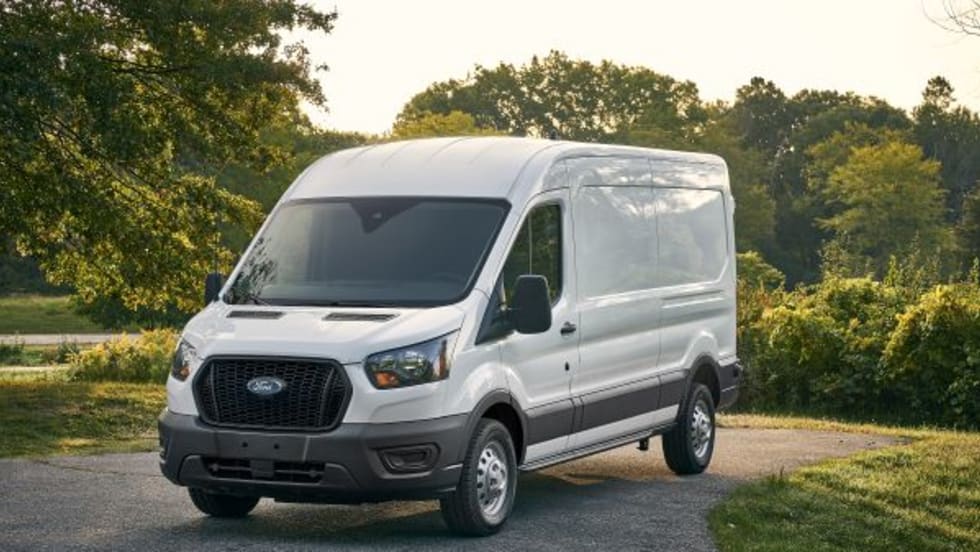
2021 Ford Transit Offers Versatility for Fleets
For the 2021-MY, Ford made ergonomic enhancements for drivers and added an available Parcel Delivery Package. This follows a major refresh in 2020, which added a Crew version, a new standard engine, standard active safety technologies, and embedded telematics to the Transit van family.
Read More →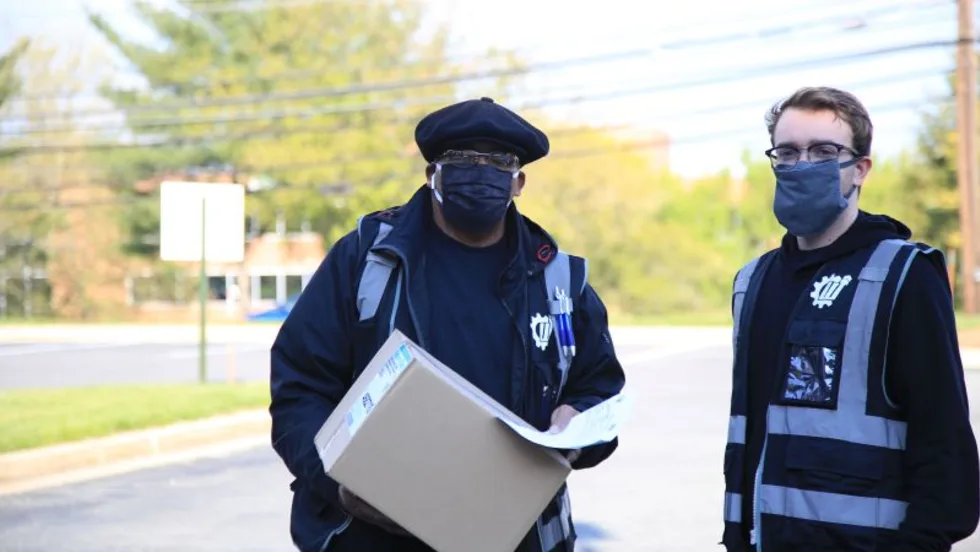
Recognizing the Other Essential Drivers
Vocational and business fleet drivers don’t get the attention that truckers do. Yet they too are on the front lines, and their jobs often bring them into uncontrolled environments every day.
Read More →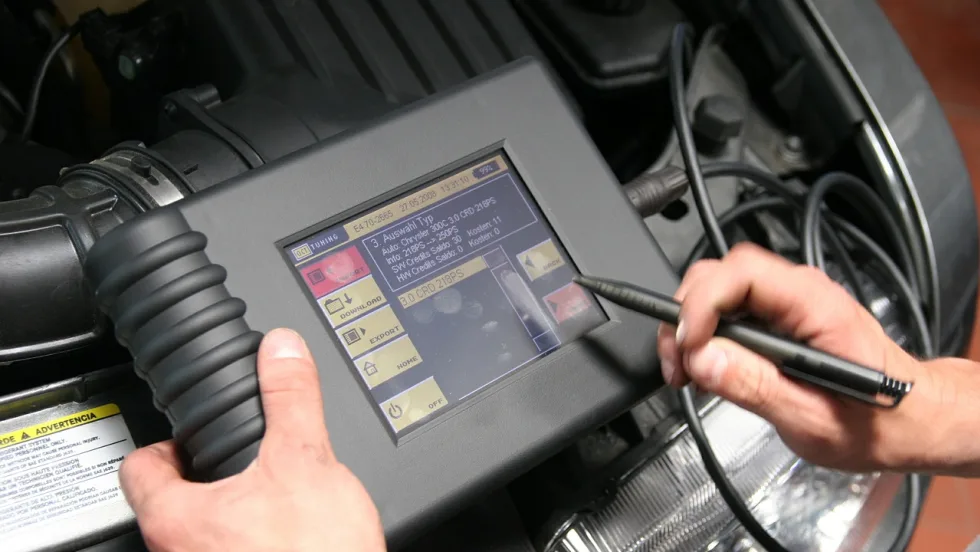
It’s Time to Formulate an ADAS Game Plan
As proliferation of Advanced Driver Assistance Systems (ADAS) increases, skilled labor, equipment, and training costs will increase as well. Fleet operators can’t mitigate these financial burdens by cutting corners on ADAS recalibration and repairs.
Read More →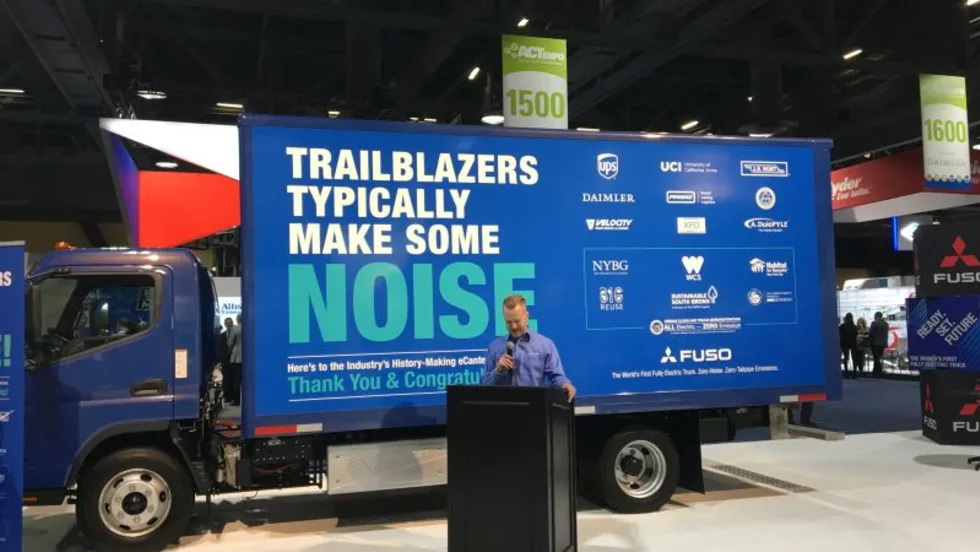
The Future is Electric, But…
With an increasing emphasis on emissions reductions mandates, will fleet operators get caught between clean technologies on their way out and an electric future that hasn’t yet arrived?
Read More →
6 Trend Lines from the 2019 Work Truck Show
From giant leaps in torque and towing to heavy duty truck personalization and chassis cab styling, these trends emerged from this year’s Work Truck Show in Indianapolis.
Read More →
They’re Coming for Your Diesel
In Southern California and other parts of the world, regulators are coalescing to ban, or severely curtail, diesel vehicles. There’s a growing disconnect with the mandates to green the environment and the availability of products and technologies to get us there.
Read More →
Hey Cannabis Companies, Welcome to Fleet
An industry is forming, and it needs help with fleet. In the meantime, the fleet industry should know that these new businesses are navigating extraordinary circumstances, which is forcing them to be better fleet operators pretty darn quick.
Read More →
Takeaways from the Fleet Forward Conference
Most attendees — from established fleets and vendors to new players that were only formed five years ago — didn’t know anyone. But that’s exactly the point.
Read More →
Is it Time to Rethink How Drivers Are Paid?
With the ELD rule affecting miles driven, and drivers’ duties increasingly including more than just driving the vehicle, what can be done to more accurately and fairly reflect a driver’s workday?
Read More →
Whatever Happened to CNG?
While the light-duty market for compressed natural gas vehicles has almost evaporated, new near zero emissions technology and drastic reductions in infrastructure costs have reinvigorated the market for medium- and heavy-duty applications — even for smaller fleets.
Read More →