


Would Car Rental in Europe Benefit from Consolidation?
A market controlled by brokered transactions will continue to suffer price pressures and customer service issues.

Europe seems to be finally ramping up its economic recovery. If you read the quarterly reports of the public car rental companies, the auto rental industry is faring better, too. But the European car rental market must still deal with systemic challenges not found in North America.
Of course, Europe is really made up of some 50 separate markets. While the creation of the European Union and a common currency in the eurozone countries helped to ease travel and cross-border business issues, this fragmentation has created a traditional stratification of car rental services. Whereas in the U.S. about 95% of the market is controlled by three companies running 10 brands — about 35% of the market is still independent in Europe.
Large travel comparison sites found in both the U.S. and in Europe aggregate the major car rental suppliers and larger independent brands. In Europe, the model diversifies into heavy use of various forms of brokerages. The brokers’ relationship with the rental companies, especially on the small end, often lacks the structure and scrutiny of a franchise or affiliate system. It’s not completely the brokers’ faults, as they are dealing with mom-and-pop shops with varying degrees of automation.
Therefore, the handoff of the reservation to the independent rental company may lead to a mismatched price quote, misunderstood terms and conditions or even an unfulfilled reservation. While leisure travelers might put up with spotty customer service in a brokered transaction, price is a prime motivator — so they keep coming back. As a consequence, pricing is constantly under pressure. “I can’t remember a time in the last 20 years in Europe when a rental company didn’t say that price wasn’t on downward pressure,” says Roland Keogh of Thermeon, a car rental systems provider based in Europe.
Other pressures on pricing in Europe are customarily high fuel prices and small streets, which means about 50% of the European car rental fleet is in the economy and “mini” segments. As well, the expansion of European no-frills airlines such as EasyJet and Ryanair has created more travel opportunities for long weekend getaways, yet has also fostered the no-frills rental market.
U.S. car rental companies look longingly to Europe’s high rate of prepaid bookings, which allows for fleet utilization to be managed much more precisely. While bookings on branded websites in Europe run a healthy 50% to 60% — much higher than in the U.S. — a substantial percentage of prepaid bookings are based on brokered transactions.
What’s the problem? Prepay is so competitive that rates are deeply discounted, leaving car rental companies to make up the difference with ancillary product sales at the counter. This in and of itself isn’t the issue, as these products are elective. But online tour agencies relay typical complaints from travelers of unexpectedly high final bills — exacerbated by higher taxes, native language differences and policies country to country. In Italy, for instance, renters are required to take the collision damage waiver.
Moreover, brokers’ final prices to customers are opaque to the car rental company. The company delivers a rate to the broker, who then assigns a retail rate based on current market conditions. While the rental company’s profit is fixed, the broker has much more flexibility to adjust — and profit.
The broker situation in Europe shows how markets have a way of consolidating on their own, sometimes ineloquently. But with recent moves by Hertz, Avis and Enterprise, Europe is on a path to a more traditional form of consolidation.
Imad Khalidi, CEO of Auto Europe, a U.S.-based travel services provider to Europe, believes further consolidation in Europe is inevitable. “What happens in the U.S. today will happen tomorrow in Europe,” he says.
Yes, consolidation certainly raises the specter of removing consumer choice and raising prices, just ask the Federal Trade Commission. But it also brings about standardization of policies, uniform quality and a greater ability to redress customer concerns. And let’s face it — a fair profit margin goes a long way to better customer service.
More Blog Posts
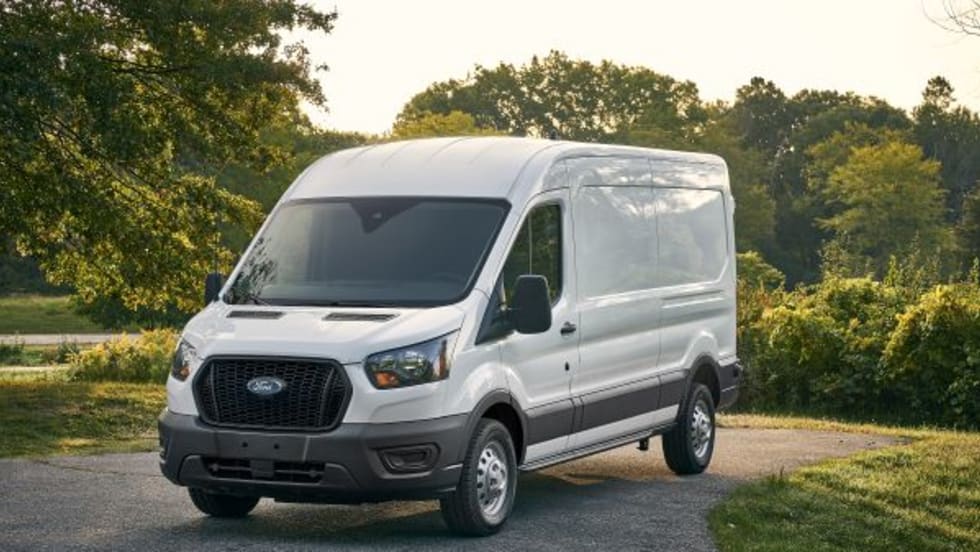
2021 Ford Transit Offers Versatility for Fleets
For the 2021-MY, Ford made ergonomic enhancements for drivers and added an available Parcel Delivery Package. This follows a major refresh in 2020, which added a Crew version, a new standard engine, standard active safety technologies, and embedded telematics to the Transit van family.
Read More →
Recognizing the Other Essential Drivers
Vocational and business fleet drivers don’t get the attention that truckers do. Yet they too are on the front lines, and their jobs often bring them into uncontrolled environments every day.
Read More →
It’s Time to Formulate an ADAS Game Plan
As proliferation of Advanced Driver Assistance Systems (ADAS) increases, skilled labor, equipment, and training costs will increase as well. Fleet operators can’t mitigate these financial burdens by cutting corners on ADAS recalibration and repairs.
Read More →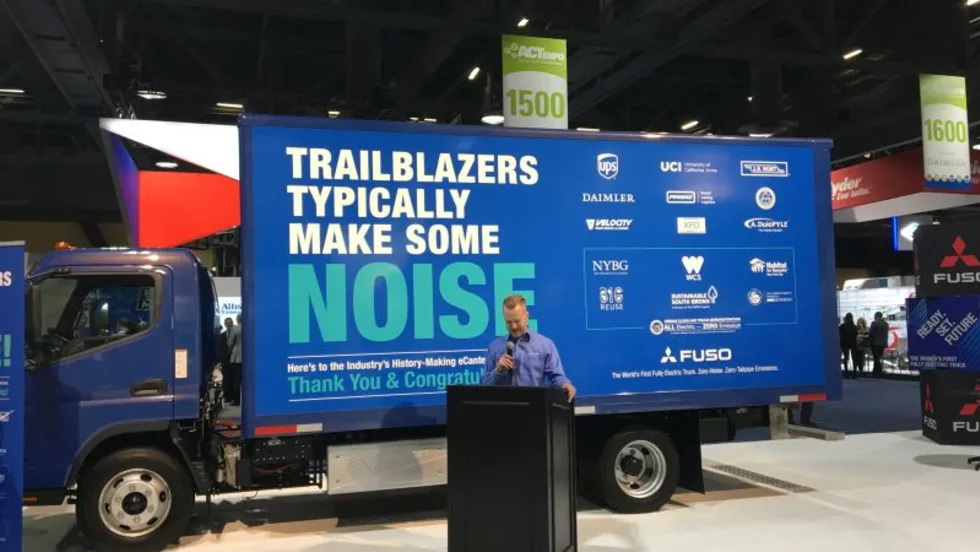
The Future is Electric, But…
With an increasing emphasis on emissions reductions mandates, will fleet operators get caught between clean technologies on their way out and an electric future that hasn’t yet arrived?
Read More →
6 Trend Lines from the 2019 Work Truck Show
From giant leaps in torque and towing to heavy duty truck personalization and chassis cab styling, these trends emerged from this year’s Work Truck Show in Indianapolis.
Read More →
They’re Coming for Your Diesel
In Southern California and other parts of the world, regulators are coalescing to ban, or severely curtail, diesel vehicles. There’s a growing disconnect with the mandates to green the environment and the availability of products and technologies to get us there.
Read More →
Hey Cannabis Companies, Welcome to Fleet
An industry is forming, and it needs help with fleet. In the meantime, the fleet industry should know that these new businesses are navigating extraordinary circumstances, which is forcing them to be better fleet operators pretty darn quick.
Read More →
Takeaways from the Fleet Forward Conference
Most attendees — from established fleets and vendors to new players that were only formed five years ago — didn’t know anyone. But that’s exactly the point.
Read More →
Is it Time to Rethink How Drivers Are Paid?
With the ELD rule affecting miles driven, and drivers’ duties increasingly including more than just driving the vehicle, what can be done to more accurately and fairly reflect a driver’s workday?
Read More →
Whatever Happened to CNG?
While the light-duty market for compressed natural gas vehicles has almost evaporated, new near zero emissions technology and drastic reductions in infrastructure costs have reinvigorated the market for medium- and heavy-duty applications — even for smaller fleets.
Read More →