


10 of 11 Subcompacts Fail Crash Test [Video]
After crash-testing 11 subcompacts, IIHS deems the Chevrolet Spark as the only one deserving of a Top Safety Pick award.


Photo: IIHS
The Insurance Institute for Highway Safety completed testing on 11 subcompacts, and the Chevrolet Spark was the only one to draw an “acceptable” rating in the small overlap front crash test.
The Chevrolet Spark's “acceptable” rating in this particular test, along with “good” ratings in the institute's four other crashworthiness evaluations, earned the new subcompact the prestigious safety award.
The Spark was among the initial award winners announced in December. The new small overlap test results for the rest of the subcompact group mean that no other models in this size category join the Spark in the winner's circle yet.
IIHS judged the 11 subcompacts as “good,” “acceptable,” “marginal” or “poor” in five categories of crash tests: front small overlap, front moderate overlap, side, roof strength, and head restraints and seats.
Introduced in 2012, the small overlap test replicates what happens when the front corner of a vehicle collides with another vehicle or an object such as a tree or utility pole. In the test, 25 percent of a vehicle's front end on the driver's side strikes a rigid barrier at 40 mph.
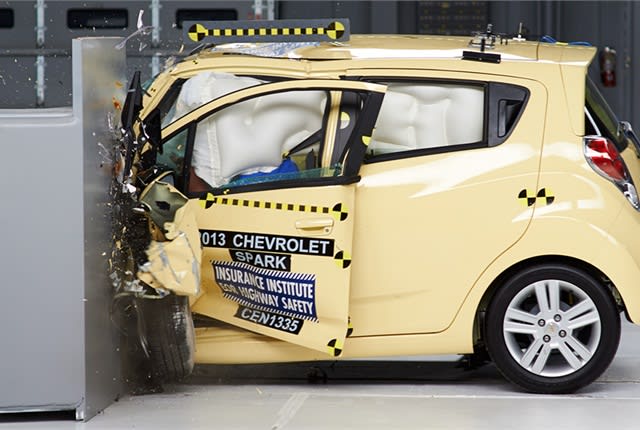
The Chevrolet Spark undergoes IIHS crash testing. Photo: IIHS.
The test is more difficult than the head-on crashes conducted by the government or the longstanding IIHS moderate overlap test because most of the vehicle's front-end crush zone is bypassed. That makes it hard for the vehicle to manage crash energy, and the occupant compartment can collapse as a result. Nevertheless, in many size categories, manufacturers have found ways to improve vehicle structures to meet this challenge, IIHS said.
"Small, lightweight vehicles have an inherent safety disadvantage. That's why it's even more important to choose one with the best occupant protection," said Joe Nolan, IIHS senior vice president for vehicle research. "Unfortunately, as a group, minicars aren't performing as well as other vehicle categories in the small overlap crash."
In contrast to the subcompact group's performance, most models in the small car category, which are a little larger, have done much better in the test. There are five “good” ratings and five “acceptable” ratings among 17 small cars that have been evaluated so far.
Originally posted on Automotive Fleet
More Safety

Clocks Fall Back Nov. 1. Is Your Fleet Ready for Earlier Darkness?
Clocks fall back Nov. 1. Help your fleet prepare for earlier darkness with quick checks for driver visibility, schedules, fatigue, and seasonal road hazards.
Read More →
Tips for Driving Safely on Halloween Night
This video features a reminder from the Connecticut Department of Transportation (DOT) and the Connecticut Police Chiefs Association, urging drivers to prioritize safety this Halloween.
Read More →
Mercedes Benz Tests CLA Occupant and Battery Protection in Side Impact Crash
Two CLA sedans traveling at 35 mph were used in a Mercedes-Benz crash test examining occupant protection and electric vehicle battery safety.
Read More →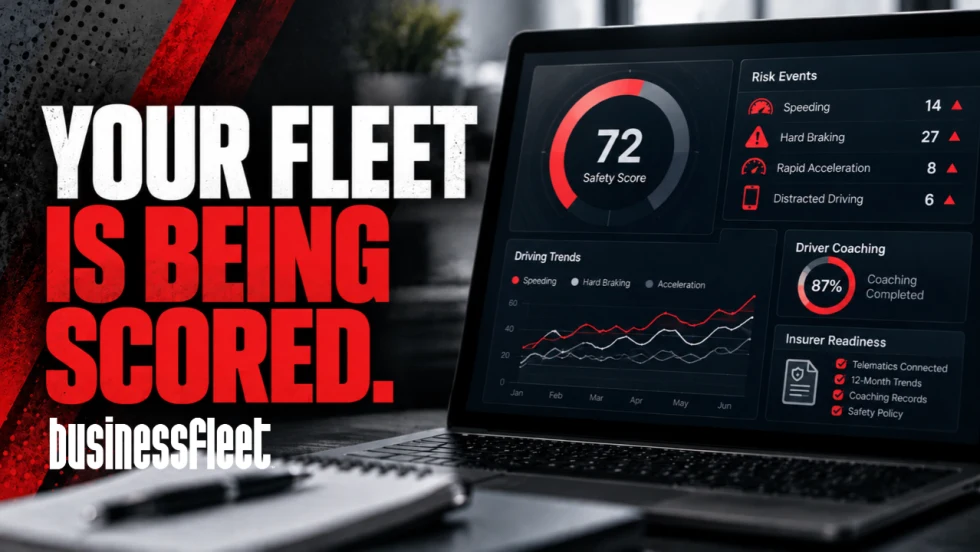
How Technology Can Help Fleet Owners Improve Insurability
Your fleet's telematics data could be the difference between getting insurance coverage and facing higher premiums or non-renewal. Here's what insurers are looking for and how fleets can use that data to make a stronger case at renewal.
Read More →
Simple Tire Checks That Help Keep Your Business Fleet Moving
A survey found that nearly one in every 10 passenger vehicles has at least one bald tire. What's more, 27% -- more than one in four -- of vehicles are driven with one or more severely under-inflated tires.
Read More →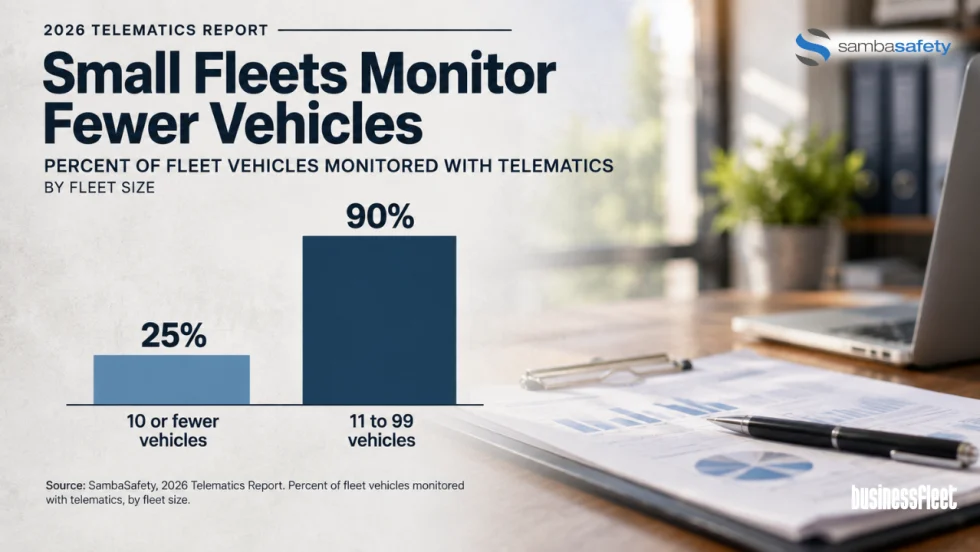
Small Fleets Lag in Telematics Coverage as Industry Moves Beyond Adoption
SambaSafety’s 2026 Telematics Report finds fleets with 10 or fewer vehicles monitor a much smaller share of their vehicles than larger operations, as the industry shifts its focus from collecting data to using it.
Read More →
Back-to-School Traffic Is Not the Risk Fleets Think It Is
Back-to-school traffic does not always mean more crashes. New Empiric Earth data shows why fleets should focus on when and where risk changes.
Read More →
Small Fleet, Big Exposure: How to Reduce Workers’ Comp Risks
For small fleets, one crash can trigger far more than vehicle damage. Here’s how stronger driver safety policies, training, maintenance, and technology can help reduce workers’ comp exposure.
Read More →
Who Makes the Call When Winter Weather Gets Dangerous?
Winter weather can quickly change a small fleet’s plans. Knowing when to reroute, delay, or stop can matter just as much as preparing the vehicles themselves.
Read More →
API Issues Refueling Safety Guidelines
The American Petroleum Institute offers a list of safe vehicle refueling guidelines, including ways to avoid potential problems with static electricity discharges in fall, winter, and early spring.
Read More →