


Video: Honda Fit Named Top Safety Pick
The subcompact car delivers an improved performance in the Insurance Institute for Highway Safety’s demanding small overlap test to qualify for the award.

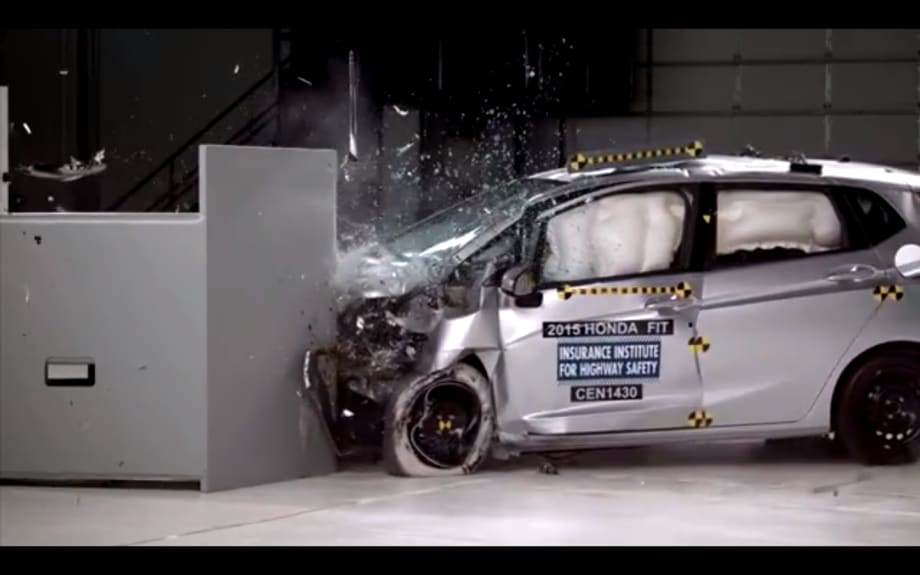
Photo: IIHS
The Insurance Institute for Highway Safety named the redesigned 2015 Honda Fit a Top Safety Pick.
The subcompact car earned an “acceptable” rating in the challenging IIHS small overlap test -- a significant improvement over the 2009-13 model, which was rated “poor.” With “good” ratings in the four other IIHS crash tests, the vehicle qualified for the Top Safety Pick award.
IIHS said it conducted two small overlap tests of the new Fit. In the first test, the bumper beam, a steel bar located behind the plastic bumper cover, broke free of the frame rail on the passenger side early in the crash. This caused much more of the crash energy to be absorbed by the driver side of the car, resulting in extensive intrusion into the occupant compartment and excessive upward movement of the steering column.
In response to that initial test, Honda engineers improved the strength of the bumper beam welds, and the company asked IIHS to test the car again. In the second test with the improved welds, the bumper beam stayed attached to the frame rail. Intrusion into the occupant compartment was reduced, and the steering column was much more stable, resulting in an “acceptable” rating, IIHS said. The rating applies to vehicles built after June 2014.
Honda will initiate a "product update" to replace the bumper beams on approximately 12,000 2015 Fits that were sold earlier this year, prior to the change to the bumper welds. Owners will be notified by mail, and dealers will do the work free of charge. This modification will significantly improve protection in small overlap crashes, IIHS said. Only cars with the replacement bumper beam earned the “acceptable” rating in the small overlap test and qualify for the Top Safety Pick designation.
"We commend Honda for its quick response to the test and for taking the additional step of replacing the bumper beams on early-production vehicles," said IIHS President Adrian Lund. "People who bought cars produced earlier in the year should take advantage of this free replacement to improve protection in small overlap crashes."
IIHS introduced the small overlap evaluation in 2012. In the test, 25 percent of a vehicle's front end on the driver side strikes a rigid barrier at 40 mph. The crash replicates what happens when the front corner of a vehicle collides with another vehicle or an object such as a tree or utility pole.
Originally posted on Automotive Fleet
More Safety
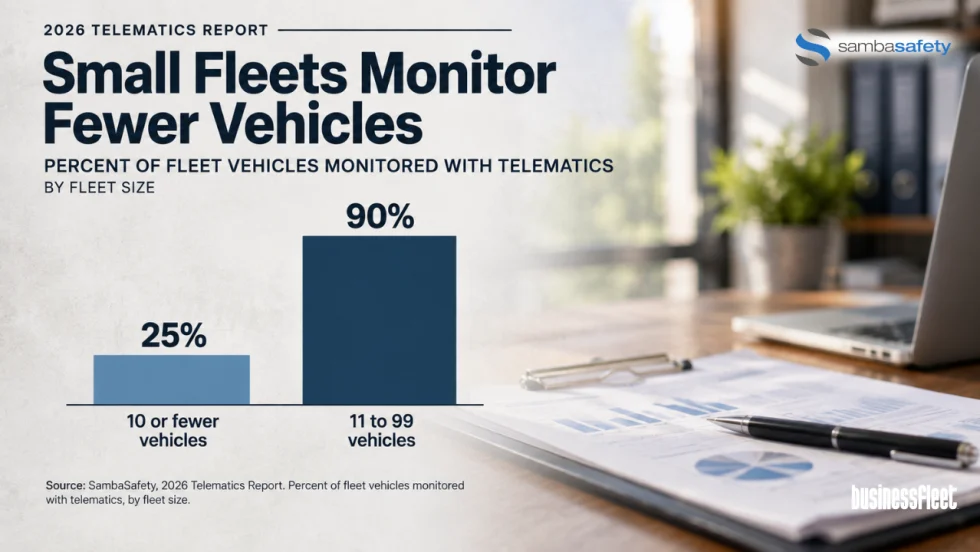
Small Fleets Lag in Telematics Coverage as Industry Moves Beyond Adoption
SambaSafety’s 2026 Telematics Report finds fleets with 10 or fewer vehicles monitor a much smaller share of their vehicles than larger operations, as the industry shifts its focus from collecting data to using it.
Read More →
Back-to-School Traffic Is Not the Risk Fleets Think It Is
Back-to-school traffic does not always mean more crashes. New Empiric Earth data shows why fleets should focus on when and where risk changes.
Read More →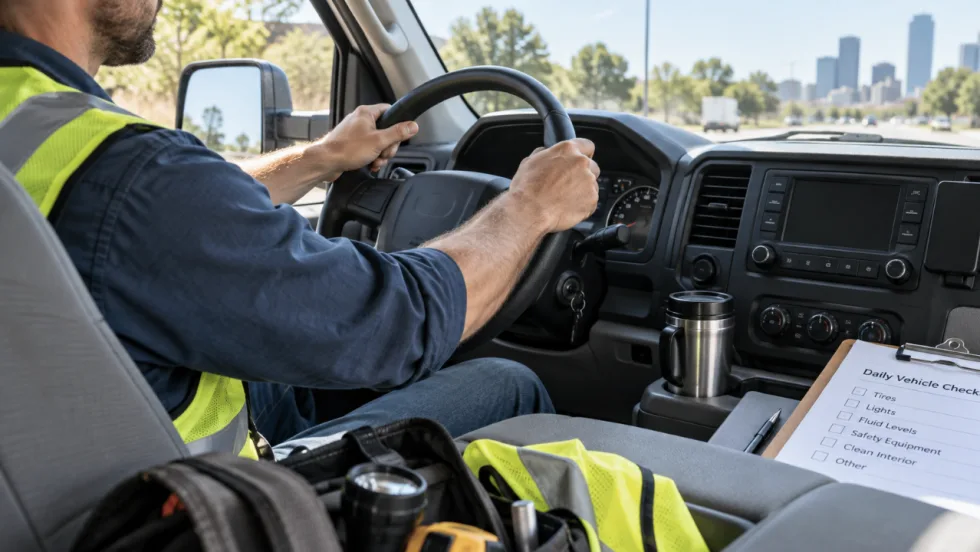
Small Fleet, Big Exposure: How to Reduce Workers’ Comp Risks
For small fleets, one crash can trigger far more than vehicle damage. Here’s how stronger driver safety policies, training, maintenance, and technology can help reduce workers’ comp exposure.
Read More →
Who Makes the Call When Winter Weather Gets Dangerous?
Winter weather can quickly change a small fleet’s plans. Knowing when to reroute, delay, or stop can matter just as much as preparing the vehicles themselves.
Read More →
API Issues Refueling Safety Guidelines
The American Petroleum Institute offers a list of safe vehicle refueling guidelines, including ways to avoid potential problems with static electricity discharges in fall, winter, and early spring.
Read More →
Winter Fleet Prep: Expert Tips to Keep Vehicles Running Smoothly
Cold weather can expose weak batteries, tires, fuel systems, and maintenance gaps fast. Use this winter fleet checklist to prepare trucks and drivers before temperatures drop.
Read More →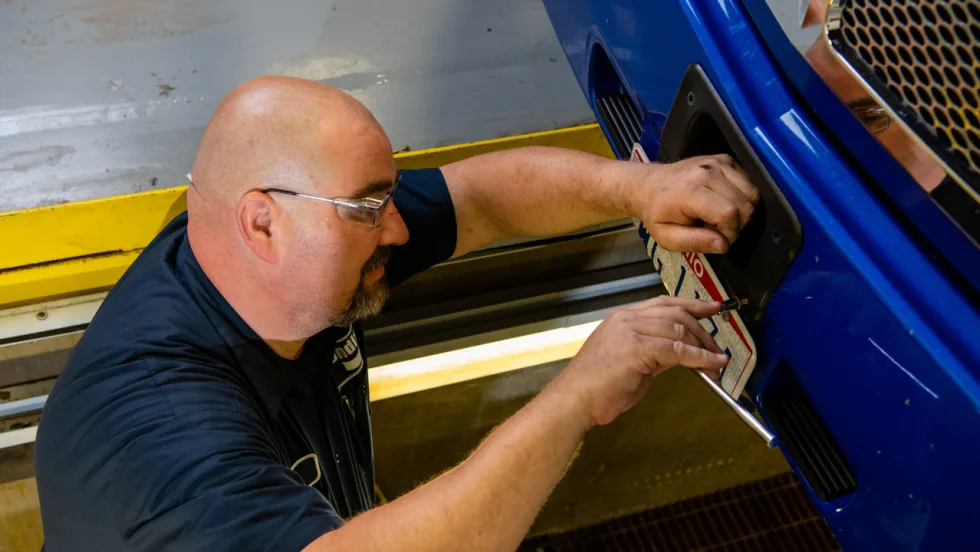
8 ADAS Maintenance Tips for Small Business Fleets From Bendix
A dirty camera, bad alignment, or one loose connection could quietly knock your fleet’s ADAS offline. Here’s what Bendix says to check.
Read More →
Developing Budget-Friendly Driver Safety Programs
From driver training and safety meetings to one-on-one coaching and incentive programs, several small fleets share how they have developed a safety culture with their drivers using low- to no-cost resources.
Read More →
A 20-Minute Safety Check for Small Fleets Before Operation Safe Driver Week
No safety department? No problem. Here's a practical checklist small fleet managers can use before Operation Safe Driver Week begins.
Read More →
Why Small Fleets Keep Getting Tripped Up by ELD Compliance
Roadcheck revealed a hard truth: most ELD violations aren't intentional. They're caused by small mistakes that can cost fleets time, money, and trust.
Read More →