


Is the U.S. Heading to Calif.-like Emissions Standards?
New federal air quality rules will affect hundreds more counties across the country, and fleets are in the cross hairs. Is your area on the list?

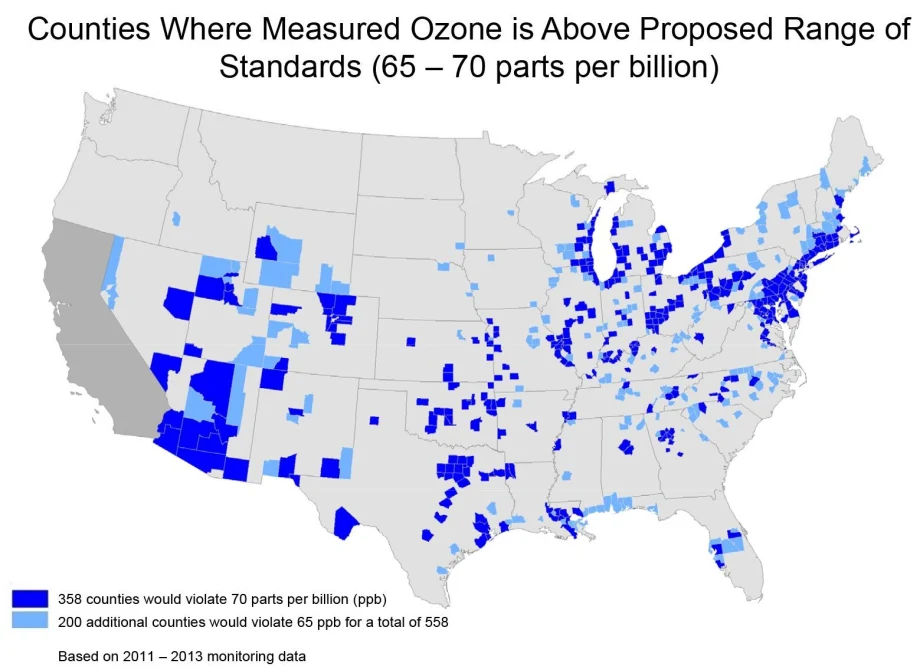
The federal government is tightening the Clean Air Act, and the new standards may affect fleets in as many as 558 counties.
You can tell a lot about a state through its nicknames. California, the Golden State, is also termed the Left Coast and the Land of Fruits and Nuts. Ah, California, where there is no line between movie stardom and politics, where hot tubbing is a sport and cops pull you over for faulty speakers. (I’m kidding on the last one).
Not surprisingly, many fold their arms and shake their heads at California’s perceived anti-business regulations, particularly when it comes to curtailing the emissions from cars, trucks and buses. It makes the writers of those rules, the California Environmental Protection Agency (CARB) and the South Coast Air Quality Management District (SCAQMD), easy whipping boys.
But when you understand that those beautiful blood-red California sunsets are in part caused by the worst pollution in the nation, you’ll know why those rules go above and beyond federal standards. “We lead the way and we take a lot of heat for it,” said Beth White, who oversees the implementation of CARB’s truck and bus regulations, in a recent conversation.
But while CARB’s overall mandate is to reduce pollution and protect the health of California citizens, it is also tasked with complying with nationwide standards under the federal Clean Air Act. If air quality does not attain a defined standard, then the state risks losing federal highway funds. This is a main driver behind the development and implementation of California’s Truck and Bus Regulation.
The much-maligned regulation, in development since 2008, governs diesel-powered vehicles of more than 14,000 lbs. GVWR. It outlines a schedule to de-fleet vehicles based on engine year in favor of cleaner burning, late-model engines, or retrofit those vehicles with diesel particulate filters (DPFs) to delay cycling to newer trucks. In any case, it covers hundreds of thousands of trucks, and it is costing fleets a lot of money.
But an interesting consequence might be benefiting California fleets on the way to compliance. The federal government is tightening the Clean Air Act, and the new standards will catch in its net many more jurisdictions around the country. In fact, if the EPA’s proposal to restrict the ozone standard to 65 to 70 parts per billion (ppb) comes to pass, 358 counties would violate 70 ppb, and 200 more counties would violate 65 ppb.
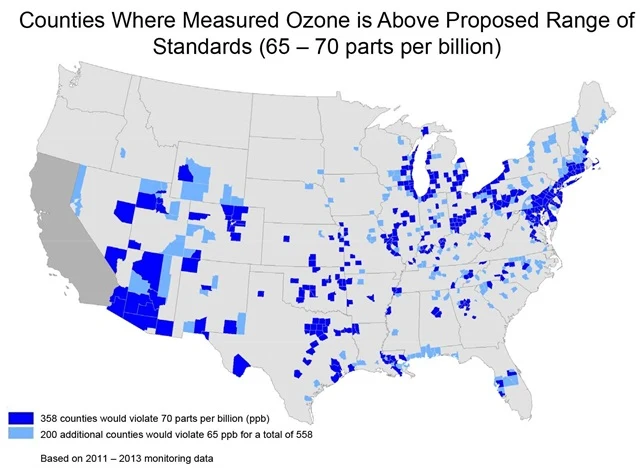
The federal government is tightening the Clean Air Act, and the new standards may affect fleets in as many as 558 counties.
That means hundreds more counties will need to find ways to comply with the Clean Air Act, and the act gives them the authority to do so. As a result, other states will look to enact regulations similar to CARB.
The Clean Air Act also provides states with time to meet the new standard, between 2020 and 2037, depending on the severity of their ozone problem. California, ironically, has been granted the most time (until 2037) to get there. Those dates are not as far in the future as you might think, especially because it takes time to improve ozone levels. Therefore, look for new rulemaking from states and counties soon.
California fleets are already on their way to compliance, mandated by the Truck and Bus Regulation. They’re reaching attainment by a combination of cycling out old trucks and retrofitting diesel particulate filters (DPFs), which buys time until final compliance.
But fleets in other parts of the country might not have the DPF option. According to Matt Schrap, president of California Fleet Solutions, an emissions consulting firm, the technology in aftermarket retrofits today generally would not bring diesel truck emissions into compliance with the latest rules.
“The DPF retrofits are really designed to control particulate matter,” Schrap said, adding that ozone improvement is specifically tied to nitrogen oxide (NOx) reduction, which is best served by buying new engines. Schrap said trucks (or engines) built during or after the 2004 model year - a key milestone in federal diesel standards - will likely be OK, though Schrap stressed that we'll only know for sure when the new regulations are announced, if in fact they enact them. "Those 2004 engines will fare better than a Nineties vintage engine for sure," Schrap said.
Schrap said trucks (or engines) built during or after the 2004 model year — a key milestone in federal diesel standards — will likely be OK, though we’ll only know for sure when the new regulations are announced. Any truck built to satisfy the 2007 and 2010 engine standards should be fine, he said.
It’s hard to say today exactly how the coming regulations will hurt fleets’ wallets in affected areas of the country. But if you’re running pre-2004 trucks, mark your calendars for Oct. 1, 2015, when the EPA will announce its final rule on the new standards.
Soon those same fleets that cast a jaundiced eye to California for so many years can look forward to some of the pain California fleets are going through now.
More Blog Posts
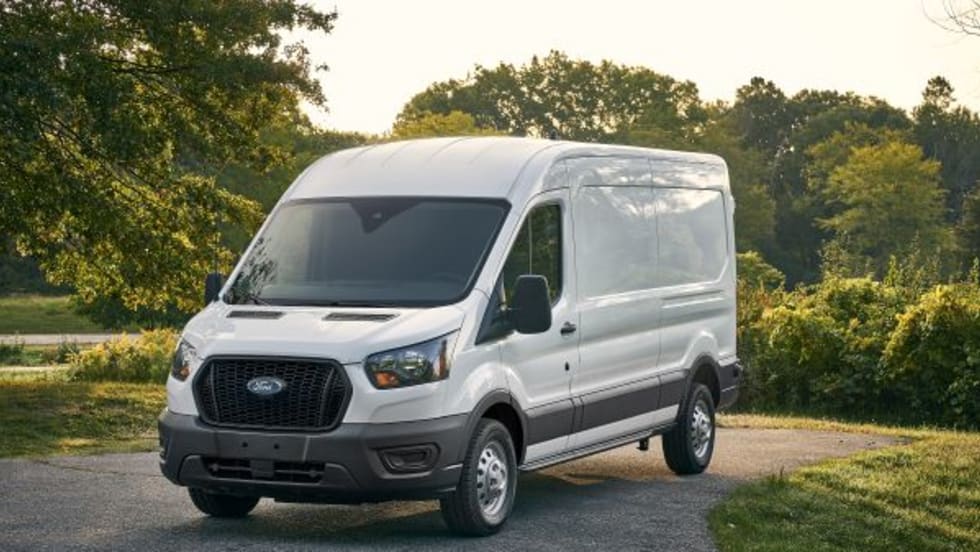
2021 Ford Transit Offers Versatility for Fleets
For the 2021-MY, Ford made ergonomic enhancements for drivers and added an available Parcel Delivery Package. This follows a major refresh in 2020, which added a Crew version, a new standard engine, standard active safety technologies, and embedded telematics to the Transit van family.
Read More →
Recognizing the Other Essential Drivers
Vocational and business fleet drivers don’t get the attention that truckers do. Yet they too are on the front lines, and their jobs often bring them into uncontrolled environments every day.
Read More →
It’s Time to Formulate an ADAS Game Plan
As proliferation of Advanced Driver Assistance Systems (ADAS) increases, skilled labor, equipment, and training costs will increase as well. Fleet operators can’t mitigate these financial burdens by cutting corners on ADAS recalibration and repairs.
Read More →
The Future is Electric, But…
With an increasing emphasis on emissions reductions mandates, will fleet operators get caught between clean technologies on their way out and an electric future that hasn’t yet arrived?
Read More →
6 Trend Lines from the 2019 Work Truck Show
From giant leaps in torque and towing to heavy duty truck personalization and chassis cab styling, these trends emerged from this year’s Work Truck Show in Indianapolis.
Read More →
They’re Coming for Your Diesel
In Southern California and other parts of the world, regulators are coalescing to ban, or severely curtail, diesel vehicles. There’s a growing disconnect with the mandates to green the environment and the availability of products and technologies to get us there.
Read More →
Hey Cannabis Companies, Welcome to Fleet
An industry is forming, and it needs help with fleet. In the meantime, the fleet industry should know that these new businesses are navigating extraordinary circumstances, which is forcing them to be better fleet operators pretty darn quick.
Read More →
Takeaways from the Fleet Forward Conference
Most attendees — from established fleets and vendors to new players that were only formed five years ago — didn’t know anyone. But that’s exactly the point.
Read More →
Is it Time to Rethink How Drivers Are Paid?
With the ELD rule affecting miles driven, and drivers’ duties increasingly including more than just driving the vehicle, what can be done to more accurately and fairly reflect a driver’s workday?
Read More →
Whatever Happened to CNG?
While the light-duty market for compressed natural gas vehicles has almost evaporated, new near zero emissions technology and drastic reductions in infrastructure costs have reinvigorated the market for medium- and heavy-duty applications — even for smaller fleets.
Read More →