


Longer Hold Times — Lower Costs?
Running your fleet vehicles longer isn't always the most cost-effective choice.

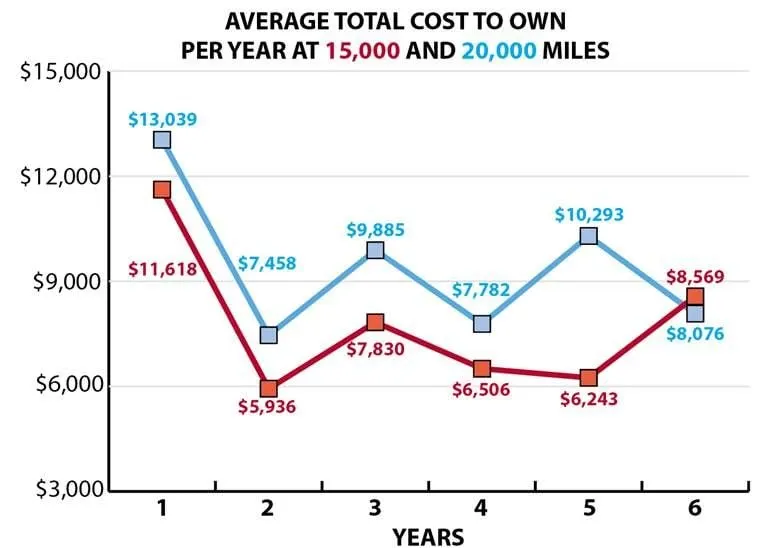
While depreciation might drop off a cliff and then slide gradually down as a car ages, depreciation is only one factor in the operating cost of a fleet vehicle. When all eight cost factors are calculated, including costs that increase and decrease over time, the Vincentric data shows that operating costs per year don’t move in a straight line.
It is an age-old question: Does it make financial sense to run fleet vehicles longer?
First, the answer varies by type of fleet. For rental fleets, it’s a question of managing depreciation along with potential customer service issues of a higher mileage rental car.
Commercial fleets, on the other hand, run vehicles longer than 36 months, so factors such as fuel, repair and maintenance costs weigh heavily in the total cost picture.
With this in mind, I asked the lifecycle cost experts at Vincentric to put together a cost-of-ownership analysis for vehicles from one to six years.
Vincentric crunched the numbers for 25 popular fleet vehicles in the 2014 model-year (with fleet-centric trim levels) in the compact, midsize, large sedan, compact crossover and half-ton pickup segments. Scenarios of 15,000 and 20,000 annual miles driven were collated.
The Vincentric data measures eight cost elements for more than 2,000 vehicle configurations, including depreciation, financing, fees and taxes, fuel, insurance, maintenance, opportunity cost and repairs. Data for this analysis was pulled on Jan. 28.
Depreciation Assumptions
When it comes to depreciation, the Vincentric data backs up commonly held assumptions that vehicle values drop off a cliff when driven off the lot and up to their second year of life. These vehicles depreciate at virtually the same rate in years three and four and then experience a slightly more pronounced depreciation in years five and six.
Car rental fleets (at least those running new risk vehicles) run vehicles on average 12 to 16 months, therefore they can’t avoid the depreciation hit. But commercial fleets have plenty of flexibility to go to years four, five, six and longer. Indeed, smaller fleets often do.
And for commercial fleets, it gets more complicated when adding in factors such as fuel, maintenance and repairs, the costs that creep up later in a vehicle's life that car rental fleets can avoid.
For fuel, the Vincentric analysis assigns a 3.5% inflation increase to fuel prices yearly. In this analysis, if you’re running your fleet vehicles 20,000 miles per year and holding them for six years, you’d pay an average of $521 more in year six than you did in year one.
This, of course, assumes fuel prices will rise — and discounting short-term fluctuations, no one is predicting they’re going to fall.
This analysis does not take into account any degradation of fuel economy as an engine ages. It is possible to lose 1% or more in miles per gallon per year.
In addition, new vehicles have better fuel economy than the ones they replace. Not only would you incur rising fuel premiums the longer you run your vehicles, you won’t realize the savings of switching to a more fuel-efficient vehicle.
Maintenance Matters
The waters are muddied further when adding in repairs and maintenance costs. Maintenance costs rise and fall from years one to six, while repair costs steadily rise. This is an issue all commercial fleets must manage, as well as rental fleets running pre-owned units.
In the 15,000-mile-a-year analysis, maintenance costs rise incrementally in years one and two and then jump dramatically in year three, only to decline in years four and five. In fact, on average, the maintenance expense in year five is even lower than for year one.
But when we reach year six, maintenance costs incur their most dramatic jump. For the life of the vehicles surveyed, on average, nearly 44% of maintenance costs happen in year six alone.
This jump is illustrated by the intervals at which the more common maintenance items occur:
30,000 miles: air and cabin filters
45,000 miles: disc brakes, front shocks/struts, tires
60,000 miles: batteries
90,000 miles: drum brakes, rear shocks/struts, tires
100,000 miles: clutch, cooling system, timing belt
The higher the annual mileage, the sooner those substantial maintenance costs arrive. Hence maintenance costs at 20,000 miles take a big hit in year three, but drop steeply in years three and four. The biggest hit comes in year five, when 39% of all maintenance costs occur in the average six-year lifecycle.
In terms of repair costs, Vincentric bases them on the cost of a zero-deductible extended warranty that takes into account the manufacturer's bumper-to-bumper warranty. Therefore, most vehicles start to incur repair costs in year three. That figure nearly triples by year six.
Adding it All Up
So when you add up all eight cost factors, the average total costs of ownership (TCO) do not uniformly improve moving forward, but instead spike and drop. Check out the enclosed chart, which tracks average TCO for 15,000 miles and 20,000 miles per year for the 25 vehicles selected.
For the vehicles in the 15,000-mile band, years three and six experience TCO spikes, while years two, four and five are cheaper to run. In the 20,000-mile band, the TCO spikes come in years three and five.
What does it all mean to you? Should you then extend your fleet cycles accordingly and de-fleet before the big TCO hit? Remember, although the Vincentric data is based on a compilation of real-world data points, this is nonetheless a theoretical analysis, and there are many other external factors to consider.
However, armed with this data, you can now make more informed choices based on your specific needs.
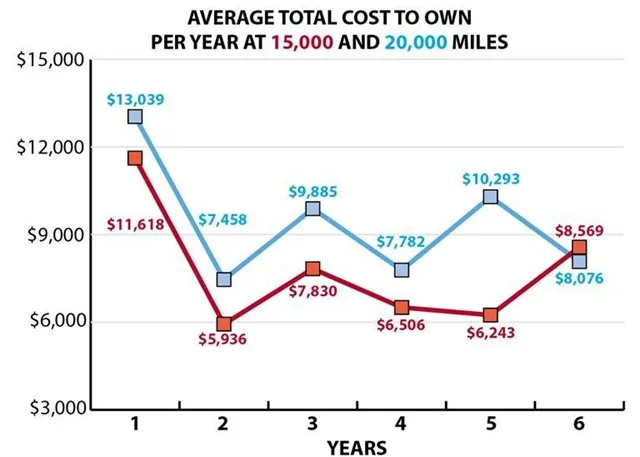
While depreciation might drop off a cliff and then slide gradually down as a car ages, depreciation is only one factor in the operating cost of a fleet vehicle. When all eight cost factors are calculated, including costs that increase and decrease over time, the Vincentric data shows that operating costs per year don’t move in a straight line.
More Blog Posts
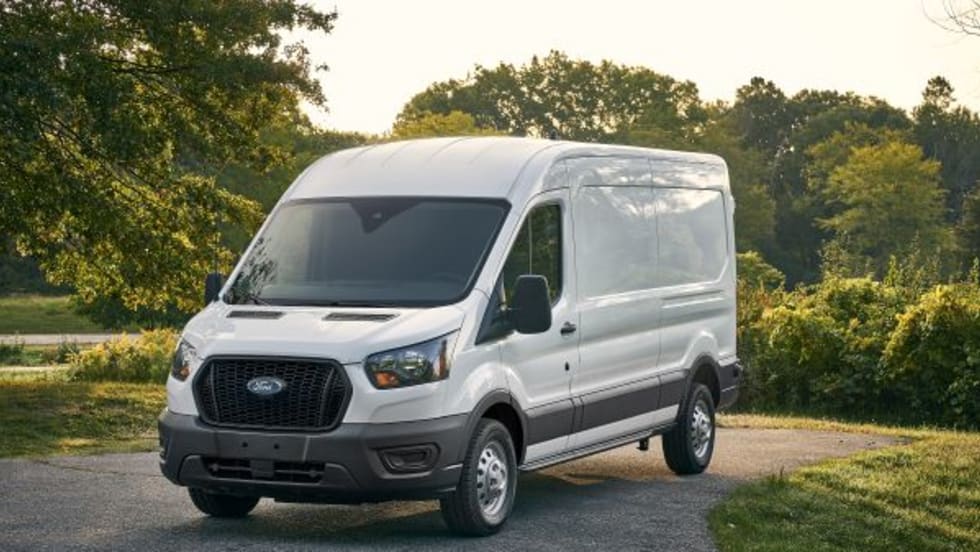
2021 Ford Transit Offers Versatility for Fleets
For the 2021-MY, Ford made ergonomic enhancements for drivers and added an available Parcel Delivery Package. This follows a major refresh in 2020, which added a Crew version, a new standard engine, standard active safety technologies, and embedded telematics to the Transit van family.
Read More →
Recognizing the Other Essential Drivers
Vocational and business fleet drivers don’t get the attention that truckers do. Yet they too are on the front lines, and their jobs often bring them into uncontrolled environments every day.
Read More →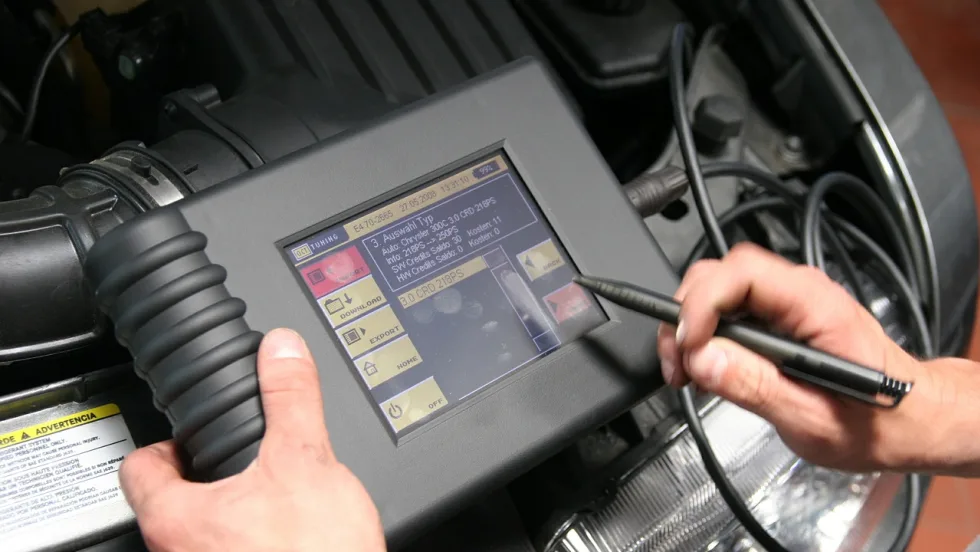
It’s Time to Formulate an ADAS Game Plan
As proliferation of Advanced Driver Assistance Systems (ADAS) increases, skilled labor, equipment, and training costs will increase as well. Fleet operators can’t mitigate these financial burdens by cutting corners on ADAS recalibration and repairs.
Read More →
The Future is Electric, But…
With an increasing emphasis on emissions reductions mandates, will fleet operators get caught between clean technologies on their way out and an electric future that hasn’t yet arrived?
Read More →
6 Trend Lines from the 2019 Work Truck Show
From giant leaps in torque and towing to heavy duty truck personalization and chassis cab styling, these trends emerged from this year’s Work Truck Show in Indianapolis.
Read More →
They’re Coming for Your Diesel
In Southern California and other parts of the world, regulators are coalescing to ban, or severely curtail, diesel vehicles. There’s a growing disconnect with the mandates to green the environment and the availability of products and technologies to get us there.
Read More →
Hey Cannabis Companies, Welcome to Fleet
An industry is forming, and it needs help with fleet. In the meantime, the fleet industry should know that these new businesses are navigating extraordinary circumstances, which is forcing them to be better fleet operators pretty darn quick.
Read More →
Takeaways from the Fleet Forward Conference
Most attendees — from established fleets and vendors to new players that were only formed five years ago — didn’t know anyone. But that’s exactly the point.
Read More →
Is it Time to Rethink How Drivers Are Paid?
With the ELD rule affecting miles driven, and drivers’ duties increasingly including more than just driving the vehicle, what can be done to more accurately and fairly reflect a driver’s workday?
Read More →
Whatever Happened to CNG?
While the light-duty market for compressed natural gas vehicles has almost evaporated, new near zero emissions technology and drastic reductions in infrastructure costs have reinvigorated the market for medium- and heavy-duty applications — even for smaller fleets.
Read More →