


Safeguarding Your Business with Brokers
While the high-profile bankruptcy of Atlas Choice has left many car rental companies wary of working with brokers, rental companies can take steps to protect themselves and ensure a productive relationship.

Today, car rental companies doing any amount of inbound international business publish rates on dozens of bookings sites. These sites are run by third-party consolidators — brokers — and have offered an increasingly important channel to not only the major car rental companies, but also independents that can’t participate in the “traditional” online travel agency (OTA) model offered by the likes of Expedia and Priceline.
But when car rental brokerage Atlas Choice declared bankruptcy last December, car rental companies got skittish, prompting them to wonder about the market dynamics at play. What’s really going on?
“Too many brokers got into the market thinking they could gain business through smarter SEO and use of Google AdWords,” says one international car rental operator. “There are too many brokers and too many RACs chasing not enough bookings.”
This operator adds that an increasingly larger group of brokers publishes rates for too many rental companies, which is helping to drive rates down to unsustainable levels in many markets.
The increased competition is also pushing up the brokers’ costs to acquire bookings — Google AdWords cost per click has gone from $3 five years ago to $15 to $20, and even $40 in crowded markets today. The effect is to shrink commissions for smaller brokers and thus profit margins, which are adding to suppliers’ fears of future insolvencies and nonpayment.
“Brokers need scale and multi-channel distribution to protect their businesses, and any startup that thinks it can ramp up through paid clicks is wrong,” says Bobby Healy, chief technology officer of CarTrawler.
Similar to the plate tectonics that merged car rental companies, the broker market is seeing signs of consolidation as well. However, rental companies shouldn’t think that this will dampen competition.
“It’s about customers seeking value, whether you use a broker or go direct,” says consultant Mary Jane Wells. “Customers are going to comparison shop. That’s not going away. There are so many methods to find the best rental for their needs — customers will continue to explore all avenues online and over the phone.”
So what can car rental companies do to not only protect themselves but also gain the most out of their broker relationships? The first rule of engagement is to research broker companies.
“Do your homework, credit check the brokers you work with,” says Alison Lee of Bluebird Auto Rental Systems and a former car rental purchasing manager in Europe. “If that is too costly, speak to colleagues that already work with them to find out their credit history.”
Lee also recommends investigating brokers on business information sites such as Endole.co.uk to ascertain their investors and cash positions, and to check their work histories and associations on LinkedIn.
Understand a broker’s model: Are its profits primarily from selling an insurance-type product? Does it rely too heavily on paid clicks? “Car hire operators should think carefully about brokers that are selling like this in the market,” Healy says. “Their costs are higher than their revenue, and that’s not the definition of a sustainable business model.”
When starting to do business with brokers, Lee and others suggest asking the broker to establish a line of credit that the rental company could draw on, which would provide peace of mind regarding the potential for nonpayment of prepaid reservations.
Operators should be cautious of working with new and less established brokers on a prepaid basis, says Richard Lowden of Green Motion. “If you are unsure of the substance of the broker and their financial standing, then start the relationship off with a pay-on-arrival product,” he says. “There is no doubt that broker channels offer great opportunities for operators, but as with everything in business, these opportunities must be managed carefully.”
When you begin prepayments, don’t feel the need to give brokers your lowest prepaid rate until you’ve developed a payment history with them. Then, after you get comfortable with them, “If they want cheaper rates, give them a volume target and kick in the lower rates when they hit it,” Lee says.
Lee also suggests discussing the possibility of “partial prepay rates,” in which the customer pays a “deposit” when booking, which is actually the broker’s margin. The customer then pays the net rate at the rental counter when he or she picks up the car. “It is a far better arrangement for everyone — including the brokers — as they do not have the accounts payable/receivable responsibility for each transaction,” she says.
In any scenario, the operator should view brokers as its partners, because they are. And both parties need to work together to serve the rental customer. “Make it easy and transparent, and a good customer experience,” Wells says. “That’s the future; that’s the expectation.”
More Blog Posts

2021 Ford Transit Offers Versatility for Fleets
For the 2021-MY, Ford made ergonomic enhancements for drivers and added an available Parcel Delivery Package. This follows a major refresh in 2020, which added a Crew version, a new standard engine, standard active safety technologies, and embedded telematics to the Transit van family.
Read More →
Recognizing the Other Essential Drivers
Vocational and business fleet drivers don’t get the attention that truckers do. Yet they too are on the front lines, and their jobs often bring them into uncontrolled environments every day.
Read More →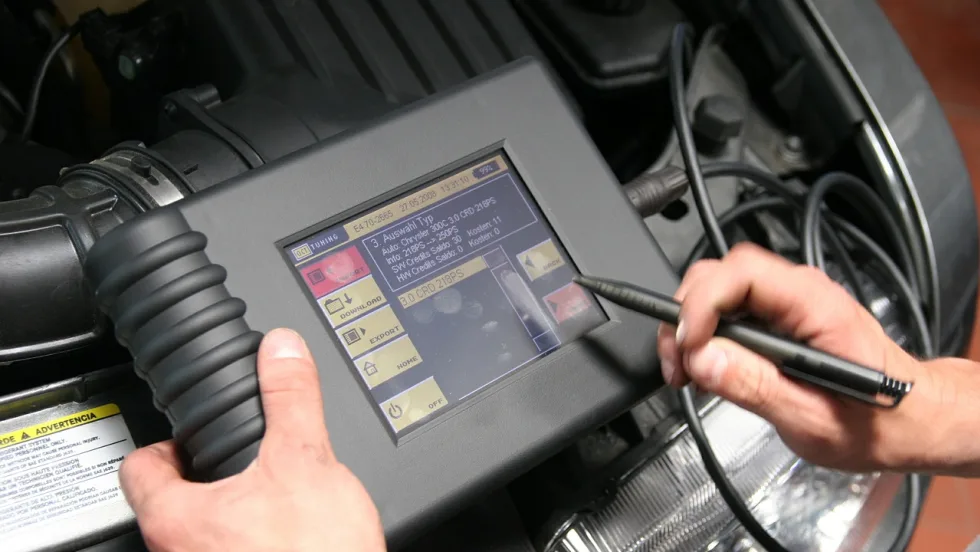
It’s Time to Formulate an ADAS Game Plan
As proliferation of Advanced Driver Assistance Systems (ADAS) increases, skilled labor, equipment, and training costs will increase as well. Fleet operators can’t mitigate these financial burdens by cutting corners on ADAS recalibration and repairs.
Read More →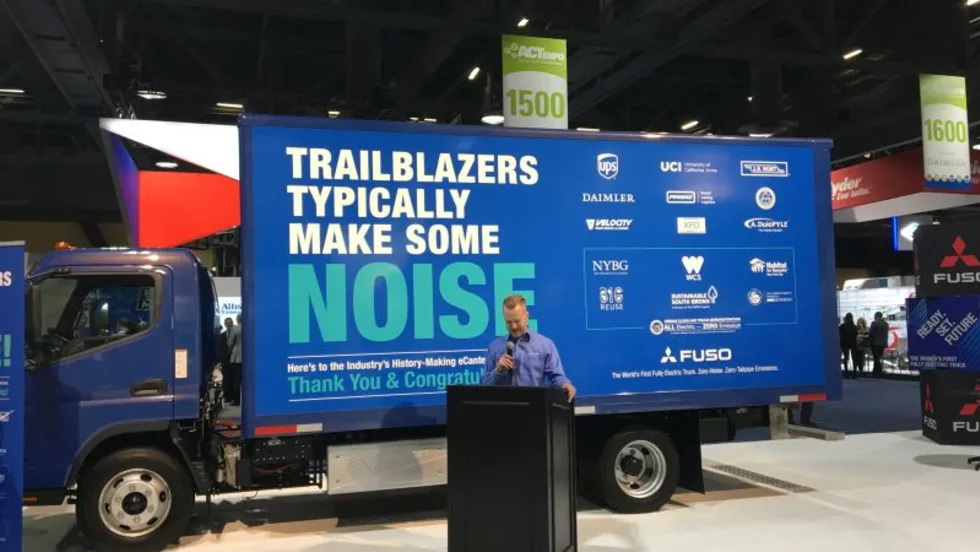
The Future is Electric, But…
With an increasing emphasis on emissions reductions mandates, will fleet operators get caught between clean technologies on their way out and an electric future that hasn’t yet arrived?
Read More →
6 Trend Lines from the 2019 Work Truck Show
From giant leaps in torque and towing to heavy duty truck personalization and chassis cab styling, these trends emerged from this year’s Work Truck Show in Indianapolis.
Read More →
They’re Coming for Your Diesel
In Southern California and other parts of the world, regulators are coalescing to ban, or severely curtail, diesel vehicles. There’s a growing disconnect with the mandates to green the environment and the availability of products and technologies to get us there.
Read More →
Hey Cannabis Companies, Welcome to Fleet
An industry is forming, and it needs help with fleet. In the meantime, the fleet industry should know that these new businesses are navigating extraordinary circumstances, which is forcing them to be better fleet operators pretty darn quick.
Read More →
Takeaways from the Fleet Forward Conference
Most attendees — from established fleets and vendors to new players that were only formed five years ago — didn’t know anyone. But that’s exactly the point.
Read More →
Is it Time to Rethink How Drivers Are Paid?
With the ELD rule affecting miles driven, and drivers’ duties increasingly including more than just driving the vehicle, what can be done to more accurately and fairly reflect a driver’s workday?
Read More →
Whatever Happened to CNG?
While the light-duty market for compressed natural gas vehicles has almost evaporated, new near zero emissions technology and drastic reductions in infrastructure costs have reinvigorated the market for medium- and heavy-duty applications — even for smaller fleets.
Read More →