


Why is Ford Killing the E-Series?
The workhorse van is being phased out in the coming years in favor of the Transit. The move speaks to the “Europeanization” of the North American van market. Start “right spec’ing” now.

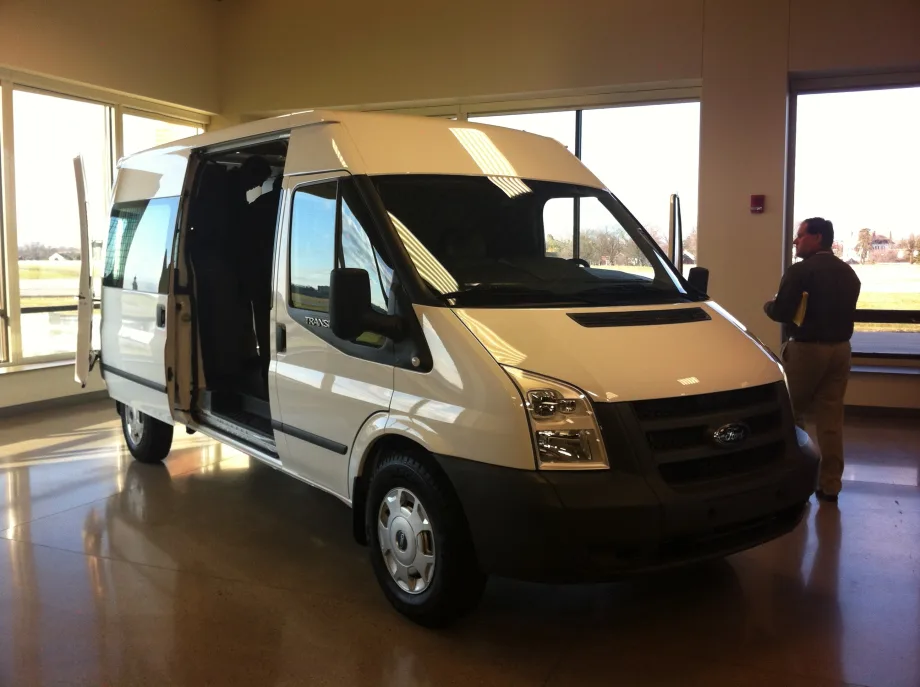
The Ford Transit van, seen here in its present global incarnation, is being re-engineered for the North American commercial market in anticipation of its launch in 2013.
The Ford Transit van, seen here in its present global incarnation, is being re-engineered for the North American commercial market in anticipation of its launch in 2013.
Ford invited our small club of fleet- and commercial-minded journalists yesterday to tour the Ford Rouge Center in Dearborn, Mich., home of the F-150, and put us in commercial vehicles on the Proving Track. While it’s always good to put product through its paces, the big news was with a vehicle we could not yet drive and only view: the Ford Transit van.
The Transit is being brought from Europe in calendar year 2013. The arrival of the Transit spells the end of the E Series van. That’s right, the E Series — the Econoline, the workhorse that sold 8 million units in 50 years of service — is being put out to pasture.
While the first Transit model arrives in 2013, the E Series won’t meet its maker in one fell swoop; it’ll stick around for a while as Transit sales ramp up and more Transit model choices come online. (The E Series cutaway will stick around even longer, Ford says. RVer’s, you can rest easy.)
Ford is fixing up the baby room for its new arrival, investing $1.1 billion in its Kansas City plant to build the Transit stateside. Obviously, this is a high-volume move for Ford.
But why kill the E Series? It’s more about what replaces it — and a new philosophy in how we will use vans in America. First, the Transit fits Ford’s (and every automaker’s) new manufacturing philosophy. As automakers move to global platforms, so will Ford’s commercial vans. The Transit has 6 million in sales in its own right and is already available in half the world. It will be built on one of Ford’s 12 global platforms, which makes much more sense from a manufacturing standpoint.
From an end-user standpoint, the Transit promises to be a van for all seasons and reasons, with many more choices for wheelbases, roof heights and engines than would’ve been possible in the E Series.
Even more so, it’s about fuel economy — Ford expects the next-gen Transit to achieve a 25% improvement over a comparable E Series. Put “lightweighting” in your vocabulary — it’s one of the ways manufacturers are continuing to reap even better fuel economy out of an internal combustion engine. The Transit is 300 lbs. lighter than the E Series.
Ford has been spearheading this new philosophy with its penetration of the Transit Connect, the small European van that tapped into an unsatisfied niche of users needing a nimble delivery vehicle. The TC passenger version is basically re-inventing the taxi market as well.[PAGEBREAK]
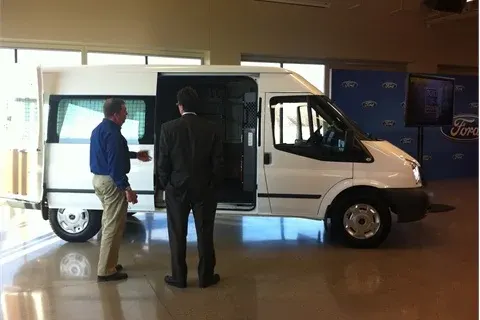
Other OEMs are already out with similar product or in planning. Nissan launched its NV van in January of 2011 and Chrysler will bring either or both the Fiat Ducato and Doblo vans from Europe. In the meantime, the smaller Ram cargo van is ready to launch. Of course, the Sprinter has been available in the U.S. for 10 years, and continues as a high-end niche van under a Mercedes badge.
The move is parallel to the shift on the consumer side from SUV to crossover. When gas prices got ridiculous, we woke up to the fact that we could get the kids around without big heavy bodies on hulking steel frames. For those thinking, however, that the Transit is some effete Euro-poseur in its capabilities, think again. Ford is putting the Transit through rigorous testing to meet or exceed what the E Series could do.
Another wrinkle: 5% of E-series vans were sold to consumers. Ford is expecting to grow that share with the Transit, perhaps even as high as 30%. A lot of those consumer sales will come from the recreational market; especially the toy haulers, outdoorspeople and weekend warriors. The Transit has functionality for those applications — mainly cargo area and walk-in height — that the E-Series never did. A higher retail market share will be a good thing for residual values.
If I have one concern, it’s this: There are plenty of van users who are perfectly happy with the E-Series. They like its capabilities, availability and the vast network of dealers that can service them. And they like the price. Van customers have told me they haven’t considered the new van models out there primarily because of initial cost — even though they know those van models will get better fuel economy.
At the event, I asked Ford engineers and marketing folk if the Transit’s price point would come close to the E Series. Of course, no one would talk price this far out. The Transit will surely be competitive on price to the new van offerings from other automakers.
Ford execs made sure to point out that the Transit will present a better overall value proposition when considering functionality, fuel economy and resale value. And they made sure to point out that Ford has and will be working with fleets all along the way to Transit’s U.S. launch to match the needs of this market.
But this value proposition works better for larger fleets, which are more inclined to lease and cycle out of its vehicles quicker. For smaller fleets, in which initial costs represent a greater part of their fleet budget, it’s harder to swallow.
Really, fleets have no choice but to get onboard because this is where the van market is headed. It’s time to change your mindset and make the case for lifecycle cost over initial cost. With fuel prices always an issue today, it’s time to rethink the attitude that you can buy a truck or van that exceeds your payload or towing capacity, but it’s good to have just in case. Today, the vehicle has to be right-spec’d to the task.
You do have choices. Perhaps the smaller Transit Connect will do the job for some applications and the Transit for others; similarly, you could move from a pickup into a van for other applications. And if you still want something similar to the E Series, you can move to GM’s Express/Savana vans.
You now have even more choices and opportunities to keep costs down. You just need to do your homework to get there.
More Blog Posts
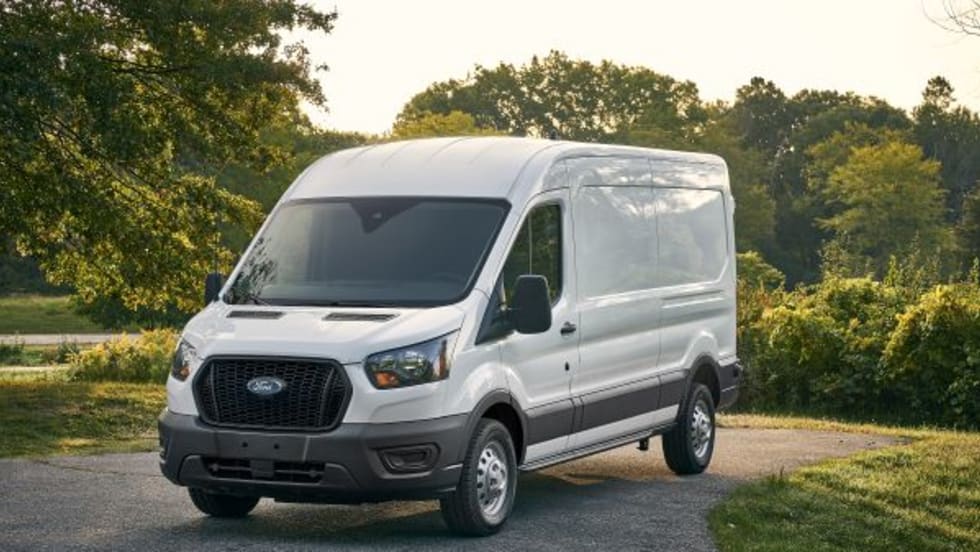
2021 Ford Transit Offers Versatility for Fleets
For the 2021-MY, Ford made ergonomic enhancements for drivers and added an available Parcel Delivery Package. This follows a major refresh in 2020, which added a Crew version, a new standard engine, standard active safety technologies, and embedded telematics to the Transit van family.
Read More →
Recognizing the Other Essential Drivers
Vocational and business fleet drivers don’t get the attention that truckers do. Yet they too are on the front lines, and their jobs often bring them into uncontrolled environments every day.
Read More →
It’s Time to Formulate an ADAS Game Plan
As proliferation of Advanced Driver Assistance Systems (ADAS) increases, skilled labor, equipment, and training costs will increase as well. Fleet operators can’t mitigate these financial burdens by cutting corners on ADAS recalibration and repairs.
Read More →
The Future is Electric, But…
With an increasing emphasis on emissions reductions mandates, will fleet operators get caught between clean technologies on their way out and an electric future that hasn’t yet arrived?
Read More →
6 Trend Lines from the 2019 Work Truck Show
From giant leaps in torque and towing to heavy duty truck personalization and chassis cab styling, these trends emerged from this year’s Work Truck Show in Indianapolis.
Read More →
They’re Coming for Your Diesel
In Southern California and other parts of the world, regulators are coalescing to ban, or severely curtail, diesel vehicles. There’s a growing disconnect with the mandates to green the environment and the availability of products and technologies to get us there.
Read More →
Hey Cannabis Companies, Welcome to Fleet
An industry is forming, and it needs help with fleet. In the meantime, the fleet industry should know that these new businesses are navigating extraordinary circumstances, which is forcing them to be better fleet operators pretty darn quick.
Read More →
Takeaways from the Fleet Forward Conference
Most attendees — from established fleets and vendors to new players that were only formed five years ago — didn’t know anyone. But that’s exactly the point.
Read More →
Is it Time to Rethink How Drivers Are Paid?
With the ELD rule affecting miles driven, and drivers’ duties increasingly including more than just driving the vehicle, what can be done to more accurately and fairly reflect a driver’s workday?
Read More →
Whatever Happened to CNG?
While the light-duty market for compressed natural gas vehicles has almost evaporated, new near zero emissions technology and drastic reductions in infrastructure costs have reinvigorated the market for medium- and heavy-duty applications — even for smaller fleets.
Read More →