


Revised CARB Plan Includes $150 Million For Heavy Duty Vehicles
CARB recently approved a revised $363 million funding plan that includes $150 million for heavy-duty vehicles and off-road equipment, aimed at putting more clean vehicles in disadvantaged communities.

The $150 million for a range of heavy-duty vehicle and off-road equipment includes funding for advanced technology demonstration projects and zero-emission buses for transit agencies and rural school districts.
Photo: Bobit
The California Air Resources Board recently approved a revised $363 million funding plan that includes $150 million for heavy-duty vehicles and off-road equipment, aimed at putting more clean vehicles in disadvantaged communities.
The revised plan for fiscal year 2016-2017 keeps much of the original funding intact while addressing the smaller budget appropriation of $363 million under AB 1613 and additional direction from the California legislature.
“The investment of $360 million from our cap-and-trade program for these low-carbon transportation projects will continue to drive the market for new technologies, and put more ultra-clean and zero-emission trucks, buses and cars into the communities throughout California that need them the most,” said Mary D. Nichols, CARB chair.
The $150 million for a range of heavy-duty vehicle and off-road equipment includes funding for advanced technology demonstration projects and zero-emission buses for transit agencies and rural school districts.
Also included is a voucher incentive project to encourage commercial deployment of hybrid, low-NOx and zero-emission trucks, buses and engines, and large-scale pilot projects to commercialize zero-emission trucks and buses.
CARB also voted to increase the maximum incentive amount for the Low NOx Engine Incentives with renewable fuel to $25,000 per truck. In total, these heavy-duty investments are aimed at bringing the cleanest trucks and buses to California’s most impacted communities, transportation corridors, and freight hubs.
Low-income residents often live in areas of California that are most affected by air pollution, which is why the investments are aimed at disadvantaged communities. The revised version of the plan doubles the funding for scrap-and-replace pilot projects that could allow residents of low-income communities to afford cleaner vehicles.
The increase will ensure that existing programs in the San Joaquin Valley and South Coast air districts will have funding beyond the fiscal year and provides for the expansion of similar programs to other interested air districts.
Originally posted on Automotive Fleet
More Operations

Is Your Fleet Making Your Business Money or Quietly Costing It?
Your vehicles keep your business moving, but are they helping your bottom line? From underused vehicles and unexpected downtime to the real cost of completing a job, here's how to find out whether your fleet is working as hard as your business needs it to.
Read More →
Les Schwab Tires Launches Foundation With $100,000 for Community Recovery
Les Schwab Tires launches a foundation with $100,000 to support recovery for Silver Rail Elementary and the Bend community following a school shooting.
Read More →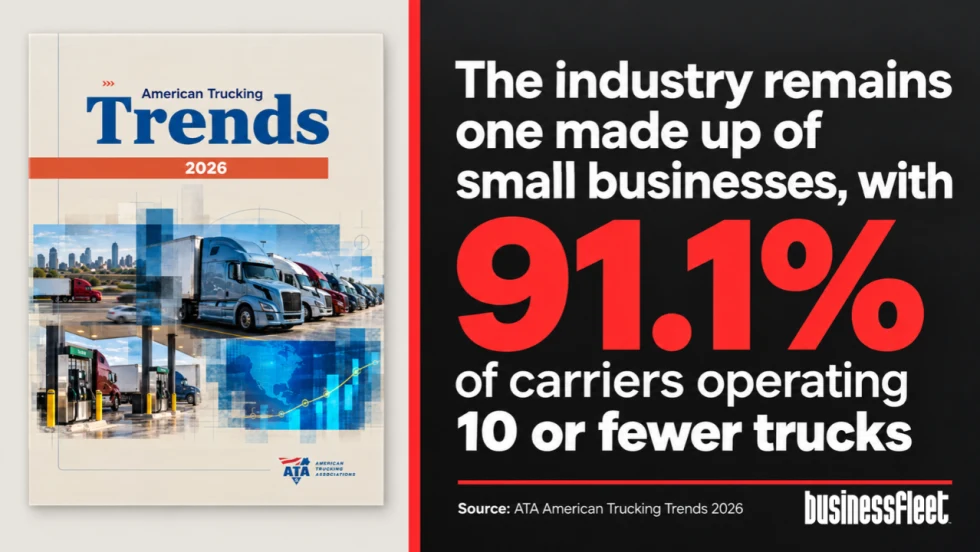
Small Carriers Make Up 91% of Trucking Industry as Freight Revenue Rises
The latest American Trucking Associations report shows modest gains in freight tonnage and revenue, with businesses operating 10 or fewer trucks accounting for most carriers.
Read More →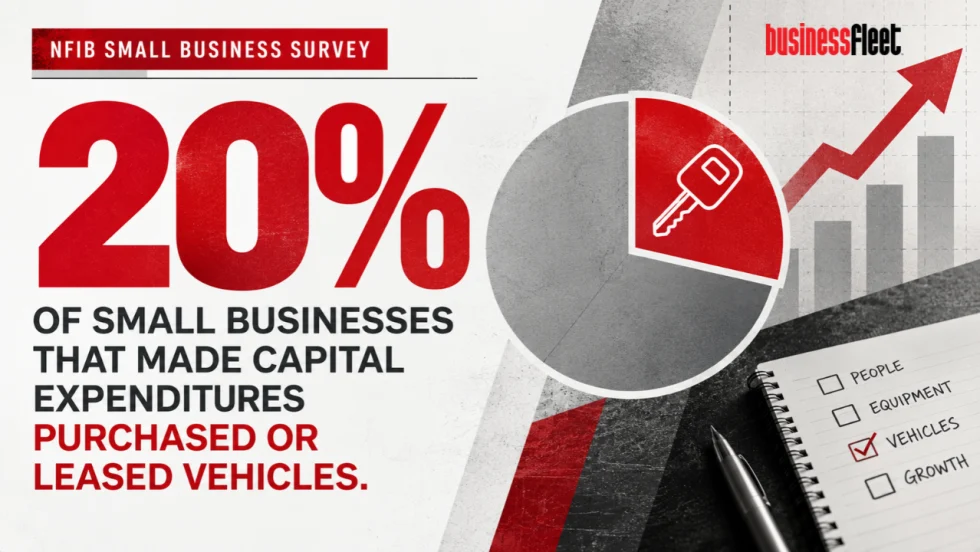
Small Business Vehicle Purchases Slip as Owners Pull Back on Expansion
New NFIB survey data shows fewer small businesses purchasing or leasing vehicles as inflation, hiring challenges, and borrowing costs weigh on expansion plans.
Read More →
Growing Fleets, Bigger Challenges | Business Fleet Brief
From growing pains and weather risks to workers' comp, new vehicles, and telematics gaps, this month's Business Fleet Brief covers what small fleets need to know.
Read More →
Your Business Grew, Did Your Fleet Management Program Grow With It?
Small fleets often grow faster than the processes supporting them. Here’s how to recognize when informal fleet management has stopped working and what to formalize first.
Read More →
Small Fleet Lessons That Can Make a Big Difference | Business Fleet Brief
From used-vehicle costs and lost keys to safety tech and replacement planning, this Business Fleet Brief breaks down practical lessons that can make a big difference for small fleets.
Read More →
Automotive Fleet Opens 2026 Personal Use Survey for Commercial Fleet Managers
Less than two weeks left! Commercial and corporate fleet managers are invited to share how their organizations handle company vehicle personal-use policies, charges, and driver eligibility.
Read More →
You Do Not Have to Be a Big Business to Build the Next Generation
Small businesses may not have the biggest budgets or the biggest fleets, but they do have something powerful. They are close to the communities they serve, and that makes them uniquely equipped to help shape the next generation of automotive and fleet talent.
Read More →
How Small Fleets Can Stop Losing Time to Lost Keys
Lost keys can mean delayed jobs, idle vehicles and unexpected replacement costs. See how small fleets are using digital key management to keep vehicles moving and improve accountability.
Read More →