From driver training and safety meetings to one-on-one coaching and incentive programs, several small fleets share how they have developed a safety culture with their drivers using low- to no-cost resources.
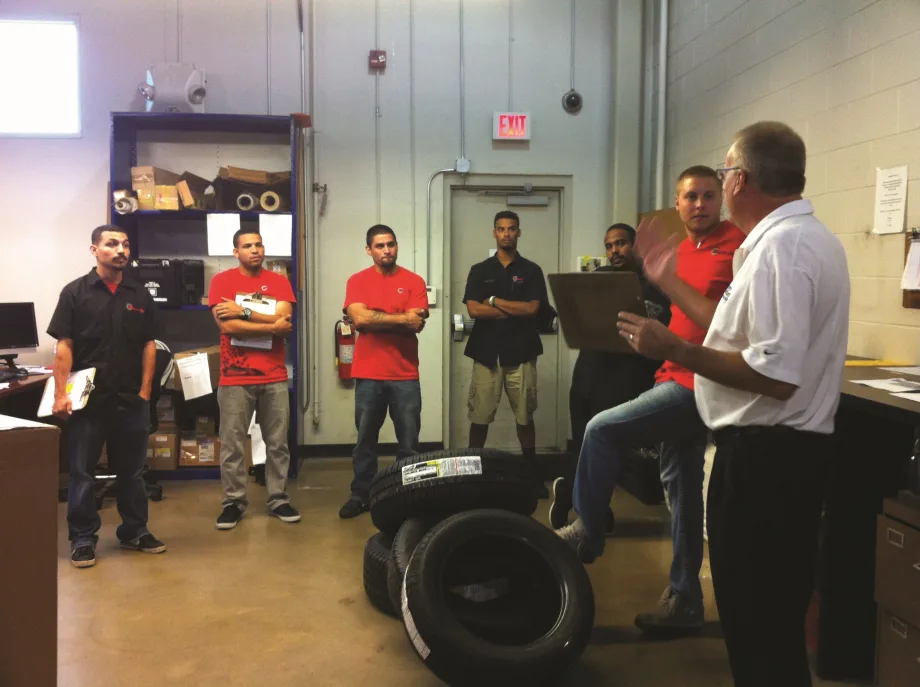
Wheelz Up, a Washington, D.C.-based auto parts delivery service, holds a safety meeting with some of its fleet drivers.
Credit:
Wheelz Up.
9 min to read
Small fleets implement low-cost strategies like driver training and safety meetings to nurture a safety-oriented culture.
One-on-one coaching is utilized to provide personalized feedback and enhance driver safety practices.
Incentive programs are introduced as motivational tools to reinforce safe driving behaviors among fleet drivers.
*Summarized by AI
Editor's note: This article was originally published in 2015. While the budget-conscious safety strategies remain relevant, some job titles, company names, and organizational details may have changed since the original publication.
To Kevin Weil, keeping your fleet drivers safe doesn’t just happen. It’s about being proactive, whether that means educating your drivers through safety meetings, conducting hands-on training or using in-vehicle monitoring systems such as telematics.
Ad Loading...
“If you depend on luck to keep your drivers safe, at some point your fleet drivers will have a severe accident,” said Weil, operations manager of Northland Mechanical Contractors, which runs a fleet of 25 service vehicles in Minnesota’s Twin Cities market.
In fact, on average, 20% of a fleet is involved in a crash annually, according to PHH Arval (now known as Element Fleet), a provider of fleet management and maintenance services.
From in-cabin video cameras to telematics systems that track speed, hard braking, and vehicle location, fleets can purchase a variety of technologies to help promote driver safety. But while these products demonstrate a return on investment, they nonetheless come at a hefty price — leaving many small fleets thinking twice about making such a large investment.
These enterprise technology initiatives aren’t the only options for promoting fleet safety. In this article, we will highlight several ways to encourage driver safety on a more modest budget.
How to Build a Low-Cost Fleet Safety Program
Safety starts with making sure drivers understand your company’s safety culture.
Ad Loading...
“Safety first is a big thing,” said Stuart Aust, owner of Bug Doctor, a New Jersey-based pest control company with 30-plus fleet vehicles. “As part of our safety culture, drivers must pull over when making a cellphone call, texting or emailing. We won’t penalize them for taking a break.”
As a starting point, the Network of Employers for Traffic Safety (NETS) has several safety resources available for fleets on its website. Jack Hanley, executive director of NETS from 2008-2016, recommended that a fleet begin with NETS’ “Comprehensive Guide to Road Safety.” Produced by a committee of NETS board of directors members, this free downloadable guide highlights safety definitions, road safety best practices, and road safety management requirements.
The guide is designed to help employers at various stages of road safety program development, according to NETS. The guide is applicable to drivers of light-, medium-, and heavy-duty vehicles who drive vehicles on company business more than 5,000 miles per year.
Here are a few highlights from the safety guide:
Management must implement fatigue management procedures, including adequate rest breaks, avoiding night driving and long driving hours, and rotating work shifts.
Drivers are not allowed to use a mobile phone/pager/two-way radio while driving a vehicle. This includes hands-free devices.
Ad Loading...
Management must create a high-risk driver intervention process, including criteria for identifying and notifying high-risk drivers, as well as a scheduled coaching session with the driver’s supervisor after identification.
“The ‘Comprehensive Guide to Fleet Safety’ helps employers learn what they need to pay attention to,” Hanley said. “The guide is a step-by-step recipe for putting a fleet safety program in place.”
Additionally, NETS offers more road safety tips during its annual Drive Safely Work Week, which highlights a different facet of fleet safety each October.
For example, the 2013 NETS campaign “Gear Up for Safe Driving” focused on how being at your physical and mental best can help make you a better driver. Tips included snacking to help preserve energy and avoid sudden “crashes,” getting the recommended 7.5 to 8 hours of sleep per night, taking a break from driving every 2 hours or after 100 miles, and adding a 10-minute walk every day to improve the likelihood of a good night’s sleep.
Affordable Driver Training Strategies for Small Fleets
A focus on driver safety should start even before the hiring process. John Kaminski, manager of field operations for the Canine Company, a Wilton, Conn.-based pet products and obedience training company, refuses to hire a job candidate with a poor driving record. During the interview process, the company performs a background check on each driver’s history.
Ad Loading...
Even if a driver is properly trained when hired, the training doesn’t stop there. Peninsula Humane Society & SPCA of San Mateo County, Calif. not only teaches its animal control drivers the basics such as backing up the trucks but also includes ride-alongs with field training officers as part of its training program.
“Having drivers keeping a lookout for animals while paying attention to traffic — and citizens who may be flagging them down — can be viewed as distracted driving,” said Jeff Christner, captain of animal rescue and control. “The field officer trainers help teach drivers how to drive overly defensively.”
Each of Aust’s technicians must complete a ride-along with a service manager at least four times a year. As part of a quarterly overall evaluation, technicians are graded on their driving, including how far they maintain from other vehicles and how well they maintain the proper speed limit, according to Aust.
“As soon as we see a pattern of accidents and risky driving, we talk to the driver,” Aust said. “If the driver doesn’t show improvement, he or she will be written up or suspended. This can be a poor reflection on our company; we take these driving issues seriously.”
How Regular Safety Meetings Improve Driver Performance
To address safety issues, some fleets hold safety meetings for all employees. Jeb Lopez of Wheelz Up, a Washington, D.C.-based auto parts delivery service, gathers his managers together for a safety meeting every Thursday morning. Then the drivers are contacted on Friday for a one-on-one review, which could consist of an accolade or a warning — depending on an employee’s recent driving record.
“We believe in constant and progressive improvements on a weekly basis,” Lopez said. “We contact drivers on Fridays for a review, accolade or reprimand.”
Ad Loading...
Anderson Plumbing, Heating & Air covers vehicle safety at least 4 times a year during its weekly safety meetings. According to owner Mary Jean Anderson, the meetings feature videos on driving, which include tips, statistics, and even graphic scare tactics.
In addition to companywide safety meetings, Northland Mechanical Contractors sends out a weekly safety discussion email to all employees. The “Toolbox Safety Talk” includes a weekly safety topic and a five-question quiz on the material.
“To encourage employees to take the quiz, we give out gift cards to two random employees who got 100% on the quiz,” Weil said.
Use Vehicle Inspections to Reduce Fleet Safety Risks
Another element of fleet safety is regularly checking the vehicles.
At least once a quarter, Northland’s warehouse manager conducts random vehicle inspections to ensure everything is up to standard and operating properly. This includes inspections of the fluids, lights, steering, and brake response, according to Weil.
Ad Loading...
To catch potential problems before they become a hazard, the warehouse manager fills out a short report summarizing any vehicle items that need to be addressed.
“We focus on mechanical safety, but we also consider housekeeping of the vehicles as a safety item,” Weil said. “This includes cleaning out bottles and debris to avoid things getting stuck under the pedals. Tools also need to be secure in case of hard braking.”
Driver Monitoring Programs for Small Fleets
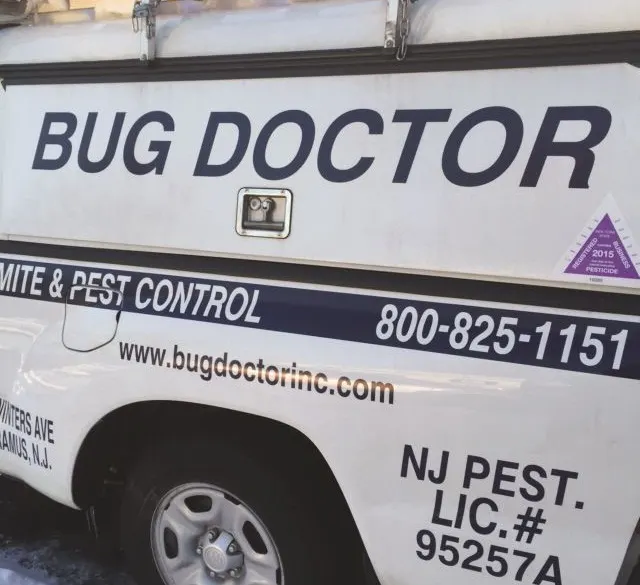
To help promote safety for others on the road, Aust puts “How Am I Driving?” bumper stickers with a 1-800 number on each vehicle in his fleet. Bug Doctor takes any complaint — received from the number — seriously.
A copy of the call goes into the driver’s file after talking to the driver to get his or her side of the story. The company then watches for any patterns reported by other drivers on the road.
“We want to do our part of stressing safety for the person as well as safety for others on the road,” Aust said.
Ad Loading...
At about $1.25 per vehicle per month, a safety hotline (or driver-monitoring) program is a low-cost option for identifying drivers who may be struggling to drive safely.
Paul Farrell, senior technical consultant at Nationwide Insurance, sees this program as an opportunity to lead to coaching and refresher training for the affected driver. It can help highlight the need to identify problem drivers before they appear on a motor vehicle record (MVR).
“An analysis of motor vehicle records is a must-do, but it isn’t the end of the process,” Farrell said. “That’s why many fleets use safety hotlines to cover some of those gaps. It picks up forward-looking behavior instead of waiting for a crash.”
Bug Doctor has a 1-800 "How Am I Driving" number on each of its fleet vehicles to help promote safe driving. Photo courtesy of Bug Doctor.
Credit:
Bug Doctor
Driver Safety Incentive Programs That Fit Your Budget
Safety training and education can help get a safety program off the ground, but employers also need to provide drivers with regular feedback — whether that’s rewarding good driving behavior or issuing warnings for patterns of dangerous driving.
Farrell recommends that employers implement performance coaching, driver communication plans, goal alignment initiatives, and the use of feedback mechanisms.
Ad Loading...
To motivate drivers, some fleets offer bonus/reward programs as an incentive. Farrell cautions fleets on using this type of motivation as a shortcut if the company's safety practices are still incomplete.
“Without all of the relevant safety fundamentals in place as a foundation, incentives can only motivate a temporary movement in the right direction — the results won’t be long-lasting,” Farrell said. “The use of incentives may be a productive part of a well-rounded and well-executed driver safety program.”
Last year, Wheelz Up implemented a $25 rewards program for drivers each quarter. With help from its telematics system, Wheelz Up uses an A+ rating reporting system to base the employee’s driving behavior. Other criteria include no tardiness, no client complaints, perfect attendance, and adherence to company policies, such as not talking on the phone during deliveries, no smoking, and keeping the vans clean.
“Out of 60 drivers, there are around 20 drivers who are in good standing and receive the $25 AMEX gift cards each quarter,” Lopez said. “The rewards program works, and drivers like the extra incentive; it makes them feel closer to our company culture.”
Anderson Plumbing, Heating & Air rewards its employees with catered meals or gift cards. “Each quarter, if we have no accidents, we buy breakfast or give a gift certificate to a local restaurant or to the movies,” Anderson said.
Ad Loading...
Fleet Safety Resources and Benchmarking Programs
If employees are looking to talk to other fleet companies — with an interest in road safety and reducing collisions— they should consider the “Strength in Numbers” fleet safety benchmark program from NETS.
Consisting of small and large fleets (ranging from 68 to 44,500 vehicles), benchmark members share top-of-mind safety issues, according to Hanley. For an annual fee of $1,490, members can interact with road safety companies, create custom reports based on benchmark data files, and use the NETS reports to support their fleet’s safety recommendations.
Terry King — safety manager at Acushnet Company, a manufacturer of golf products — found the benchmark program while surfing the Internet for fleet safety information.
“One of the biggest advantages is being able to see the various safety policies different companies have in place,” said King, a member of the benchmark program for four years. “You get a good view of what fleets are doing with a specific issue.”
The Current Cost of Fleet Crashes
Motor vehicle crashes remain a major workplace safety and financial risk. From 2011 through 2022, more than 21,000 U.S. workers died in work-related motor vehicle crashes, accounting for 35% of all work-related deaths during that period.
The National Safety Council estimates that motor vehicle crashes resulted in 42,789 deaths, 4.9 million medically consulted injuries, and $559.3 billion in total costs in 2024. Those costs include lost productivity, medical and administrative expenses, vehicle damage, and employer costs.
NSC’s 2024 estimates put the average economic cost at:
$6,600 for each vehicle involved in a property-damage-only crash
$28,000 for a possible injury
$45,000 for an evident injury
$174,000 for a disabling injury
$2.05 million for each death
These are broad economic costs by severity, not direct employer expenses, so the terminology in the original section should also be updated.
For a figure more directly connected to employers, motor vehicle crashes were the most expensive cause of lost-time workers’ compensation claims in 2022 and 2023, averaging $91,433 per claim.
Rather than allowing hands-free calls, current National Safety Council guidance recommends that employers prohibit both handheld and hands-free electronic device use while employees are driving. NSC also recommends using clear enforcement methods, which may include driving-record reviews, reports from others, in-vehicle cameras, monitoring technology, and systems that restrict phone use while a vehicle is moving.
Small fleets can improve driver safety through low-cost methods such as regular safety meetings, implementing driver training sessions, and offering one-on-one coaching.
Safety meetings provide a platform for discussing best practices, reviewing incidents, and reinforcing safety protocols, which fosters a culture of safety awareness among drivers.
Driver training equips drivers with necessary skills and knowledge, reducing accident risks and contributing to a stronger safety culture by emphasizing safe driving practices.
Yes, small rewards or recognition programs can be implemented at minimal cost to motivate drivers to adhere to safety standards and encourage ongoing attention to safe driving behaviors.
One-on-one coaching allows for personalized feedback and targeted improvement plans, addressing specific driving habits and fostering continuous safety improvements within the fleet.
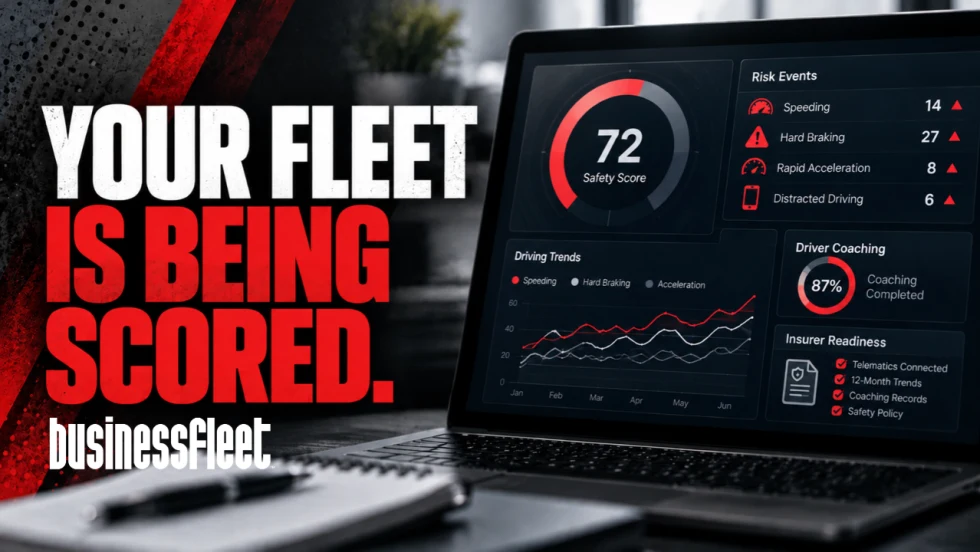
Your fleet's telematics data could be the difference between getting insurance coverage and facing higher premiums or non-renewal. Here's what insurers are looking for and how fleets can use that data to make a stronger case at renewal.
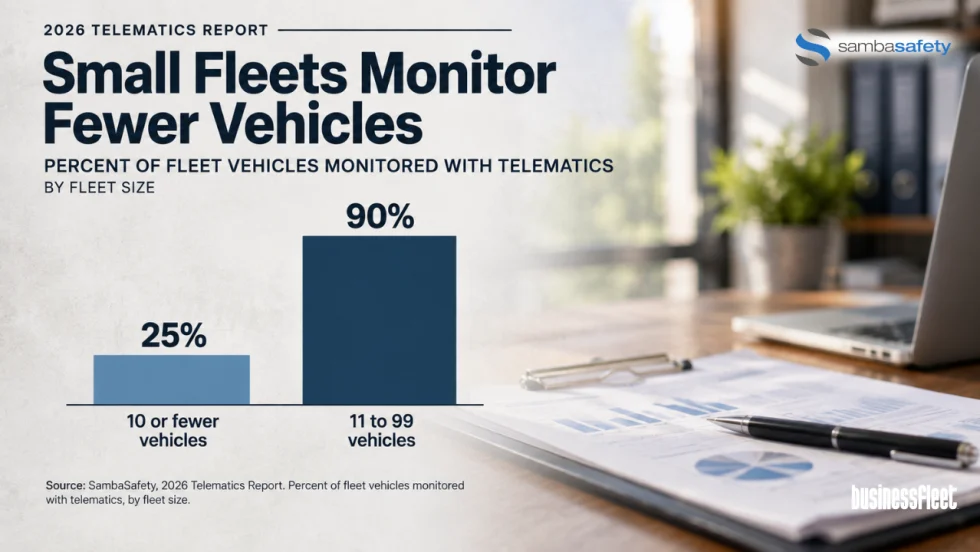
SambaSafety’s 2026 Telematics Report finds fleets with 10 or fewer vehicles monitor a much smaller share of their vehicles than larger operations, as the industry shifts its focus from collecting data to using it.
For small fleets, one crash can trigger far more than vehicle damage. Here’s how stronger driver safety policies, training, maintenance, and technology can help reduce workers’ comp exposure.
Winter weather can quickly change a small fleet’s plans. Knowing when to reroute, delay, or stop can matter just as much as preparing the vehicles themselves.
The American Petroleum Institute offers a list of safe vehicle refueling guidelines, including ways to avoid potential problems with static electricity discharges in fall, winter, and early spring.
Cold weather can expose weak batteries, tires, fuel systems, and maintenance gaps fast. Use this winter fleet checklist to prepare trucks and drivers before temperatures drop.