


Before the Fireworks Start Small Fleets Should Review Their Cargo Security Plans
Long holiday weekends create prime conditions for cargo theft. Here's what small fleet operators should review before the Fourth of July.


Long holiday weekends can create opportunities for cargo thieves, particularly when vehicles and shipments sit unattended. Security experts recommend that small fleet operators review cargo security procedures, tracking systems and driver response plans before the Fourth of July holiday.
Business Fleet | This image was edited with OpenAI. Please refer to our terms of use.
- Small fleet operators should assess and enhance their cargo security plans prior to long holiday weekends to prevent thefts.
- Cargo theft risks increase during holidays like the Fourth of July, necessitating proactive measures from fleet management.
- Operators need to conduct thorough evaluations of their security policies and practices to safeguard shipments effectively.
*Summarized by AI
For many small fleet operators, the Fourth of July weekend means balancing customer demands, driver schedules, and a few well-earned days off. Unfortunately, cargo thieves often see the holiday weekend as an opportunity.
Extended holiday closures can leave trucks and trailers sitting unattended for days at a time, creating ideal conditions for theft. According to Ryan Kiefer, director of Travelers' Special Investigations Group, long weekends remain one of the most attractive times of the year for organized cargo theft rings.
"Long holiday weekends create ideal conditions for cargo thieves," Kiefer said. "Shipments are often left unattended for extended periods, sometimes 72 hours or more, while law enforcement resources are stretched thin and businesses are operating with reduced staff."
For smaller carriers, the stakes can be especially high. A single cargo theft can result in more than just a financial loss. It can disrupt customer relationships, damage a company's reputation, and, in some cases, threaten business continuity.
Why Smaller Fleets Face Unique Risks
Kiefer said smaller carriers are becoming increasingly attractive targets because they often have fewer resources available for security investments than larger fleets.
"Smaller carriers are increasingly attractive targets, largely because they often lack the financial resources of larger carriers to invest in comprehensive security infrastructure," he added.
Criminals are also exploiting smaller operators in other ways. Kiefer notes that bad actors may impersonate legitimate carriers and use their Motor Carrier numbers to facilitate fraudulent activity.
The challenge isn't always a lack of effort. Often, it comes down to budget limitations and training gaps.
"It really comes down to two things: financial resources and training," Kiefer said. "Smaller operators often lack the budget to implement the latest technology or invest in quality hardened locking devices."
Don't Assume Home Parking Is Safe
One common misconception is that cargo is secure simply because it is parked somewhere familiar.
According to Kiefer, theft frequently occurs wherever loads are left unattended, including locations that may seem low risk.
"Unsecured lots represent the highest risk, but regardless of location, the issue arises at any place where a load is left unattended," he said. "We've even seen thefts occur from a driver's own home."
That reality makes planning ahead especially important before a holiday weekend when trucks may be parked longer than usual.
A Few Investments Can Go a Long Way
While some security upgrades can be expensive, Kiefer said there are several practical investments that can significantly reduce risk.
Travelers recommends carriers prioritize three types of hardened locking devices: air cuff locks, landing gear locks, and trailer door locks. Together, they provide protection for both the tractor and trailer. The company also recommends using more than one GPS tracking device.
"One device is a start, but having more than one tracker provides a critical backup if a thief locates and removes one of them," Kiefer said.
In addition to tracking technology, geofencing can help alert fleet managers when vehicles move outside approved routes or fail to arrive at expected locations.
Have a Plan Before the Weekend Begins
Perhaps the most important step fleet operators can take before the holiday is ensuring drivers know exactly what to do if something goes wrong.
"The message should be clear and direct: Do not leave your load unattended, use hardened locking devices and maintain vigilance at all times," Kiefer said.
Drivers should also know who to call if they suspect they're being followed or if a theft occurs. Having contact information readily available can save valuable time when every minute counts.
Kiefer said one of the biggest challenges after a theft is a lack of preparation. Carriers often struggle to quickly provide cargo descriptions, trailer information, or law enforcement contacts, delaying response efforts when speed matters most.
As the Fourth of July approaches, small fleet operators may not be able to eliminate every risk. But taking time to review security procedures, verify tracking systems, and communicate expectations with drivers can help ensure a holiday weekend doesn't turn into an expensive lesson in cargo theft.
Quick Answers
Holiday weekends often see increased opportunistic theft due to higher volumes of transported goods and reduced oversight, making cargo security crucial.
*Summarized by AI
More Safety

Mercedes Benz Tests CLA Occupant and Battery Protection in Side Impact Crash
Two CLA sedans traveling at 35 mph were used in a Mercedes-Benz crash test examining occupant protection and electric vehicle battery safety.
Read More →
How Technology Can Help Fleet Owners Improve Insurability
Your fleet's telematics data could be the difference between getting insurance coverage and facing higher premiums or non-renewal. Here's what insurers are looking for and how fleets can use that data to make a stronger case at renewal.
Read More →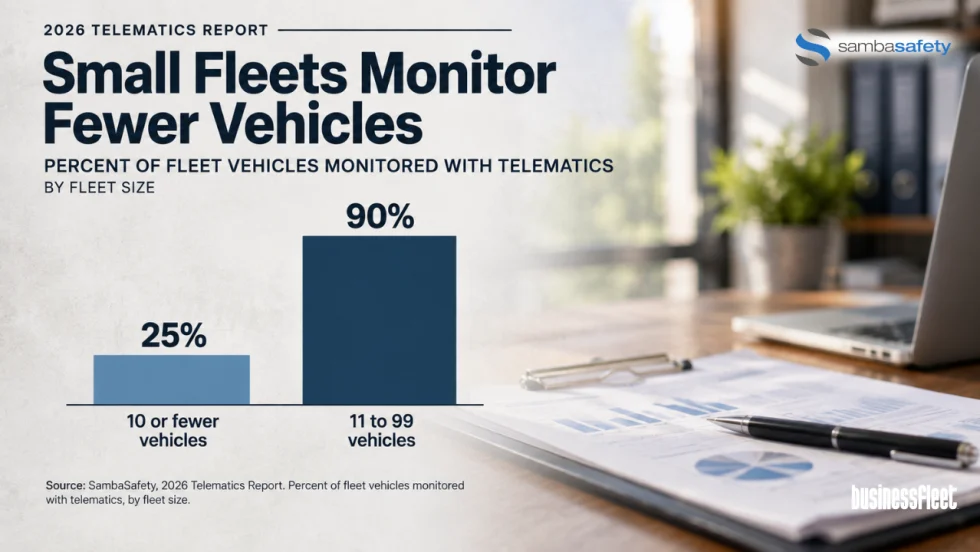
Small Fleets Lag in Telematics Coverage as Industry Moves Beyond Adoption
SambaSafety’s 2026 Telematics Report finds fleets with 10 or fewer vehicles monitor a much smaller share of their vehicles than larger operations, as the industry shifts its focus from collecting data to using it.
Read More →
Back-to-School Traffic Is Not the Risk Fleets Think It Is
Back-to-school traffic does not always mean more crashes. New Empiric Earth data shows why fleets should focus on when and where risk changes.
Read More →
Small Fleet, Big Exposure: How to Reduce Workers’ Comp Risks
For small fleets, one crash can trigger far more than vehicle damage. Here’s how stronger driver safety policies, training, maintenance, and technology can help reduce workers’ comp exposure.
Read More →
Who Makes the Call When Winter Weather Gets Dangerous?
Winter weather can quickly change a small fleet’s plans. Knowing when to reroute, delay, or stop can matter just as much as preparing the vehicles themselves.
Read More →
API Issues Refueling Safety Guidelines
The American Petroleum Institute offers a list of safe vehicle refueling guidelines, including ways to avoid potential problems with static electricity discharges in fall, winter, and early spring.
Read More →
Winter Fleet Prep: Expert Tips to Keep Vehicles Running Smoothly
Cold weather can expose weak batteries, tires, fuel systems, and maintenance gaps fast. Use this winter fleet checklist to prepare trucks and drivers before temperatures drop.
Read More →
8 ADAS Maintenance Tips for Small Business Fleets From Bendix
A dirty camera, bad alignment, or one loose connection could quietly knock your fleet’s ADAS offline. Here’s what Bendix says to check.
Read More →
Developing Budget-Friendly Driver Safety Programs
From driver training and safety meetings to one-on-one coaching and incentive programs, several small fleets share how they have developed a safety culture with their drivers using low- to no-cost resources.
Read More →