



Keep Reading: Safety Is Usually the First Priority… Until the Day Gets Busy
Why Small Fleets Keep Getting Tripped Up by ELD Compliance
Roadcheck revealed a hard truth: most ELD violations aren't intentional. They're caused by small mistakes that can cost fleets time, money, and trust.
June 25, 2026
Roadcheck findings suggest many ELD violations stem from documentation gaps, training issues, and inconsistent workflows rather than intentional noncompliance.
Credit:
Business Fleet
9 min to read
- Small fleets often face ELD violations due to minor, unintended mistakes.
- These violations can lead to significant costs in terms of time, money, and lost trust.
- The recent Roadcheck highlighted how widespread these unintentional errors are among small fleets.
*Summarized by AI
When roadside inspectors uncover electronic logging device (ELD) violations, it's easy to assume the problem starts with the technology itself or with drivers intentionally trying to skirt the rules. But industry experts say that's often not the case.
In many instances, the compliance issues identified during inspections can be traced back to breakdowns in training, documentation, and day-to-day workflows. Those issues may seem minor on their own, but over time, they can create a chain of errors that leaves fleets vulnerable during roadside inspections, audits, and even insurance reviews.
This year's International Roadcheck offered another reminder that compliance problems rarely happen in isolation.
"What stood out most was how compounded the violations were," said Cole Harte, ELD Product Lead at Linxup. "Inspectors weren't finding a single missed annotation; they were finding stacked failures within a single stop. In many cases, these are traced back to accumulated documentation errors: unassigned driving events, edits without annotations, and gaps between logs and supporting documents."
For fleet managers, particularly those running smaller operations, the takeaway is clear. Staying compliant isn't simply about having an ELD installed. It's about creating processes that help drivers and managers consistently maintain accurate records throughout the year.
Most Violations Start with Everyday Mistakes
The phrase "ELD tampering" often implies that drivers are deliberately manipulating records. While intentional violations certainly occur, experts say the majority of compliance issues stem from something much more common: human error.
Drivers of smaller fleet operations are often balancing deliveries, customer interactions, route changes, and paperwork throughout the day. When compliance procedures aren't clearly communicated or when systems are difficult to navigate, mistakes become more likely. Those challenges are often amplified when fleets rely on complicated processes or fail to establish consistent expectations across the organization.
"Most compliance issues come from accidental mistakes and inconsistent driver training, not intentional tampering," said Monte Dalton, chief strategy officer at Assured Techmatics. "Driver confusion around edits, exemptions, and login and logout procedures is common."
Dalton said complex workflows can further increase the likelihood of compliance issues.
"Complex workflows and unclear processes create unnecessary violations," Dalton said. "Better technology helps by simplifying the driver’s experience, automating alerts, and identifying potential problems before they become roadside violations or audit findings."
Training remains one of the biggest factors in long-term compliance success. According to Dalton, better onboarding and training can help fleets build stronger compliance habits while reducing preventable mistakes before they become violations.
He added that "better onboarding and training tools improve long-term compliance culture." At the same time, "automated alerts combined with guided workflows help reduce preventable violations that stem from those day-to-day gaps."
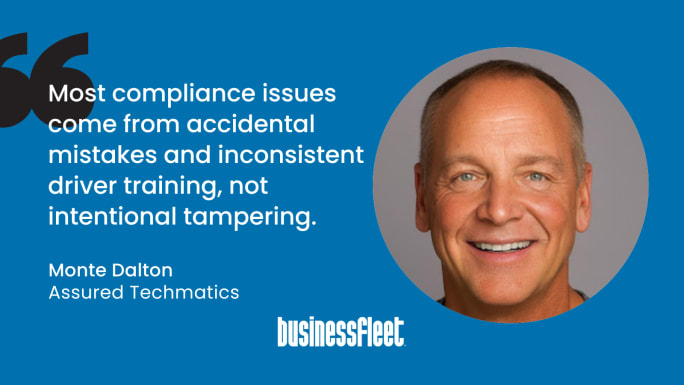
Monte Dalton says most ELD compliance problems originate from everyday mistakes and inconsistent training, underscoring the importance of clear processes and ongoing driver education.
Credit:
Assured Techmatics| Business Fleet
Why Smaller Fleets Face Greater Risk
Compliance challenges affect fleets of every size, but smaller operations often face a different set of realities. Owners and managers frequently wear multiple hats, handling everything from customer service and dispatching to recruiting and maintenance. Compliance responsibilities can easily become one more item on an already crowded list.
That doesn't mean smaller fleets care less about safety or compliance. In many cases, they have fewer resources dedicated to those functions.
"Small and mid-sized fleet owners are running lean operations and juggling multiple responsibilities," Harte said. "Thorough driver training and clear compliance workflows take time to build, and when you're also managing customers, scheduling, and everything else that comes with running a business, those things can easily get pushed down the list."
When that happens, gaps begin to emerge. New drivers may not receive comprehensive training, processes may be interpreted differently by employees, and documentation standards can become inconsistent across the fleet.
"That's where gaps tend to appear: a driver who never got walked through the process, or a workflow that wasn't clearly communicated to the whole team," Harte said. "It's not a lack of care. It's the reality of doing a lot with limited time."
The Compliance Issues Fleets Should Be Watching
While compliance violations can take many forms, several problem areas continue to surface repeatedly during inspections and audits.
One of the biggest concerns remains unassigned driving time, particularly among fleets that operate shared vehicles or have inconsistent login habits. When driving events cannot be accurately tied to a driver, they can quickly become a compliance concern.
"Unassigned driving time remains one of the biggest issues, especially with shared vehicles and poor driver login habits," Dalton said.
Documentation issues can also create problems long after the driving event itself. Missing annotations, incomplete supporting records, and inconsistencies between documents can all raise red flags during inspections.
"Driver edits without proper annotations or approval workflows can create audit risks, and fleets often struggle with incomplete supporting documents that don't match ELD records," Dalton said. "Connectivity issues, disconnected devices, and manual log corrections can also create inconsistencies that trigger violations."
With Roadcheck now complete, experts say fleets should use the results to examine their own records and identify vulnerabilities before the next inspection.
"Fleet managers should conduct a detailed compliance audit focused on disconnected or malfunctioning ELD events, unresolved unassigned driving time, and unusual duty status changes," Dalton said. He also recommends that fleets "verify that supporting documents align with HOS records and identify inactive or duplicate driver profiles" and "review recurring trends by driver, terminal, or vehicle, and ensure annotation and certification compliance is in order, as those patterns often point to underlying training or operational issues."
Looking for trends rather than isolated incidents can help managers identify deeper operational problems before they show up during an inspection or audit.

According to Cole Harte, roadside inspectors often find several related compliance issues at once, highlighting how small documentation errors can compound into larger violations.
Credit:
Linxup | Business Fleet
Moving From Reactive to Proactive Compliance
Historically, many fleets have treated compliance as something that receives attention only when an inspection occurs or a violation is detected. Increasingly, however, operators are looking for ways to identify problems before they create risk.
Technology is playing a larger role in that effort by helping managers gain real-time visibility into potential issues rather than discovering them weeks later. Automated monitoring, alerting, and reporting tools can help fleets identify compliance concerns earlier and achieve greater consistency across their operations.
"Real-time alerts help fleets address issues before inspections," Dalton said. "Centralized visibility into edits, diagnostics, and unassigned driving time enables managers to act proactively."
Ultimately, the objective is not simply avoiding citations. It is creating a process that supports operational consistency across the organization.
"The goal is to move fleets beyond reactive compliance and create a more inspection-ready operation with fewer surprises," Dalton said.
What Drivers Need to Know Before an Inspection
While managers play a critical role in maintaining compliance, drivers remain on the front lines during roadside inspections. Preparing them in advance can help reduce confusion and minimize the likelihood of preventable violations.
According to Harte, inspection readiness starts long before a driver is pulled over. Drivers should understand how to transfer ELD data to enforcement officers, regularly review their records for accuracy, and develop habits that help catch mistakes before they become compliance issues.
"Drivers should know the process for transferring logs to a DOT officer before they find themselves in a roadside inspection," Harte said.
He also recommends that drivers routinely review their records rather than waiting until an inspection occurs. "That includes reviewing their logs from the last 8 days before any inspection window and verifying that there are no unexplained manual edits in the record," Harte said.
Simple habits can often have an outsized impact on compliance performance. Taking a few minutes to review and certify logs at the end of each shift can help drivers identify errors. At the same time, they're still easy to correct rather than discovering them during a roadside inspection.
"Certifying logs at the end of every shift is one of the best habits a driver can build, because it catches errors early rather than during an inspection," Harte said.
Drivers should also be prepared for situations when technology doesn't cooperate. Even with reliable ELD systems, malfunctions can happen, making backup procedures an important part of staying compliant.
"It's also important to keep blank logbooks on hand in case of an electronic issue," Harte said. "If an ELD malfunctions, drivers are still expected to stay compliant by switching to paper logs immediately and documenting the malfunction."
Compliance Is Increasingly a Business Issue
The impact of repeated ELD violations extends far beyond the fines associated with a citation. Compliance performance can affect productivity, customer relationships, insurance discussions, and a fleet's overall reputation.
For small fleets operating with tight margins, even a handful of disruptions can have a meaningful effect on the business. "Violations can lead to downtime, delivery delays, fines, insurance concerns, and questions from shippers," Dalton said.
Those consequences are becoming increasingly important as insurers place greater emphasis on fleet safety, risk management, and operational performance. While underwriting decisions have traditionally relied on broad assumptions, telematics and compliance data are increasingly playing a larger role in how some providers evaluate risk.
"On the insurance side, the shift is underway but uneven," Harte said. "Many carriers still price risk based on broad assumptions rather than actual fleet performance, so operators who have built safer fleets often don't see that reflected in their rates."
Still, signs of change are beginning to emerge. "That's starting to change, through brokers and agents who are more open to factoring telematics into underwriting decisions," Harte said.
He also noted that "we're also seeing more insurers begin to require dash cameras and safety training programs as part of the underwriting process."
For fleets investing in compliance and safety programs, that shift could eventually create additional value beyond regulatory requirements. "Fleets that invest in safety and compliance technology are increasingly positioned to benefit from it," Harte said.
Strong compliance programs can also help fleets reduce disruptions and strengthen relationships with customers, insurers, and business partners.
"A reliable compliance process helps reduce that downtime, avoid costly violations, improve driver efficiency, and strengthen relationships with shippers and insurers," Dalton said.
He added that "strong compliance processes also protect brand reputation," while "proactive compliance reduces costly roadside disruptions that affect the entire operation."
Building a Culture of Inspection Readiness
For fleets looking to stay compliant without adding more administrative burden, experts say the answer lies in creating systems that make compliance easier, not more complicated.
That means reducing friction for drivers, improving visibility for managers, and addressing issues before they escalate into violations. It also means viewing compliance as an ongoing operational discipline instead of a periodic exercise tied to enforcement events.
"Fleets should focus on simplifying the driver experience, automating compliance monitoring, and building proactive workflows rather than relying on reactive responses," Dalton said.
He added that fleets should focus on "addressing unassigned driving time, maintaining clean edit and annotation records, and ensuring supporting documents consistently align with HOS logs."
Technology and training remain central to that effort. "Cloud-based records improve audit preparedness, and better onboarding and training tools improve long-term compliance culture," Dalton said.
Ultimately, he added, "The right technology supports safer operations and long-term business performance."
For fleet operators, the lesson from this year's Roadcheck is that compliance is rarely determined during the inspection itself. More often, it reflects the systems, habits, and processes that were in place long before an inspector ever asked to see a log.
For small fleets in particular, inspection readiness isn't just a compliance exercise. It's increasingly tied to operational efficiency, customer confidence, and long-term business performance.
Quick Answers
An Electronic Logging Device (ELD) is a tool that automatically records a driver's hours of service and ensures compliance with federal regulations. Compliance is crucial for small fleets to avoid penalties, protect their reputation, and ensure drivers’ safety.
*Summarized by AI
More Safety

Mercedes Benz Tests CLA Occupant and Battery Protection in Side Impact Crash
Two CLA sedans traveling at 35 mph were used in a Mercedes-Benz crash test examining occupant protection and electric vehicle battery safety.
Read More →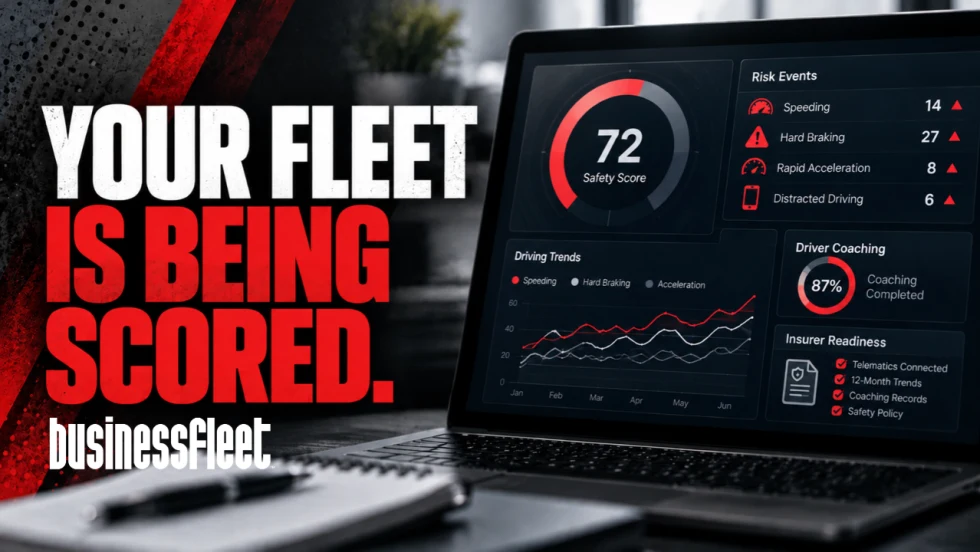
How Technology Can Help Fleet Owners Improve Insurability
Your fleet's telematics data could be the difference between getting insurance coverage and facing higher premiums or non-renewal. Here's what insurers are looking for and how fleets can use that data to make a stronger case at renewal.
Read More →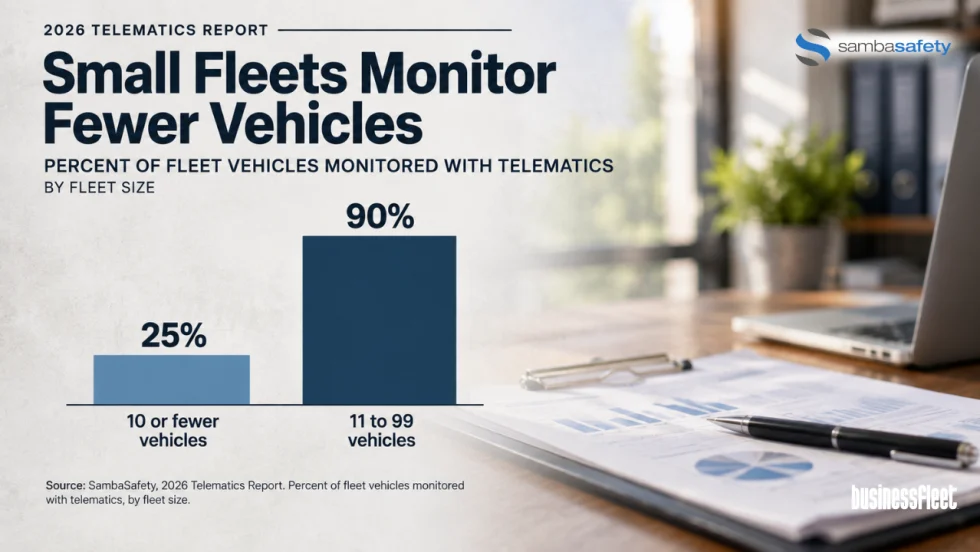
Small Fleets Lag in Telematics Coverage as Industry Moves Beyond Adoption
SambaSafety’s 2026 Telematics Report finds fleets with 10 or fewer vehicles monitor a much smaller share of their vehicles than larger operations, as the industry shifts its focus from collecting data to using it.
Read More →
Back-to-School Traffic Is Not the Risk Fleets Think It Is
Back-to-school traffic does not always mean more crashes. New Empiric Earth data shows why fleets should focus on when and where risk changes.
Read More →
Small Fleet, Big Exposure: How to Reduce Workers’ Comp Risks
For small fleets, one crash can trigger far more than vehicle damage. Here’s how stronger driver safety policies, training, maintenance, and technology can help reduce workers’ comp exposure.
Read More →
Who Makes the Call When Winter Weather Gets Dangerous?
Winter weather can quickly change a small fleet’s plans. Knowing when to reroute, delay, or stop can matter just as much as preparing the vehicles themselves.
Read More →
API Issues Refueling Safety Guidelines
The American Petroleum Institute offers a list of safe vehicle refueling guidelines, including ways to avoid potential problems with static electricity discharges in fall, winter, and early spring.
Read More →
Winter Fleet Prep: Expert Tips to Keep Vehicles Running Smoothly
Cold weather can expose weak batteries, tires, fuel systems, and maintenance gaps fast. Use this winter fleet checklist to prepare trucks and drivers before temperatures drop.
Read More →
8 ADAS Maintenance Tips for Small Business Fleets From Bendix
A dirty camera, bad alignment, or one loose connection could quietly knock your fleet’s ADAS offline. Here’s what Bendix says to check.
Read More →
Developing Budget-Friendly Driver Safety Programs
From driver training and safety meetings to one-on-one coaching and incentive programs, several small fleets share how they have developed a safety culture with their drivers using low- to no-cost resources.
Read More →Subscribe to Our Newsletter