


Answers to Seven Fleet Questions
When the heads of seven major fleet management companies convene on a panel together, it’s a good time to get their views on issues such as changes to lease accounting standards, how the new fuel economy standards will affect fleet and which alternative fuel will break out in five to seven years.

NAFA (the fleet management association) held its annual conference and expo in St. Louis this week, and in keeping with tradition, the heads of the major fleet leasing and management companies convened on a panel to answer burning questions on the minds of fleets today. Here is a snapshot of their responses:
Will new rules force all leases “on the books?”
There has not been any breaking news in the past year regarding FASB's (Financial Accounting Standards Board) efforts to develop a new model for the recognition of assets and liabilities arising under lease contracts — essentially requiring all leases (closed or open) to be on the balance sheet. Any changes were originally scheduled for 2012 implementation, but an exposure draft released in 2010 solicited 900 responses from the industry and prompted a new exposure draft, expected later this year. The earliest of any new rules implementation would be in 2015 with full implementation by 2016.
This shouldn’t keep you up at night: Similar to last year, Jim Frank of Wheels said that the “impact of these rules could be insignificant for our clients.”
What should fleets do to prepare for the 2016 EPA fuel economy standards?
George Kilroy of PHH reminded the audience that it’s the manufacturers that have to achieve the new CAFÉ requirements, not fleets. And the consensus is that the industry is in good shape to meet those standards. However, meeting the next set of even more stringent standards in 2025, “is a different discussion,” said Clarence Nunn of GE Capital.
Frank warned that we’re enjoying vehicle prices right now “at 2002 levels,” and that as we bear the cost of technology to reach the new standards, vehicles will be more expensive. In addition, the manufacturers will use price to drive people away from less fuel-efficient vehicles, he said.
How can we impact driver behavior to improve fleet safety and fuel economy?
The panel agreed that modifying driver behavior has a huge impact on fleet safety. Frank commented on the enormous spread in fleet accident rates, from 10-12% for fleets that take safety seriously to 40%-plus for those that need help. Impacting driver behavior can lower those percentages greatly.
As well, positively modifying driver behavior can have a 10-20% impact on fuel economy.
But Gary Rappeport of Donlen commented that fleet management companies can’t drive this change themselves; it takes an institutional commitment from top management. Nunn backed that up. “The FMCs can’t deliver enforcement,” he said. “We can’t have that conversation with the top sales person who’s also your worst violator.”
Kilroy counseled to make the drivers “willing participants in the solution.” Mike Pitcher of Leaseplan suggested letting drivers compete to improve safety. Carl Ortell of ARI counseled to keep the program simple, and make sure to reward drivers for their efforts.
Is technology benefitting or hurting fleets?
Whether causing driver distraction or a more expensive repair, technological advancement in vehicles can certainly cause headaches for fleet managers. However, the panel’s consensus is that all this new technology is very much helping fleets do their jobs better.
Technology has impacted safety with collision prevention controls such as adaptive cruise control and blind spot monitoring. It is providing better fuel economy, making vehicles last longer and elongating the preventive maintenance cycle. All this has provided a net benefit to depreciation.
Technology allows the collection of data on almost every aspect of driving and fleet and that data is actionable, Carl Ortell of ARI said. [PAGEBREAK]The constant need for the new driving generation to be connected, even in the car, is giving these leasing execs pause. However, Pitcher recognizes technology exists to combat distracted driving. (And those products were on display at NAFA’s expo.)
How far can technology go? Frank brought up a new regulation in France that will require a breathalyzer in every car (!!).
Fleets do have an opportunity to avoid certain tech options that don’t hold value in the used market. Nunn warned, however, that the used car market doesn’t value a stripped down vehicle these days.
Really, it’s some of the non-tech expenses fleets need to be aware of. Tire costs are up 10%, and Kilroy added that the labor shortage for repair technicians is only getting worse and will drive prices higher.
Can car sharing benefit fleet management?
Indeed, Zipcar exhibited at NAFA for the first time with a fleet solution, and Hertz (which owns Donlen) has its own program called Connect to Go. While car sharing won’t replace the traditional sales rep in Houston, for instance, it could dramatically change the pool vehicle concept. Kilroy mentioned a large city was able to cut its pool in half with a car-sharing program.
Nunn warned that more and more companies scrutinize miles driven on each fleet vehicle, so fleet managers should “be prepared to answer that question” when the time comes.
Which alternative fuel or power will be the breakout winner in five to seven years?
No surprising answers here. Like the rest of the industry, “we really don’t know,” Frank said, “so we’ll work to advance all of them.”
“Rumors of the death of the internal combustion engine have been greatly exaggerated,” Pitcher said. While he sees the potential for greater diesel penetration, Pitcher said he doesn’t think there will be a significant change in how vehicles are powered in five to seven years.
Frank spoke of advances in materials technology, such as carbon fiber, to reduce the weight of vehicles, which will have a positive impact on fuel economy.
Nunn sees hybrid technology as “the roadmap for OEMs to meet [2015] CAFÉ standards.”
Ortell and others mentioned that government subsidies are needed to kick start any alternative technology, though our indebted government is really not in a position to be subsidizing right now.
What are the barriers to CNG implementation?
Compressed natural gas (CNG) seemed to be the alt-fuel du jour at this year’s conference, and the panel was asked about the barriers to adoption. Rappeport mentioned performance issues when it comes to horsepower and torque, as well as the added weight of a CNG system, though in 18 months technology may have solved those problems, he said.
While new drilling technology has recently increased supply, infrastructure is the main issue, the panel agreed. Fleets that fuel locally will have an easier time, though long haul fleets will have a greater challenge with the lack of public fueling stations.
Kilroy put the infrastructure in perspective by stating that there are only about 975 CNG refueling sites in the U.S., and half are behind a locked fence. But, he mentioned visiting a very modern public CNG fueling station that had a 30-foot high cooling tower at its side. “No one wants that in their neighborhood,” he said.
While the CNG technology is expensive, costs will come down as adoption increases. Incentives are driving the equation right now, though even without a tax incentive, the ROI is compelling, said Rappeport. Consistency in demand is key, he said. There is a market potential to even export supply to Europe, and private equity is analyzing this investment. With political agreement for energy independence, “We’re near the tipping point for CNG” to really take off, Rappeport believes.
Kilroy said on a consumer level that home-fueling pumps will accelerate adoption, and that CNG from home sources is a very inexpensive option.
More Blog Posts
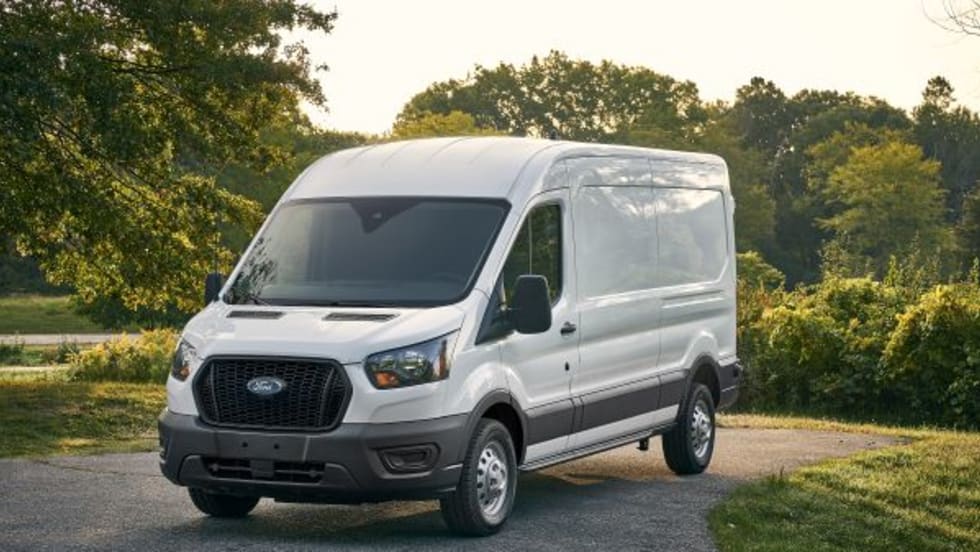
2021 Ford Transit Offers Versatility for Fleets
For the 2021-MY, Ford made ergonomic enhancements for drivers and added an available Parcel Delivery Package. This follows a major refresh in 2020, which added a Crew version, a new standard engine, standard active safety technologies, and embedded telematics to the Transit van family.
Read More →
Recognizing the Other Essential Drivers
Vocational and business fleet drivers don’t get the attention that truckers do. Yet they too are on the front lines, and their jobs often bring them into uncontrolled environments every day.
Read More →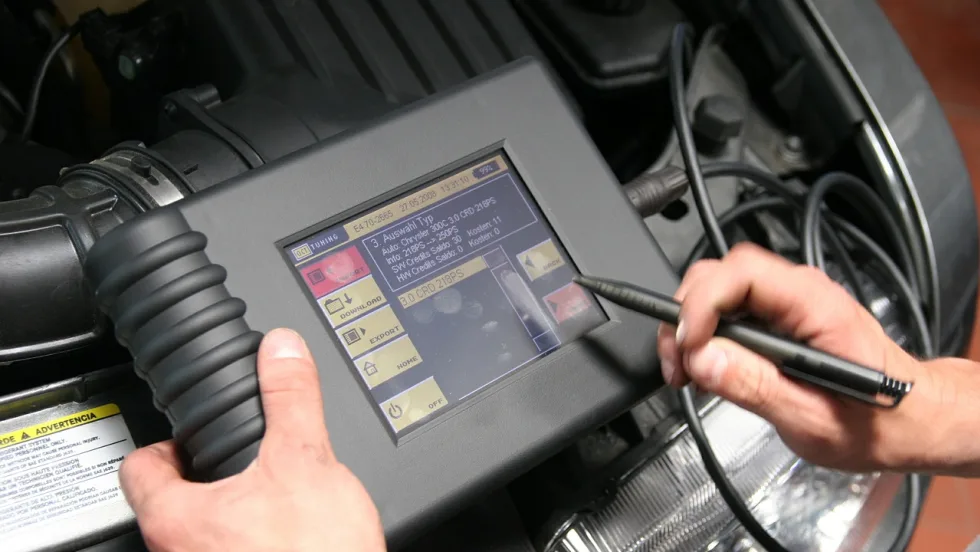
It’s Time to Formulate an ADAS Game Plan
As proliferation of Advanced Driver Assistance Systems (ADAS) increases, skilled labor, equipment, and training costs will increase as well. Fleet operators can’t mitigate these financial burdens by cutting corners on ADAS recalibration and repairs.
Read More →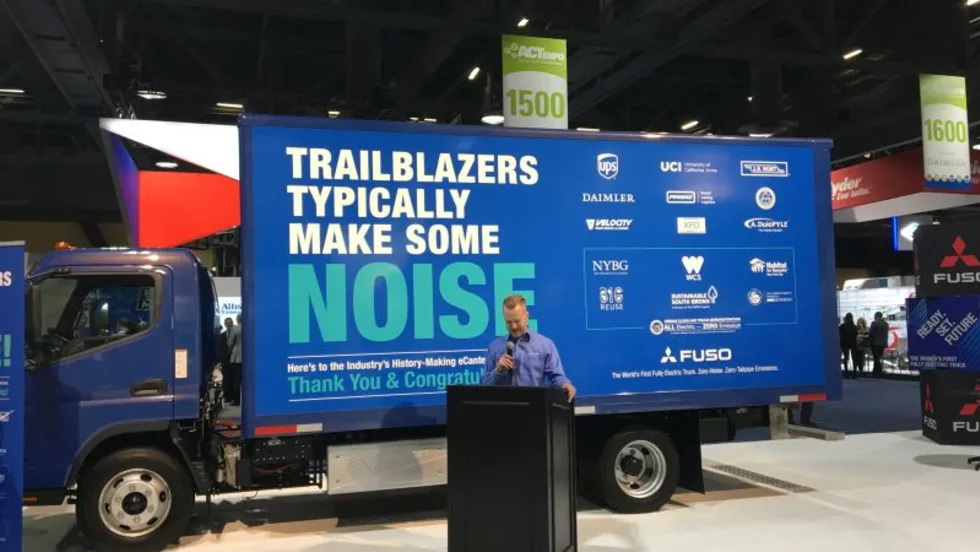
The Future is Electric, But…
With an increasing emphasis on emissions reductions mandates, will fleet operators get caught between clean technologies on their way out and an electric future that hasn’t yet arrived?
Read More →
6 Trend Lines from the 2019 Work Truck Show
From giant leaps in torque and towing to heavy duty truck personalization and chassis cab styling, these trends emerged from this year’s Work Truck Show in Indianapolis.
Read More →
They’re Coming for Your Diesel
In Southern California and other parts of the world, regulators are coalescing to ban, or severely curtail, diesel vehicles. There’s a growing disconnect with the mandates to green the environment and the availability of products and technologies to get us there.
Read More →
Hey Cannabis Companies, Welcome to Fleet
An industry is forming, and it needs help with fleet. In the meantime, the fleet industry should know that these new businesses are navigating extraordinary circumstances, which is forcing them to be better fleet operators pretty darn quick.
Read More →
Takeaways from the Fleet Forward Conference
Most attendees — from established fleets and vendors to new players that were only formed five years ago — didn’t know anyone. But that’s exactly the point.
Read More →
Is it Time to Rethink How Drivers Are Paid?
With the ELD rule affecting miles driven, and drivers’ duties increasingly including more than just driving the vehicle, what can be done to more accurately and fairly reflect a driver’s workday?
Read More →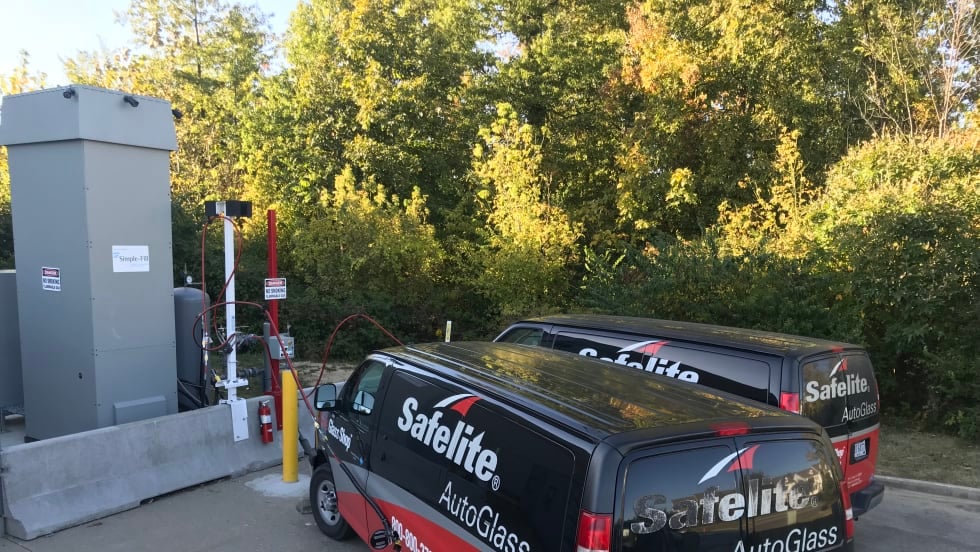
Whatever Happened to CNG?
While the light-duty market for compressed natural gas vehicles has almost evaporated, new near zero emissions technology and drastic reductions in infrastructure costs have reinvigorated the market for medium- and heavy-duty applications — even for smaller fleets.
Read More →