


Van Envy? We’re Headed There
The release of the Nissan NV200 small commercial van represents Nissan's next step in its commercial vehicle plans. But where will it fit in the nascent cargo van wars?

Around my childhood neighborhood, we played a game of one-upmanship when a new bicycle model came out. Of course, my banana bike was only the coolest until the kid up the block got the six-speed with handle shifts. All grown up, we covet the latest and greatest light-duty pickups and marvel as each generation just gets better and better. Seriously – you can’t buy a bad truck today.
Cargo vans, however, never made it to aspirational status, unless you include the ‘70s detour into kung fu graphics, shag carpet and mini disco balls. Until now. We can thank the Europeans. They’ve helped us understand that there is a market for a car-based van that is easy to maneuver, fuel-efficient and able to handle much of what a pickup can do. “Cool” might be a stretch, but let the van wars begin.
Ford laid down the gauntlet when it brought the small Ford Transit Connect stateside in 2010, though it didn’t have any competition because it essentially created a new segment. Along comes the 2013 Nissan NV200, another Euro transplant. The NV200 was released in North America two years ago, and it will also be reincarnated next year as the Chevy City Express Cargo Van. Chrysler has announced plans to bring the Fiat-Doblo based van to the States as the ProMaster City, while in the interim it offers the Ram C/V Tradesman. Mercedes is contemplating bringing over the Mercedes Vito.
Of course, this nascent small van market only complements the action in the larger cargo van market, once dominated by the venerable Ford E-Series line and the Chevrolet Savana/GMC Express.
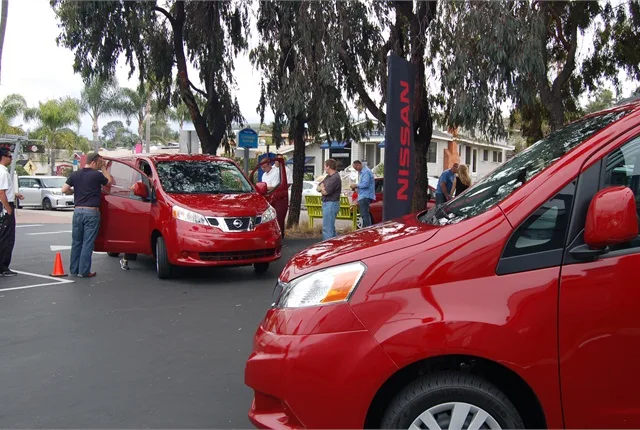
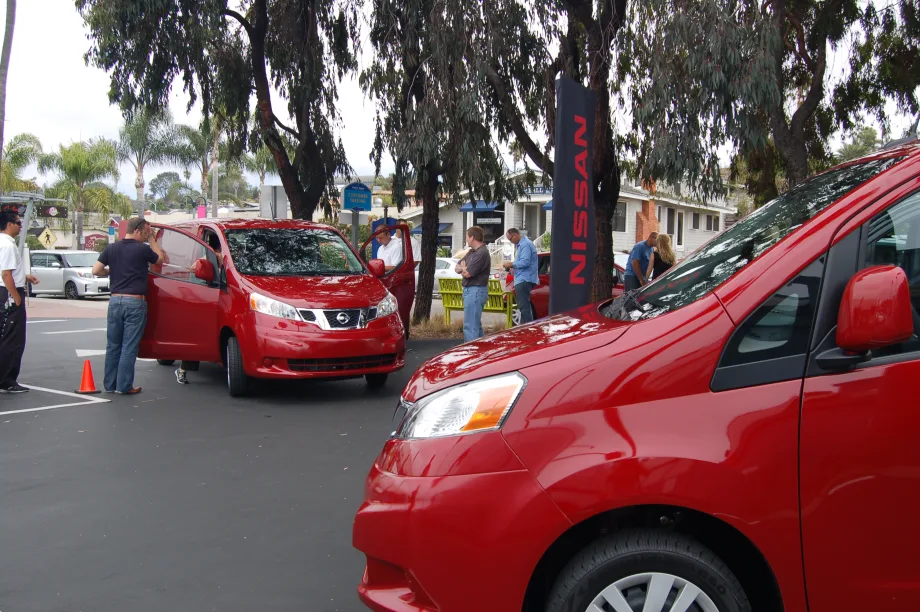
Nissan showed off its 2013 NV200 this week in San Diego. (Click here for the photo gallery.) And since Ford was the first out of the gate in the U.S. with the Transit Connect, the NV200 draws natural comparisons. The first eye-opener is the starting MSRP of $19,990 for the base Model S, a full $2,400 less than the base Transit Connect. For an extra thousand, the SV model adds power door locks, remote keyless entry, cruise control and an additional 12V power point. A technology package adds another $950.
The second revelation is fuel economy: the NV200 is rated at 24 mpg combined, a point higher than the Transit Connect.
The NV 200’s 2.0L 4-cylinder engine produces 131 hp and 139 lb.-foot of torque. The Xtronic CVT transmission is supposed to result in “increased torque capacity, quicker acceleration, improved drivability and high fuel economy,” according to Nissan. That translated to sufficient power (unloaded, at least) on our drive through suburban San Diego. Pickup is better than adequate; freeway merges were confident. The brakes are great. I remember using some of the same adjectives when describing the drive of the Transit Connect’s 2.0L four banger.
In other spec departments, the NV200 has a slight edge in turning radius. It does give away a few cubic feet of cargo volume (122.7 cu. ft.) to the Transit Connect (129.6 cu. ft.) and 100 lbs. in payload capacity (1,500 lbs. to Transit Connect’s 1,600 lbs.). Both vans accommodate a full pallet. The Transit Connect is tow rated; the NV200 is not.
Nissan made sure the NV200 came with some commercial van must-haves, including dual sliding doors, integrated cargo area mounting points for upfits, a center console for hanging files and a fold-flat passenger seat to use as a desk (like the Transit Connect).
Nissan reps pointed to the fact that the NV200 is built a lot closer to home, in Cuernavaca, Mexico. This could result in shorter order-to-delivery times for fleets compared to the Transit Connect, which is presently built in Turkey as a passenger vehicle and stripped of rear seats and windows upon arrival in the U.S. to avoid the “chicken tax.”
The one thing Nissan can’t match is Ford’s dealer footprint, though the partnership with GM will certainly extend the van’s reach. At lunch, I sat down with Peter Bedrosian, product manager of the NV200 team, to ask him about this and other fleet-specific questions.
Bedrosian believes the small van market could grow to 100,000-unit segment in two years. Is Nissan ready? He said that Nissan will be able to handle added production capacity and is in the process of shuffling product between its Mexico plants to accommodate greater production needs. “There will be enough of this van to go around,” he said.
However, fleets will need to keep the servicing of the vans specific to Chevrolet or Nissan dealers, as no cross-brand servicing or warranty agreements are anticipated.
At present, 320 Nissan dealers are designated as commercial, and while that number could grow, it will stay under 400. Nonetheless, this gives Nissan coverage of “98% of its key markets,” Bedrosian said.
Two years into its commercial van and truck program, Bedrosian said Nissan is comfortable with slow, organic growth. “These commercial dealers are actively calling on potential fleet customers and they’re still getting used to this selling model,” Bedrosian said.
Nissan is still in the process of forming partnerships with the large fleet management companies, and while the NV200 is receiving some larger fleet orders, the NV200 “really fits with small business, where the end user or the boss of the end user is making the purchase decision,” Bedrosian said. He pointed out that the domestic OEM van business is 70% fleet and 30% small business/retail, while Nissan swaps those numbers with 70% retail/small business and 30% fleet.
“Fleets are cautious and understandably want to take their time getting to know the product,” Bedrosian said, adding that a positive impression today will turn into sales when the fleet’s present generation of vans is ready to turn over. “We’re planting the seeds.”
Those seeds need to be sown quickly, because other OEMs are entering the market with new models and Ford is set to release a redesigned Ford Transit Connect. The new Transit Connect promises to up the bar once again, with two new engine choices and a CNG/LPG gaseous prep package, among more of the latest options and amenities we’ve come to expect.
Welcome to the van wars. To borrow an old adage from the pickup truck wars, “It’s a great time to be a customer.”
More Blog Posts
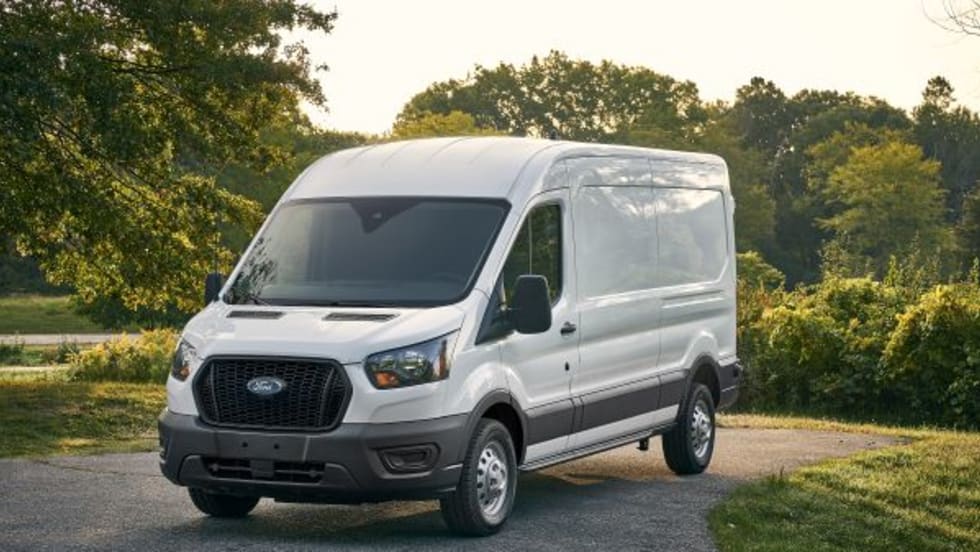
2021 Ford Transit Offers Versatility for Fleets
For the 2021-MY, Ford made ergonomic enhancements for drivers and added an available Parcel Delivery Package. This follows a major refresh in 2020, which added a Crew version, a new standard engine, standard active safety technologies, and embedded telematics to the Transit van family.
Read More →
Recognizing the Other Essential Drivers
Vocational and business fleet drivers don’t get the attention that truckers do. Yet they too are on the front lines, and their jobs often bring them into uncontrolled environments every day.
Read More →
It’s Time to Formulate an ADAS Game Plan
As proliferation of Advanced Driver Assistance Systems (ADAS) increases, skilled labor, equipment, and training costs will increase as well. Fleet operators can’t mitigate these financial burdens by cutting corners on ADAS recalibration and repairs.
Read More →
The Future is Electric, But…
With an increasing emphasis on emissions reductions mandates, will fleet operators get caught between clean technologies on their way out and an electric future that hasn’t yet arrived?
Read More →
6 Trend Lines from the 2019 Work Truck Show
From giant leaps in torque and towing to heavy duty truck personalization and chassis cab styling, these trends emerged from this year’s Work Truck Show in Indianapolis.
Read More →
They’re Coming for Your Diesel
In Southern California and other parts of the world, regulators are coalescing to ban, or severely curtail, diesel vehicles. There’s a growing disconnect with the mandates to green the environment and the availability of products and technologies to get us there.
Read More →
Hey Cannabis Companies, Welcome to Fleet
An industry is forming, and it needs help with fleet. In the meantime, the fleet industry should know that these new businesses are navigating extraordinary circumstances, which is forcing them to be better fleet operators pretty darn quick.
Read More →
Takeaways from the Fleet Forward Conference
Most attendees — from established fleets and vendors to new players that were only formed five years ago — didn’t know anyone. But that’s exactly the point.
Read More →
Is it Time to Rethink How Drivers Are Paid?
With the ELD rule affecting miles driven, and drivers’ duties increasingly including more than just driving the vehicle, what can be done to more accurately and fairly reflect a driver’s workday?
Read More →
Whatever Happened to CNG?
While the light-duty market for compressed natural gas vehicles has almost evaporated, new near zero emissions technology and drastic reductions in infrastructure costs have reinvigorated the market for medium- and heavy-duty applications — even for smaller fleets.
Read More →