


Is Video Telematics for You?
Video telematics systems can assess risk, improve driving behaviors, and mitigate crashes. Follow these steps to decide whether it is the right solution for you and understand the key factors for success.

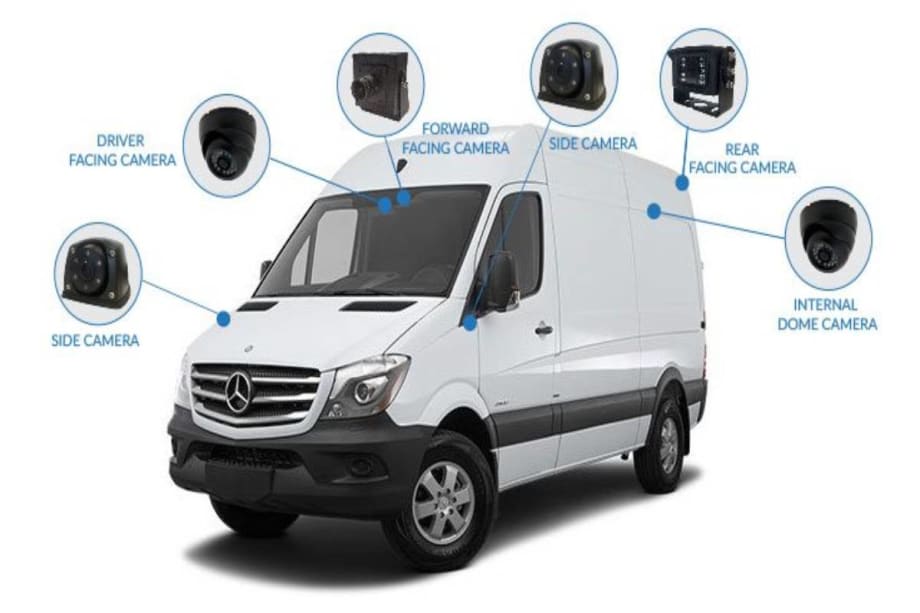
Today’s video telematics systems employ dashboard-mounted cameras, or dashcams, to capture video of the driver, the vehicle’s external environment, or both.
Video telematics was first used in police cruisers in the Eighties. It has since expanded to many more vehicle and business types outside of law enforcement.
Today’s video telematics systems employ dashboard-mounted cameras, or dashcams, to capture video of the driver, the vehicle’s external environment, or both. They’ve been traditionally used to exonerate an organization’s drivers from false incident claims. Now with video data that’s storable, searchable, and categorized — along with real-time warnings and in-cab alerts — they’re also used to coach drivers to better driving.
With these benefits, this prompts the question: Do you need video telematics in your company’s vehicles? This guide will help you decide.
You’ll understand:
How video telematics works,
If a video telematics system is right for your business,
How to choose a video telematics system,
The key factors for video telematics success.
Be prepared to answer a series of questions along the way that will get you closer to the system and configuration that’s right for you.
How Does Video Telematics Work?
Video telematics camera systems are connected to vehicles’ diagnostics ports or telematics modems, which enable data to be uploaded to the cloud for storage and retrieval on demand. Views from these cameras can be monitored live, or a video clip can be triggered by an event such as:
Exceeding a speed threshold.
Aggressive acceleration.
When the vehicle detects a crash.
When drivers create unsafe events, the system can immediately notify management through an SMS and the drivers through in-cab audio alerts.
Older dashcams were used primarily for post-crash analysis, as the recordings could only be accessed linearly and without specific search criteria. However, newer video telematics systems use machine vision, artificial intelligence (AI), and deep learning to determine the type of event that occurred. These systems have camera sensors that recognize traffic signs, vehicle lanes, and distances to other vehicles. They can also detect — and codify — in-cab driver behaviors such as cell phone use, unbuckled seat belts, and eating, drinking, or smoking.
With accompanying metadata, users can search and analyze the video clips for details of specific driving events. Drivers are given mobile apps that enable them to review their video clips and access their individual driver scorecards.
Does My Fleet Need Video Telematics?
Your fleet may already have a GPS tracking (telematics) system, or you may be thinking about a system for your business. Why would you need to incorporate another level of telematics, with added costs and hardware?
The answer lies in combining video with telematics data and analytics for contextual insights into driver behaviors. The combination becomes a powerful tool to assess risk, improve driving behaviors, and mitigate crashes.
Video telematics provides a visual document of what occurred in and around the vehicle at the time of an incident. Beyond telematics data, video helps distinguish when a behavior is risky driving or a reaction to the environment. These insights provide a deeper analysis of events and allow for more effective coaching to correct those behaviors before they lead to a crash. The result is safer drivers on the road and a reduced risk of collisions. It’s not only the video data that keeps your drivers safe, but also the contextual insights that you may glean from an integrated telematics solution.
Does your business run larger trucks and vans with branding?
Trucks, vans, and any type of vehicle with company logos are particularly vulnerable to claims. If this is you, then you especially understand that your vehicles are moving billboards. This drives commercial insurance rates higher, and it exposes businesses to potential “nuclear verdicts” in the event of a catastrophic crash.
Because smart video footage can be easily accessed and searched, managers can pull up a clip around an incident quickly — providing objective evidence of what happened to help businesses and their insurers know when to fight or settle. It also makes it incredibly easy to exonerate your business and your drivers in the case of someone calling in to make a claim that one your drivers hit their mailbox or was speeding through their neighborhood.
Beyond managing risk and exonerating drivers, the other benefit comes in the form of insurance breaks. While many insurance companies already offer discounts to organizations with GPS tracking systems in place, others offer specific discounts for video telematics. Some video telematics providers have partnered directly with insurance companies to offer discounts that use the technology.
Are your vehicles governed by FMCSA regulations?
For vehicles subject to Federal Motor Carrier Safety Administration (FMCSA) regulations, a new rule allows fleets to submit video as evidence to remove violations from driver’s Safety Measurement System file. This in turn lowers unsafe driving scores and contributes to reduced insurance rates.
Choosing a Video Telematics System
You’ll want to ask yourself, and then potential providers, a series of questions to guide your decision-making process. You’ll first need to define your reasons to acquire a video telematics system.
Do you need a video telematics system as a protection against insurance claims and false accusations against your drivers?
If the answer is yes, then a standalone dashcam is probably enough for you, and those can be implemented with minimal investment.
However, to realize the full value of a video telematics system you’ll need to invest in one that uses machine vision and AI capabilities. They’re more costly, but offer exponentially higher returns on investment by correcting dangerous behaviors, mitigating catastrophic loss, and creating a safer overall fleet.
Are you looking to integrate video telematics into an existing telematics platform, or are you entering video telematics from scratch?
There are at least 20 video telematics solutions on the market. They can be grouped by type: a) hardware-focused suppliers offering digital video recorder (DVR) systems, b) tech safety companies with a video telematics solution focus, and c) traditional telematics providers that offer their own video solution or have integrated their systems with a video telematics provider.
Today, most major telematics providers have a video solution integrated into their suite of telematics offerings. At the same time, many video telematics providers have traditional telematics functions built into their systems, such as breadcrumb tracking and driver scorecards. If you have telematics in your vehicles today, a good place to start is with your present provider to understand its video telematics offering.
What combination of telematics, safety, and other legacy systems can be fully integrated into a single dashboard and would minimize devices?
Either way, you’ll want a video system that is flexible and compatible with not only traditional telematics systems, but also fleet management information systems (FMIS), Electronic Logging Devices (ELDs), and other enterprise fleet management software.
Does the video telematics provider offer bidirectional application programming interfaces (APIs) and an open-platform architecture to connect to third-party systems?
Hardware and Functionality
Video telematics systems can be delineated (and priced) by hardware and feature sets.
Many systems consist of a single-unit dashcam with one to four high-definition cameras. These cameras enable a) a forward-facing view, b) a driver-facing view, c) both a forward-facing view and driver-facing view, or d) forward-facing, driver-facing, and left- and right-side views.
Some systems offer a separate, rear-mounted camera for a view of the road behind the vehicle. Others offer a camera option inside a truck box or trailer.
How many cameras do you need around (and in) your vehicles, and how many are available with the video system?
Systems can be configured to record every minute of driving time, or only record when an event is triggered. Video clips are stored on the device (tiered in hours and amount of storage) and sent to the cloud. They can also be configured for real-time audible driver alerts that are triggered by an event.
How much overall storage will you need to hold the video clips for all your vehicles?
How soon are video clips available after a triggered incident?
Is the audible alert function bidirectional?
Systems providers also differentiate by their AI and deep learning capabilities that draw conclusions about unsafe driving without having human beings analyzing the data.
How configurable are the thresholds to record unsafe behaviors?
Can the driver-facing camera analyze eye movements to detect drowsiness?
Setting Yourself Up for Success
After you’ve walked through these questions with your team and potential providers, the next step is to prepare for installation.
For regular telematics, many organizations consider a clandestine installation and a “ghost” pilot. For video telematics, the in-cab hardware installation makes this impossible. Be upfront with your drivers on the positive benefits of the new system. Reinforce the message that the system is critical to protect the drivers and the company.
Put the system in the context of performance improvement: Just like athletes review video to improve their on-field performance, a video telematics clip is like the athlete’s game statistics. A triggered video event is essentially a replay of the athlete’s game.
Expect these types of questions from drivers:
What does the video capture? How long will it be running?
How do I know when it's on or off?
Can you see me in the cab whenever you want?
Do I have access to the video from my vehicle?
Are you implementing rules to protect my privacy? Can you “hold something against me” eight months from now?
How often will the footage be reviewed? Is it going to be archived?
Consider updating your existing driver policy or creating one and disseminating it from executive leadership to employees. This will let them know the company will be installing cameras, why the company is doing it, and when the cameras will be installed. About a month before installations, hold a meeting with drivers that covers how the technology works, why it was selected over others, and how it would benefit both the company and drivers.
Assign a point person on your staff to manage the video telematics system and to review video clips. This work will initially be more time consuming than managing a traditional telematics system. While some users mention an initial avalanche of alerts, some fine tuning should help you find that balance between necessary notifications and information overload.
Incorporate video into your rewards program. Like traditional telematics, smaller business fleets can use other tools to motivate drivers, such as a metrics-based reward (or “gamification”) program based on performance the video data can measure.
Once your system is up and running and fine-tuned, consider the mantra “Review, reward, and reinforce.” Creating a safer fleet with video telematics depends on a blended approach that combines in-cab alerts, data analytics, and driver coaching to achieve immediate and lasting safety improvements.
Originally posted on Work Truck Online
More Telematics & Tech

Samsara Driver Perks Gives Small Fleets a Ready Made Driver Benefit
Small fleets can offer drivers discounts from more than 50 brands without building or managing their own employee rewards program.
Read More →
Smith System Says Small Fleets Need a Safety Cadence Not More Data
Smith System’s new Driver Risk Management program aims to help smaller fleets turn telematics and camera data into a repeatable coaching process without building a dedicated safety department.
Read More →
Dash Cams May Be Doing More Than Protecting Your Fleet Vehicles
Dash cams and GPS tracking may do more than improve safety. New survey findings link fleet technology to driver protection, employee retention, and customer confidence.
Read More →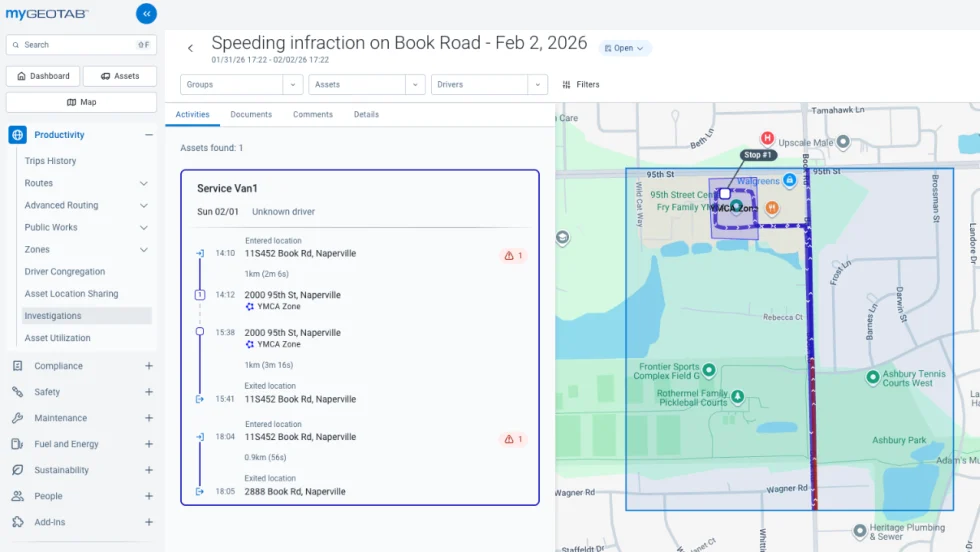
Geotab Adds Investigation Tools to Cut the Post-Incident Paper Chase
When a company vehicle is involved in a crash or complaint, Geotab Investigations brings telematics data, photos, reports, and other records into one case workflow.
Read More →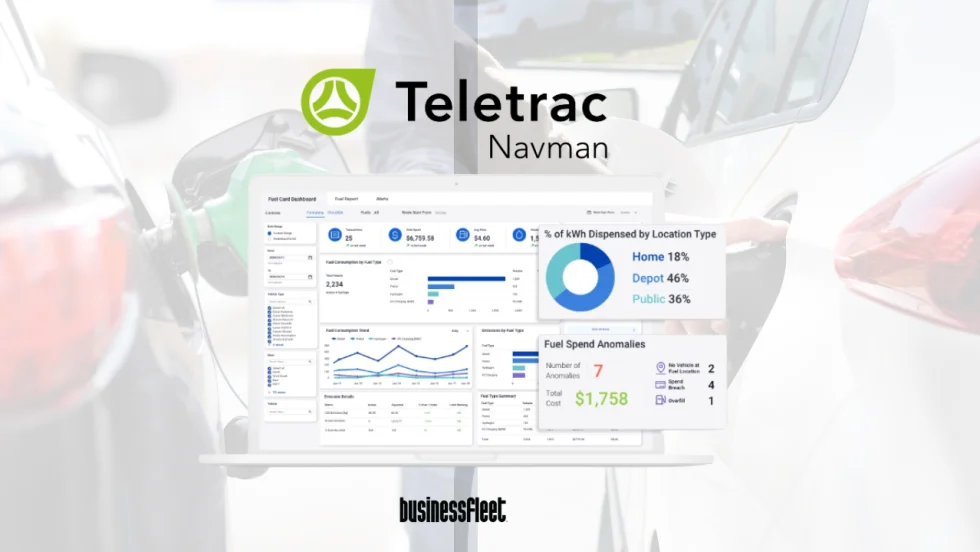
Teletrac Navman Adds Mixed-Energy Tracking to TN360
Energy Hub combines fuel card data, EV charging activity, reimbursements, and vehicle energy use in one dashboard for fleets operating gasoline, hybrid, and electric vehicles.
Read More →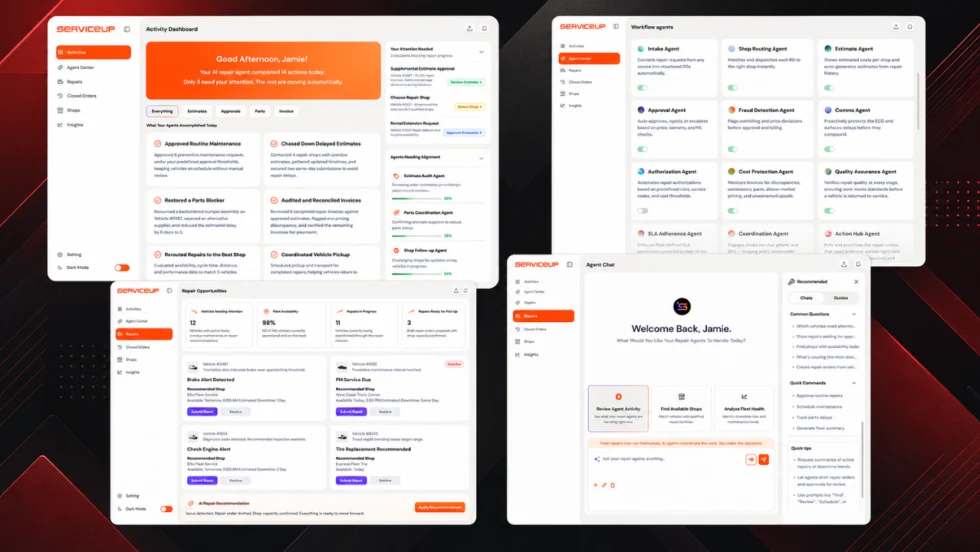
ServiceUp Brings Automated Repair Coordination to Small Fleet Operators
New AI repair agents handle shop calls, estimate reviews, status checks, and invoice validation so business owners can spend less time coordinating vehicle repairs.
Read More →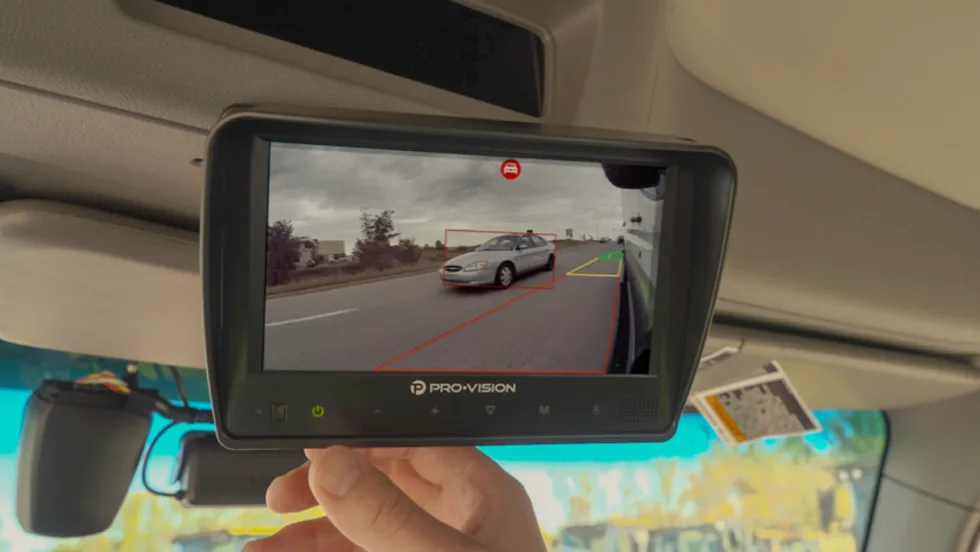
Pro-Vision Expands AI Fleet Safety Beyond the Cab
Pro-Vision's new AI camera and processing module extend real-time exterior hazard detection while integrating with leading fleet telematics platforms.
Read More →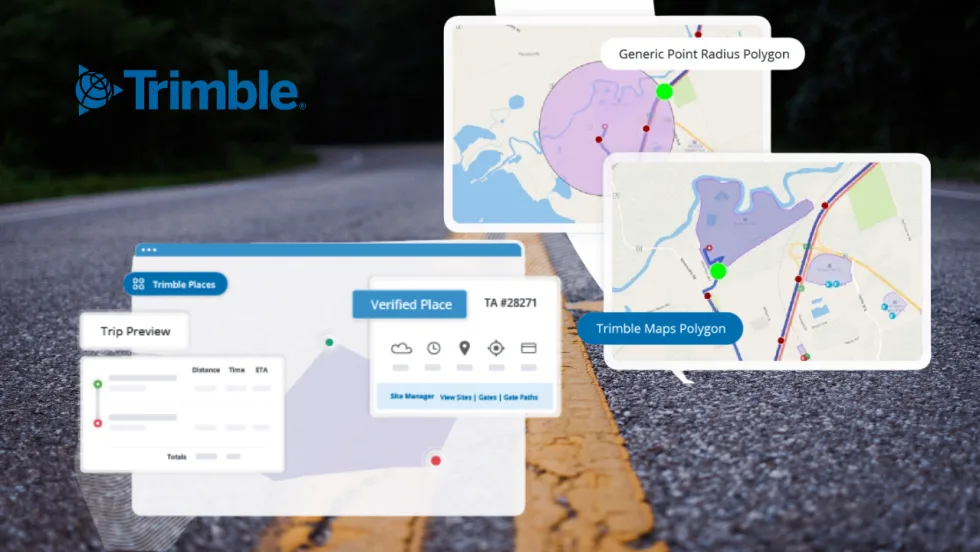
Trimble to Add Hotel Booking Capabilities to Fleet Products Through Engine Partnership
Trimble is adding hotel-booking capabilities to its fleet tools, helping drivers and small fleets find lodging faster during trips and breakdowns.
Read More →
TruckDocsAI Launches AI-Powered Compliance Platform for Owner-Operators and Small Fleets
Can AI simplify DOT compliance? TruckDocsAI launches a new platform for owner-operators and small fleets facing audit pressures.
Read More →
Geotab Says Fleet AI Success Depends More on Data Than the AI Model Itself
Geotab's new AI connector links fleet data with ChatGPT and other platforms, helping organizations turn AI investments into business results.
Read More →