


“The more that people trust automation, the more likely they were to rely on it.” — NTSB research on automation and performance.
NTSB: Focus on These 5 Key Areas to Reduce Crashes
National Transportation Safety Board’s Rob Molloy responds to the alarming increase in roadway crashes and the board’s “most wanted” recommendations to prevent them.
by Chad Simon
September 24, 2021
People’s use of cell phones increased during the pandemic, and with distracted driving on the rise, research proves that companies benefit when they have cell phone policies in place.
Image by PublicDomainPictures from Pixabay
4 min to read
“In 2020, … an average of 104 people died each day on our roadways,” said Rob Molloy, Ph.D, director, National Transportation Safety Board (NTSB) Office of Highway Safety. “For several decades, the number of fatalities has been dropping. But we've seen this trend change in the wrong direction.”
Molloy presented these findings during his keynote address at the virtual Fleet Safety Conference on Sept. 21. In the presentation, he detailed how NTSB chooses to launch investigations, the layers of crash causes, and the board’s recommendations to help make transportation safer for the traveling public.
With just 30 people to investigate crashes, the NTSB has established a ranking system to help identify highway crashes in which it chooses to launch investigations. The criteria are based on four basic questions:
Is there a high public interest, and is the board able to help restore public confidence?
Are there potentially new safety issues that have not been addressed?
Can the NTSB make a difference or bring a unique perspective that’s important to the discussion?
Does NTSB have the resources?
“When we hear what is causing most of the crashes on our highways, it’s easy to say 94% are caused by human error,” Molloy said. “Unfortunately, this myth can get in the way of finding solutions. If humans cause all the crashes, why do we need to improve vehicles or highways? Why don’t we just get rid of humans as drivers? We’ll make little progress on highway safety until we move past this myth.”
There are many layers of causalities in a crash, and each layer has flaws that can align with one another leading to a crash, according to Molloy. The layers NTSB examines are human, vehicle, operational, highway, and survival factors.
The Investigators
Human performance investigators look at human elements that may influence error, such as work environment, equipment design, cell phone use, or alcohol or drug impairment. Vehicle factor investigators conduct detailed examination of mechanical issues and other aspects of vehicles involved in the crash to determine whether the adequacy or failure of components caused the crash. Motor carrier investigators focus on operations of the motor carrier, and routine elements of driver qualifications, drug testing, hours of service and maintenance are reviewed.
Highway factors investigators examine and document the crash scene, looking into environmental position, such as weather and physical evidence at the scene. They also examine highway elements, such as traffic signs, markings, barriers, signals and traffic characteristics of the road and environment. The survival factors group conducts an on-site detailed documentation of what may have contributed to injuries and fatalities, interviews vehicle occupants and witnesses and examines the emergency response.
Party members from law enforcement, highway safety organizations, and other federal agencies assist investigators by providing technical expertise. Investigators and party members form groups that work together to build an actual account of the crash that the investigator can use to develop an analysis of the crash.
“These groups help us understand why the accident occurred, and more importantly, what we can do to keep it from happening in the future,” Molloy said.
During the pandemic, people’s use and addiction to cell phones have increased, and based on research NTSB conducted regarding how automation affects performance, the more that people trust automation, the more likely they were to rely on it. Additional research has clearly shown that companies benefit when they have a cell phone policy in place to prevent distracted driving.
NTSB’s Most Wanted
In 1990, the NTSB first created its most-wanted list for safety improvements to help make transportation safer for the traveling public. The revised list includes these five areas of recommendations:
Prevent alcohol- and drug-impaired driving. Actions: improved drug testing, first-offender interlock laws, a blood alcohol content limit of .05, allowing hair testing and best practices for all fluid testing.
Eliminate distracted driving. Actions: state laws banning cell phone use while driving, company distraction policies and cell phone manufacturer lockouts.
Collision avoidance in connected vehicle technology. Actions: ensure each vehicle has connected vehicle technology, improving forward collision testing, ratings for collision systems, and adding forward collision warning systems as standard equipment on all vehicles.
Form a comprehensive strategy to eliminate speeding crashes. Actions: speed-limiting technology for all vehicles, better speed detection, automated speed enforcement and better speed limit enforcement.
Protect vulnerable users through a safe systems approach. Actions: design safe roads and vehicles and reduce speeds to mitigate injuries.
“Conventional approach to road safety in the U.S. is not driving down fatalities and injuries,” Molloy said. “We need a paradigm shift. Reaching zero will require a transition to a holistic safe-systems approach. The principles underpinning a safe system acknowledges that humans make mistakes that lead to crashes. But no one should lose their life or become seriously injured as a result of the crash. Road safety must be a shared responsibility, and all parts of the system must be strengthened so that if one part fails, road users are still protected.”
Originally posted on Automotive Fleet
More Safety
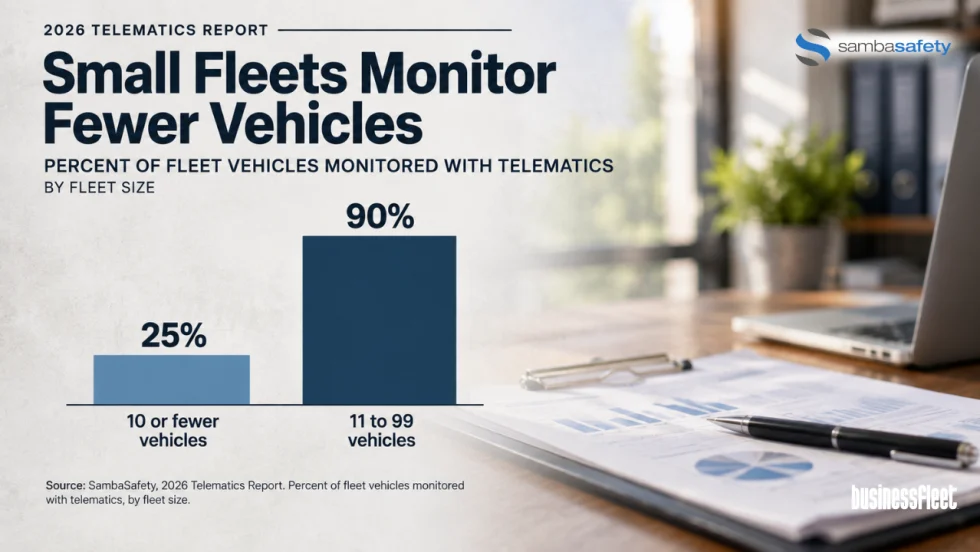
Small Fleets Lag in Telematics Coverage as Industry Moves Beyond Adoption
SambaSafety’s 2026 Telematics Report finds fleets with 10 or fewer vehicles monitor a much smaller share of their vehicles than larger operations, as the industry shifts its focus from collecting data to using it.
Read More →
Back-to-School Traffic Is Not the Risk Fleets Think It Is
Back-to-school traffic does not always mean more crashes. New Empiric Earth data shows why fleets should focus on when and where risk changes.
Read More →
Small Fleet, Big Exposure: How to Reduce Workers’ Comp Risks
For small fleets, one crash can trigger far more than vehicle damage. Here’s how stronger driver safety policies, training, maintenance, and technology can help reduce workers’ comp exposure.
Read More →
Who Makes the Call When Winter Weather Gets Dangerous?
Winter weather can quickly change a small fleet’s plans. Knowing when to reroute, delay, or stop can matter just as much as preparing the vehicles themselves.
Read More →
API Issues Refueling Safety Guidelines
The American Petroleum Institute offers a list of safe vehicle refueling guidelines, including ways to avoid potential problems with static electricity discharges in fall, winter, and early spring.
Read More →
Winter Fleet Prep: Expert Tips to Keep Vehicles Running Smoothly
Cold weather can expose weak batteries, tires, fuel systems, and maintenance gaps fast. Use this winter fleet checklist to prepare trucks and drivers before temperatures drop.
Read More →
8 ADAS Maintenance Tips for Small Business Fleets From Bendix
A dirty camera, bad alignment, or one loose connection could quietly knock your fleet’s ADAS offline. Here’s what Bendix says to check.
Read More →
Developing Budget-Friendly Driver Safety Programs
From driver training and safety meetings to one-on-one coaching and incentive programs, several small fleets share how they have developed a safety culture with their drivers using low- to no-cost resources.
Read More →
A 20-Minute Safety Check for Small Fleets Before Operation Safe Driver Week
No safety department? No problem. Here's a practical checklist small fleet managers can use before Operation Safe Driver Week begins.
Read More →
Why Small Fleets Keep Getting Tripped Up by ELD Compliance
Roadcheck revealed a hard truth: most ELD violations aren't intentional. They're caused by small mistakes that can cost fleets time, money, and trust.
Read More →Subscribe to Our Newsletter