


Keep Learning: Reducing Workers’ Compensation Claims in Light- and Medium-Duty Fleets
Small Fleet, Big Exposure: How to Reduce Workers’ Comp Risks
For small fleets, one crash can trigger far more than vehicle damage. Here’s how stronger driver safety policies, training, maintenance, and technology can help reduce workers’ comp exposure.
by Peter Young, Brownyard Group
September 23, 2026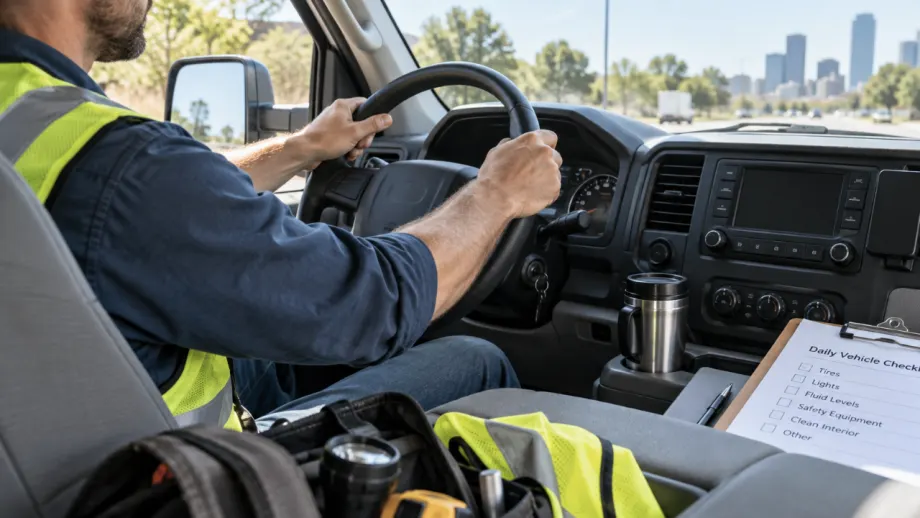
Credit:
Business Fleet | This image was edited by OpenAI. Please refer to our terms of use.
5 min to read
For employees in businesses like pest control and security, the company vehicle is an extension of the workplace, and if employees don’t feel safe while driving, they may seek opportunities elsewhere.
A recent survey of more than 3,000 workers across the U.S. and U.K. shows why. Almost all (96%) of employees list physical safety as a top work priority, yet only 63% believe their employer considers their safety a top priority.
While business owners and operators cannot control every aspect of an employee’s safety behind the wheel, they can show that they put their workers first by investing in a culture of driver safety. Doing so will help improve employee retention amid a nationwide driver shortage and safeguard a company’s reputation.
Crashes Cost More Than Most Businesses Think
Few businesses with small to midsize fleets can absorb the escalating costs of motor vehicle accidents (MVAs). The most recent analysis from the Network of Employers for Traffic Safety, based on 2023 data, shows that MVAs cost employers nearly $62 billion annually in direct crash-related expenses, including medical care, liability, lost productivity and property damage. More than half (57%) of MVAs happen on the job, with a single crash costing roughly $180,199 per injury.
From a workers’ compensation perspective, MVAs are the most expensive type of claim, costing 70% more than the average lost-time claim, according to data from the National Council on Compensation Insurance. The share of MVA-related workers’ comp claims costing over $1 million has tripled over the past two decades. Auto crashes are more than twice as likely to cause workers multiple injuries and 10 times as likely to injure multiple co-workers compared to the average workplace claim.
A Single Crash Can Create Years of Hurt
It takes only one incident to cause severe consequences that can haunt businesses for years. Consider a pest control driver who is in a crash that results in a serious injury. The commercial auto policy pays $1 million to cover legal fees, bodily injury claims and repair costs, but the company is on the hook for the deductible and purchasing a replacement vehicle.
Productivity drops every hour the vehicle and its driver aren’t on the road. If the case goes to court, litigation could take years. After settlement, the company may not be able to secure standard commercial auto coverage again. If they do, they will pay higher premiums based on their negative loss experience. Additionally, if the vehicle involved in the crash carried the corporate logo and the crash was captured on the news, the footage could live online forever for people to find on AI or Google searches, creating long-term reputational damage.
Fleet Safety Is the Employers’ Responsibility
Worker safety extends beyond brick-and-mortar structures such as administrative offices, dispatch centers and warehouses. Employers can also be held liable for their employees’ actions on the road. If courts find that a manager hired employees with poor driving records or failed to enforce safe driving policies, the company may be found negligent.
When companies take intentional steps to create a culture of driver safety, they reduce these potential liabilities significantly. They can also lower insurance costs and enhance their corporate reputation. A commitment to driver safety also extends to driver retention, because employees will want to remain with employers who look out for their well-being.
A Six-Point Safety Strategy for Small to Midsize Fleets
Employees of businesses like security guard firms and pest control companies may not technically be classified as “professional drivers,” but managers should still put the same precautions in place as they would with any size fleet. Start by implementing these six measures.
- Hire the most qualified drivers. Companies should define what constitutes an acceptable driving record. Supervisors should then request and review motor vehicle records for all job candidates and identify any red flags, such as driving-while-intoxicated (DWI or DUI) violations or having a large number of points on their license. Employers should only hire drivers who meet the company’s standards.
- Put a fleet safety policy in writing. Historically, businesses with strict, enforced policies and procedures have a better loss experience than those that do not. Policies typically include code-of-conduct standards for how drivers are expected to behave behind the wheel. They should also consider including prohibitions on any type of distractions behind the wheel (such as calling, eating, texting, smoking or grooming), along with clear penalties for non-compliance, a disciplinary procedure and escalation methods after multiple violations.
- Offer regular driver training sessions. Teach employees about safe driving practices at new-hire orientation, and consider assigning managers to accompany employee drivers for a ride-along or road test twice a year to evaluate their driving habits. Training sessions can include detailed steps on what to do in the event of an MVA, such as documenting the crash with pictures. Consider keeping an “accident kit” in all company vehicles with forms that allow drivers to fill in key details like direction of travel, weather conditions, and whether traffic signals were involved. Encourage employees to call the police, even for minor crashes. When talking with law enforcement, employees should not admit or imply they are at fault, as this could complicate claims handling.
- Keep all vehicles roadworthy. Conduct routine preventive maintenance based on the vehicle manufacturer’s recommended schedule. Ask employees to conduct routine inspections and submit reports at least monthly to identify any potential defects. Address any reported problems immediately.
- Use technology to keep drivers safe. Consider telematics and GPS tracking to monitor each vehicle’s location and gather data on speeding, hard braking and other driver behavior. Employers can also install driver-facing and front-facing dash cams to provide defensible evidence in the event of an MVA. Businesses buying new vehicles should consider models with Advanced Driver Assistance Systems such as automatic emergency braking, lane departure warnings and collision avoidance systems.
- 6. Keep all vehicles adequately insured. Most fleets should carry $1 million limits on their commercial auto policies and add umbrella insurance on higher limits if needed. Consult with an agent for personalized advice.
Protect the ‘Mobile Office’
Employees who spend much of their workday behind the wheel of a company vehicle deserve the same protection on the road that they get in the office. Companies that implement and document preventive safety measures, policies and procedures intended to create safer drivers will reduce their workers’ compensation exposure and strengthen their defense against claims of negligence while keeping workers safe and productive.

Credit:
Brownyard Group | Business Fleet
Quick Answers
Strong driver safety policies help prevent crashes, thereby reducing the risk of injuries and subsequent workers’ compensation claims, which can be financially devastating for small fleets.
*Summarized by AI
More Safety
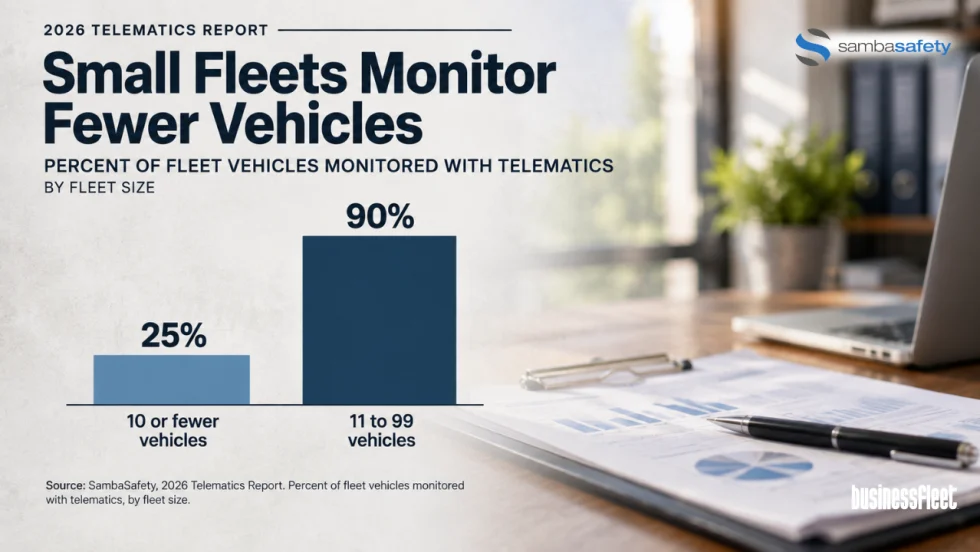
Small Fleets Lag in Telematics Coverage as Industry Moves Beyond Adoption
SambaSafety’s 2026 Telematics Report finds fleets with 10 or fewer vehicles monitor a much smaller share of their vehicles than larger operations, as the industry shifts its focus from collecting data to using it.
Read More →
Back-to-School Traffic Is Not the Risk Fleets Think It Is
Back-to-school traffic does not always mean more crashes. New Empiric Earth data shows why fleets should focus on when and where risk changes.
Read More →
Who Makes the Call When Winter Weather Gets Dangerous?
Winter weather can quickly change a small fleet’s plans. Knowing when to reroute, delay, or stop can matter just as much as preparing the vehicles themselves.
Read More →
API Issues Refueling Safety Guidelines
The American Petroleum Institute offers a list of safe vehicle refueling guidelines, including ways to avoid potential problems with static electricity discharges in fall, winter, and early spring.
Read More →
Winter Fleet Prep: Expert Tips to Keep Vehicles Running Smoothly
Cold weather can expose weak batteries, tires, fuel systems, and maintenance gaps fast. Use this winter fleet checklist to prepare trucks and drivers before temperatures drop.
Read More →
8 ADAS Maintenance Tips for Small Business Fleets From Bendix
A dirty camera, bad alignment, or one loose connection could quietly knock your fleet’s ADAS offline. Here’s what Bendix says to check.
Read More →
Developing Budget-Friendly Driver Safety Programs
From driver training and safety meetings to one-on-one coaching and incentive programs, several small fleets share how they have developed a safety culture with their drivers using low- to no-cost resources.
Read More →
A 20-Minute Safety Check for Small Fleets Before Operation Safe Driver Week
No safety department? No problem. Here's a practical checklist small fleet managers can use before Operation Safe Driver Week begins.
Read More →
Why Small Fleets Keep Getting Tripped Up by ELD Compliance
Roadcheck revealed a hard truth: most ELD violations aren't intentional. They're caused by small mistakes that can cost fleets time, money, and trust.
Read More →
Before the Fireworks Start Small Fleets Should Review Their Cargo Security Plans
Long holiday weekends create prime conditions for cargo theft. Here's what small fleet operators should review before the Fourth of July.
Read More →Subscribe to Our Newsletter