


More Safety Content: Distracted Driving - Managing Inattentional Blindness
Big Data: When and Where Do Distracted Driving Events Occur?
Samsara reviewed millions of alerts to determine at what time of day, days per week, and average speeds when distracted driving events happen.
from Sowmya Murali, Samsara
April 14, 2022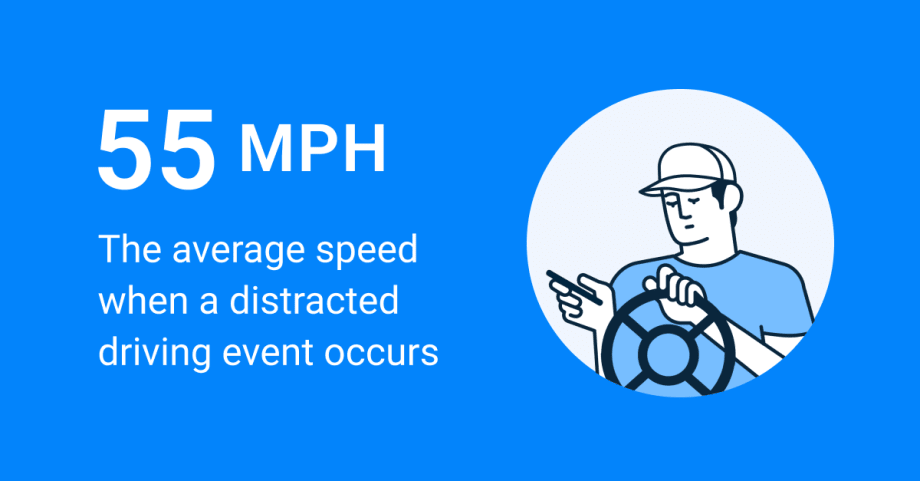
One of the best ways to change a behavior is to flag it as it happens. Real-time feedback on speeding, harsh braking events, and other distracted behaviors make it possible to detect and coach drivers on risky behaviors.
Source: Samsara
5 min to read
April is Distracted Driving Awareness Month, an annual effort sponsored by the United States National Safety Council (NSC) to shine a light on the consequences of distracted driving and help make roadways safer. Distracted driving is a leading cause of vehicle collisions, and more than 3,000 people in the U.S. were killed in motor vehicle crashes involving distracted drivers in 2020 alone.
"Distracted driving accounts for nearly 10% of fatal crashes in the U.S.," said Noah Budnick, executive director for Together for Safer Roads. "Adding to this heartbreak is that these crashes are preventable. Distracted driving is a public health epidemic that we must address."
For fleet safety leaders, coaching drivers on risky behaviors — including distracted driving — is a priority all year round. To help bring awareness to this important safety issue, Samsara looked into data to uncover trends in distracted driving.
Samsara reviewed more than 9.8 million distracted driving alerts from March 1, 2021 to March 31, 2022. It evaluated passenger, light-duty, and heavy-duty vehicles across all industries served, including transportation, utilities, field services, and manufacturing, among others.
The Average Speed When a Distracted Driving Event Occurs is 55 MPH
Samsara data shows that the average speed when a distracted driving event occurs is 55 MPH. This suggests that most instances of distracted driving events likely occur on highways. Long stretches of road can lead to fatigue or boredom behind the wheel, making it easy for drivers to become distracted. Some drivers may feel they can safely take their eyes off the road for a few moments, but at 55 MPH, you can travel the length of a football field in five seconds.
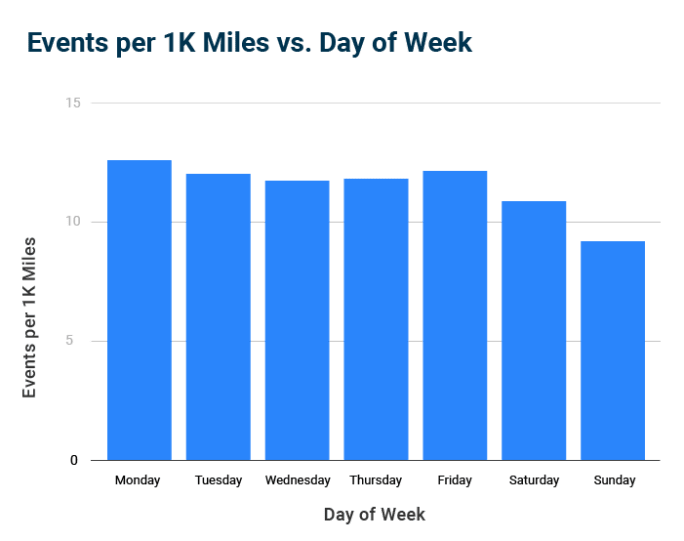
Distracted Driving Events Occur Less Frequently on the Weekend
When comparing distracted driving events per 1,000 miles driven, Samsara data shows that distracted driving is the most prominent on weekdays, with Monday having the highest amount of alerts, closely followed by Friday. Monday saw a 33% jump in distracted driving events per 1,000 miles driven compared to Sundays. This may be because drivers can experience increased communication, like messages from the front office, and feel the need to provide a timely response.
Technology can be a valuable tool to engage and reward drivers.
Source: Samsara
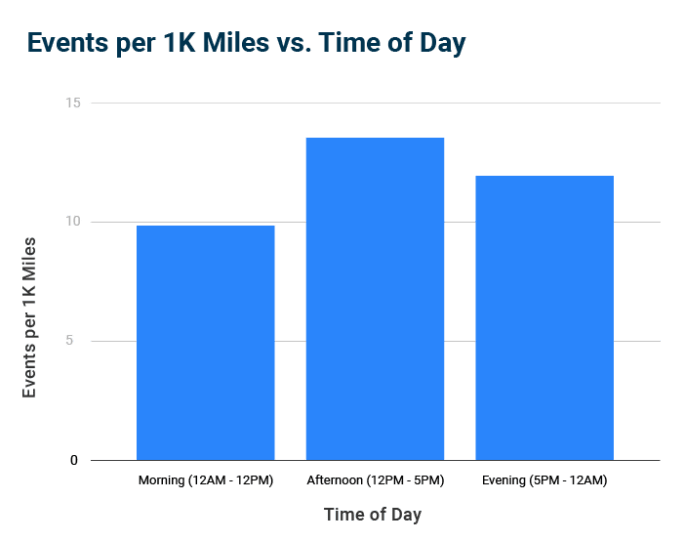
Distracted Driving Events Occur Most Often in the Afternoon
When comparing distracted driving events per 1,000 miles driven, Samsara data shows that distracted driving events occur most frequently in the afternoon between noon and 5 p.m. There was a 25% increase in the number of distracted driving events in the afternoon as compared to the morning. This may be because some drivers are looking for lunch break stops or are sitting in afternoon rush hour traffic.
Samsara found that in-cab alerts can help drivers refocus their attention in the moment and change behavior over time.
Source: Samsara
Drivers Speed Nearly a Quarter of the Time for Trips Between 2 to 2.5 hours
Another leading cause of collisions is speeding. For more than two decades, speeding has been involved in approximately one-third of all motor vehicle fatalities. Speeding is another important safety issue to coach drivers on, especially since distracted driving is particularly dangerous when combined with high speeds. Samsara took a closer look at recent speeding data from January 1, 2022 to March 31, 2022 and found that speeding is a concern across all vehicle types.
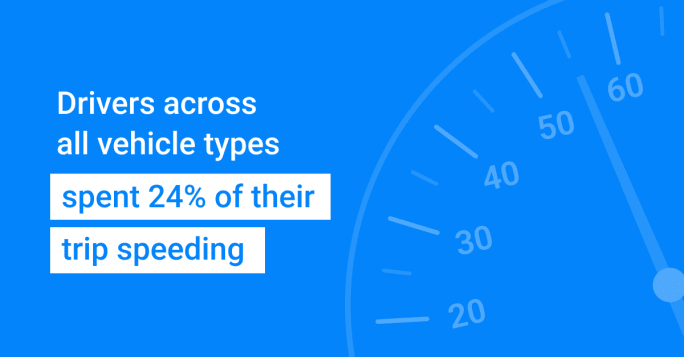
Samsara selected the cohort of trips that lasted between two and two and a half hours to determine how often drivers were speeding during this duration of time. It was found that drivers across all vehicle types spent 24% of their trip speeding. Light-duty vehicles spent 30% of their trip duration speeding, the highest in comparison to heavy-duty and passenger vehicle trips. This is likely because light-duty vehicles have the opportunity to easily travel at high speeds and have fewer speeding limit restrictions.
For fleets with hundreds or thousands of drivers, it’s important to focus coaching efforts on the highest-risk drivers.
Source: Samsara
Tips for Coaching Drivers on Distracted Driving and Other Risky Behaviors
Ongoing education and one-on-one coaching are important, even for experienced drivers. But without visibility into behavior on the road, coaching is often reactive, and only happens after an incident, collision, or injury has occurred.
“Great fleets with strong safety cultures understand that spending time on employee development is the best way to grow long-term safety awareness and reduce risky behaviors behind the wheel,” said Budnick. “No human being is perfect. We all make mistakes. For this reason, we need to catch errors and better support the professional drivers we rely on.”
Here are a few tips on coaching drivers effectively:
Change behavior in the moment with in-cab alerts: One of the best ways to change a behavior is to flag it as it happens. Real-time feedback on speeding, harsh braking events, and other distracted behaviors make it possible to detect and coach drivers on risky behaviors in real time. In-cab alerts can help drivers refocus their attention in the moment and change behavior over time.
Provide one-on-one coaching to high-risk drivers: For fleets managing hundreds or thousands of drivers, it’s particularly important to focus coaching efforts on the highest-risk drivers. Data on distracted driving and speeding — or safety scores that aggregate a wide array of risk data — can help identify drivers who would benefit from one-on-one coaching or additional training.
Reward positive behavior with public recognition: Technology should be used as a tool to engage and reward drivers — not as a hammer. In fact, the NSTSCE analyzed video-based driver coaching programs and found that managers “must provide feedback on safe driving behaviors, rather than only risky behaviors, or the process will be viewed negatively.” Safety-focused companies may offer additional paid time off or bonuses to their best drivers based on the fewest number of harsh braking events or excessive speed warnings. This recognizes good behavior and encourages drivers to do better. Make sure to recognize and reward drivers for following safe practices and improving over time.
Together for Safer Roads surveyed drivers and found more than half view themselves as safer and more careful following in-cab camera adoption.
About the Author: Sowmya Murali is big data-analytics manager for Samsara. Samsara’s Connected Operations Cloud collects more than 4.6 trillion sensor data points annually from IoT devices across diverse industries around the world. For more, check out Samsara’s blog.
Originally posted on Automotive Fleet
More Safety
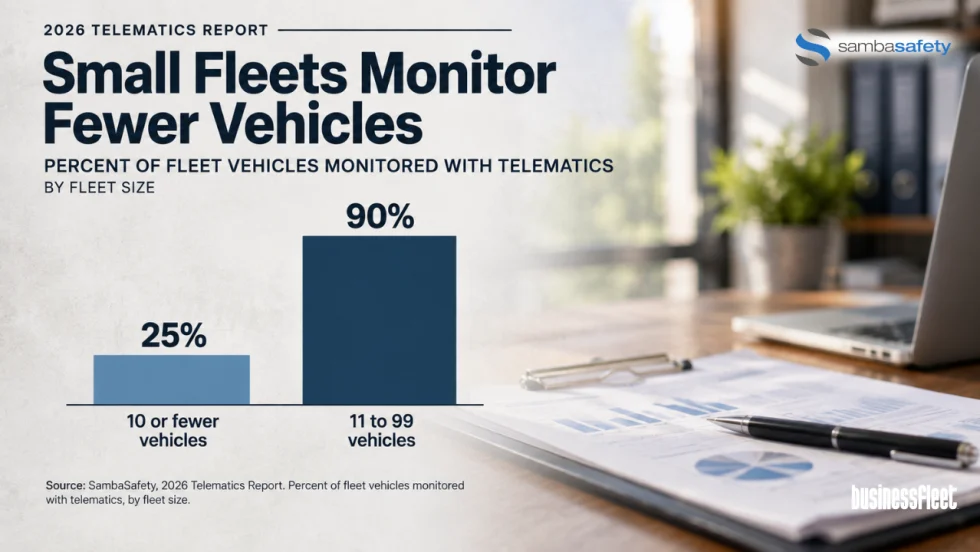
Small Fleets Lag in Telematics Coverage as Industry Moves Beyond Adoption
SambaSafety’s 2026 Telematics Report finds fleets with 10 or fewer vehicles monitor a much smaller share of their vehicles than larger operations, as the industry shifts its focus from collecting data to using it.
Read More →
Back-to-School Traffic Is Not the Risk Fleets Think It Is
Back-to-school traffic does not always mean more crashes. New Empiric Earth data shows why fleets should focus on when and where risk changes.
Read More →
Small Fleet, Big Exposure: How to Reduce Workers’ Comp Risks
For small fleets, one crash can trigger far more than vehicle damage. Here’s how stronger driver safety policies, training, maintenance, and technology can help reduce workers’ comp exposure.
Read More →
Who Makes the Call When Winter Weather Gets Dangerous?
Winter weather can quickly change a small fleet’s plans. Knowing when to reroute, delay, or stop can matter just as much as preparing the vehicles themselves.
Read More →
API Issues Refueling Safety Guidelines
The American Petroleum Institute offers a list of safe vehicle refueling guidelines, including ways to avoid potential problems with static electricity discharges in fall, winter, and early spring.
Read More →
Winter Fleet Prep: Expert Tips to Keep Vehicles Running Smoothly
Cold weather can expose weak batteries, tires, fuel systems, and maintenance gaps fast. Use this winter fleet checklist to prepare trucks and drivers before temperatures drop.
Read More →
8 ADAS Maintenance Tips for Small Business Fleets From Bendix
A dirty camera, bad alignment, or one loose connection could quietly knock your fleet’s ADAS offline. Here’s what Bendix says to check.
Read More →
Developing Budget-Friendly Driver Safety Programs
From driver training and safety meetings to one-on-one coaching and incentive programs, several small fleets share how they have developed a safety culture with their drivers using low- to no-cost resources.
Read More →
A 20-Minute Safety Check for Small Fleets Before Operation Safe Driver Week
No safety department? No problem. Here's a practical checklist small fleet managers can use before Operation Safe Driver Week begins.
Read More →
Why Small Fleets Keep Getting Tripped Up by ELD Compliance
Roadcheck revealed a hard truth: most ELD violations aren't intentional. They're caused by small mistakes that can cost fleets time, money, and trust.
Read More →