


Managing Safety, Distraction in Increasingly Connected Cars
Today’s high-tech vehicles demands a five-prong approach that incorporates sound policy, driver education and coaching, policy enforcement and technology.
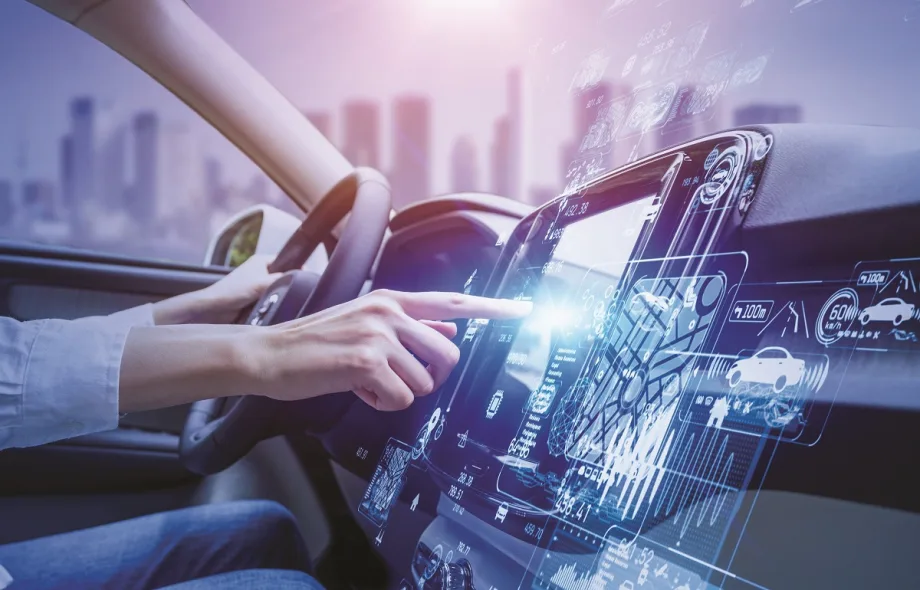
Whether activating technologies by voice, by touching a touchscreen or phone, or interfacing with the infotainment system, there’s little difference in distraction, Atchley of University of Florida says.
Photo: Getty Images/metamorworks
There’s no question distracted driving is dangerous — the National Highway Traffic Safety Administration (NHTSA) reports it claimed 3,142 lives in 2020 alone.
And it’s epidemic. NHTSA statistics find distraction causes over 25% of all crashes each year, for a grand total of 1.4 million. It’s even more of a concern when operating a fleet of vehicles and employing staff drivers to operate them.
Paul Atchley, professor and senior consultant for Special Projects at the University of Florida and distracted driving advisor for eDriving, has studied the real-world implications of multitasking in and out of vehicles. He reports distractions “only seem to be getting worse” but stresses fleets have more control of distractions than passenger cars because their vehicles operate in a “rule-constrained corporate environment.”
He explains, “Advances in telematics give safety managers the ability to know what’s happening in individual vehicles and to look at larger trends. Then they can set up rules that can prevent bad behaviors in the vehicle. If the bad behaviors persist, they can remove those drivers.”
Know the Distractions
Distracted driving can occur any time and for many reasons. It results from cognitive or manual distractions that cause drivers’ minds to wander, their eyes to leave the road, or their hands to leave the steering wheel.
The U.S. General Services Administration (GSA) stresses distracted driving endangers driver, passenger, and bystander safety.
The top distractions, according to the GSA, are:
- Texting
- Cellphone use
- Eating and drinking
- Talking to passengers
- Reading
- Using a navigation system
- Watching a video
Another distraction, says Corey Woinarowicz, chief revenue officer of NoCell Technologies, is the very safety technologies implemented to improve driver safety. Advanced driver-assistance systems (ADAS) that aid drivers with driving and parking functions also lead to distractions, he says.
Drivers now count on Lane Keeping Assist to position vehicles in the center of their lane, frontal and rear crash avoidance technology to avoid crashes, and brake assist to slow their vehicle automatically.
“These systems sort of ‘dumb’ down their driving skills and lull people into a false sense of security,” Woinarowicz says. “Even my compact car has Lane Keeping Assist. It’s all great technology, but I’m not taking my hands off the wheel.”
Some newer vehicle models come with up to 17-inch monitor screens as part of the dash. “How is that not a distraction?” Woinarowicz asks. “Now add a phone to that and you have drivers trying to use their phones, operate the touchscreen, and drive.”
Policy, Education, and Enforcement
Policy, enforcement and education are key elements to improved safety and reduced distraction, Atchley advises.
- Push Policy. “The only thing I’ve seen work are clear policies that cover all distractions and all drivers,” says Atchley. “When I say all drivers, I mean not just truck drivers but every employee. You must send a clear message that the company will not tolerate distraction of any kind while driving.” Policies must be clear and explain the why, which is to improve fleet safety through safer, more focused driving, he says. A sound policy not only keeps them safer but benefits the company, which experiences lower financial risks and liabilities through reduced accidents. The policy also must spell out best practices for safe driving. For some fleets, this may be a total ban on electronic devices; directing incoming calls to voicemail; avoiding texting, rereading, or responding to texts while driving; or parking to make a call.
- Focus on Education. “Education must be part of the equation,” Atchley says. “But just as we have never educated our way out of the drunk driving problem, you cannot educate a fleet out of distracted driving. Besides rules and education, you must have ways to monitor for compliance and to enforce the policy.” The fleet may also incorporate supportive technological solutions, such as telematics systems or in-cab video monitoring and more, to track device usage by drivers. But fleets also can incorporate information on these devices, along with educational materials such as posters, fact sheets, and video to build awareness among drivers.
- Enforcement Matters. Policy also must be clear about enforcement and penalties, which should grow as infractions continue. “Some kind of penalty must accompany the policy,” Atchley says. “Start with coaching and move up to termination for drivers who flaunt the policy. If a driver knows he can lose his job for using a cellphone while driving, and he does it anyway, that’s a driver in your 10% risk pool who is most likely to contribute to crashes in your organization.”
Atchley concludes, “Companies that do these things see substantial decreases in crash rates. But two-thirds of the fleets we see are missing some of these pieces. These fleets see no reduction in crashes. Sometimes the rules exist, but they are not enforced. In those cases, we sometimes see an increase in crashes.”
Tap into Technology
The top cause of distracted driving, however, is not in-cab technology but cellphone use, which leads to the most serious injuries involving crashes, according to NHTSA. Studies show cellphone use can quadruple accident risk. This has led many fleets to ban cellphone use — even hands-free use — altogether in their vehicles.
“Cellphones are the No. 1 distraction in the vehicle and the hardest for fleets to control,” Woinarowicz admits. “Drivers bring that technology into the cab with them. You can only control what you can control, and the one thing you often cannot control is the cellphone.”
Android Auto and Apple CarPlay connect drivers’ phones to their vehicles through a simple interface with the infotainment system. This technology gives drivers access to certain apps while moving down the road. Though drivers can use voice commands to control the apps, it’s just as tempting to touch the console screen to control functionality.
Even if these technologies increase hands-free cellphone use, Atchley cautions there’s little difference in distraction, whether activating technologies by voice or by touching a touchscreen or phone. Two epidemiological studies, he says, show immeasurable differences in distraction between the two; in other words, in both cases, drivers are distracted.
But with cellphones and in-cab technologies proliferating, how can fleet managers control their use and enforce distracted driving policies? “In a perfect world, we’d tell drivers to turn off their cellphones and put them in the glove box,” says Woinarowicz. “But it’s not a perfect world. People are attached to their cellphones. It's difficult to get them to comply with these rules.”
Some companies allow hand-free cellphone use and provide cradles for cellphones in the cab, but even those efforts are no panacea, Woinarowicz says. “Studies show even hands-free use is distracting,” he says.
The NoCell App works to curb distraction by enabling fleets to implement custom policy enforcement and limit driver distraction from mobile device use. The app lets fleets decide which apps drivers can use while driving and removes distracting apps from the phone when they trigger company policy parameters.
Most fleets ask new hires to sign their cellphone policy on their first day. That signature acknowledges they read the policy and agree to follow the rules on it. The NoCell app gives fleets a means of enforcing these policies.
Woinarowicz explains, “We give them a tool to prove that they are enforcing their policy so they can defend their policy and how they are enforcing it in a court of law if necessary.”
He reports NoCell works with a large transportation company that has a tiered-offense policy. If this company’s inward facing cameras in the cab catch a driver using a cellphone, the company installs the NoCell device to limit cellphone use to within company policy. “There’s no first strike, second strike, and then the third strike is termination,” he says. “We are working with them on driver retention, so drivers never get to strike three.”
These efforts also protect fleets from sizeable nuclear verdicts (verdicts higher than $10 million) after a crash. This has become more critical than ever. In August 2021, a jury sent a strong message to fleets when it assessed a truck fleet $1 billion in wrongful death damages, the highest nuclear verdict ever. The best defense against these lawsuits is a good offense, one where safety reigns as king.
Woinarowicz points out NoCell isn’t the total solution for safety and distraction. “It’s a safety puzzle,” he explains. “You’ve got to hire the right drivers, train them correctly, enforce your training, and integrate technology, then add a proactive app like ours. It takes an entire village of technology and policy to get drivers home safely at night.”
Originally posted on Automotive Fleet
More Safety

Clocks Fall Back Nov. 1. Is Your Fleet Ready for Earlier Darkness?
Clocks fall back Nov. 1. Help your fleet prepare for earlier darkness with quick checks for driver visibility, schedules, fatigue, and seasonal road hazards.
Read More →
Tips for Driving Safely on Halloween Night
This video features a reminder from the Connecticut Department of Transportation (DOT) and the Connecticut Police Chiefs Association, urging drivers to prioritize safety this Halloween.
Read More →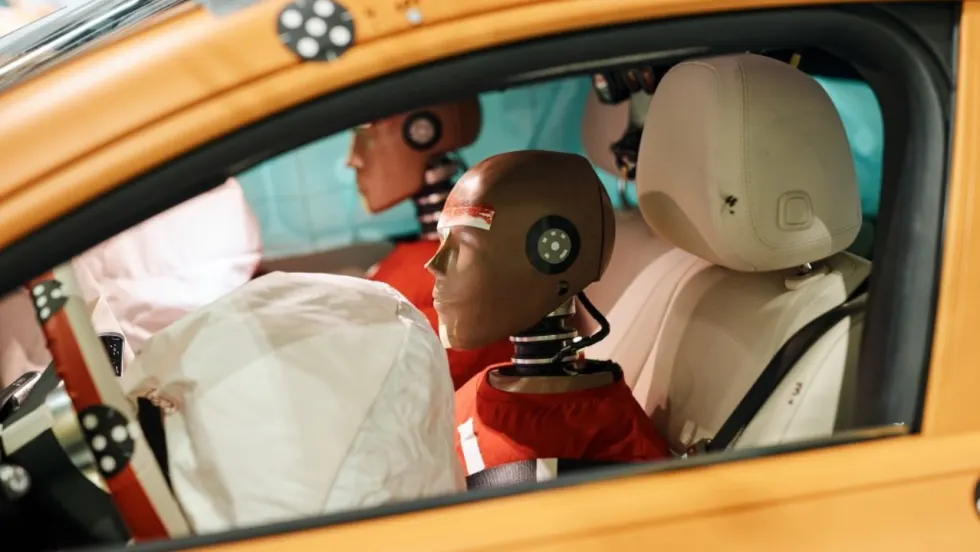
Mercedes Benz Tests CLA Occupant and Battery Protection in Side Impact Crash
Two CLA sedans traveling at 35 mph were used in a Mercedes-Benz crash test examining occupant protection and electric vehicle battery safety.
Read More →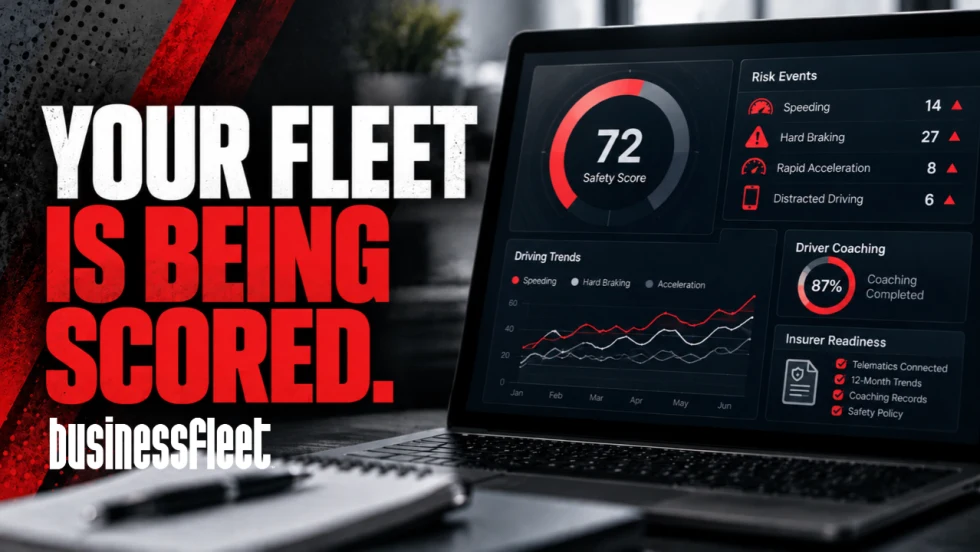
How Technology Can Help Fleet Owners Improve Insurability
Your fleet's telematics data could be the difference between getting insurance coverage and facing higher premiums or non-renewal. Here's what insurers are looking for and how fleets can use that data to make a stronger case at renewal.
Read More →
Simple Tire Checks That Help Keep Your Business Fleet Moving
A survey found that nearly one in every 10 passenger vehicles has at least one bald tire. What's more, 27% -- more than one in four -- of vehicles are driven with one or more severely under-inflated tires.
Read More →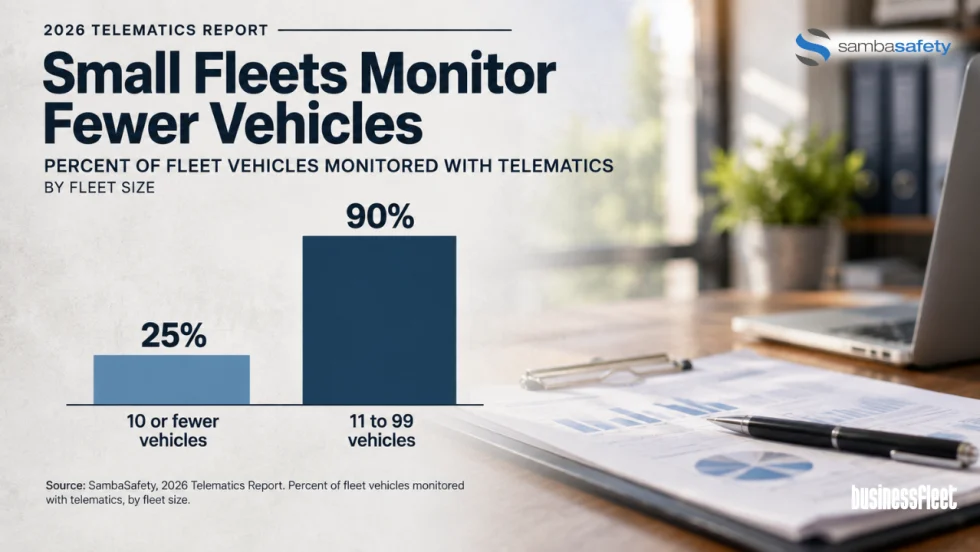
Small Fleets Lag in Telematics Coverage as Industry Moves Beyond Adoption
SambaSafety’s 2026 Telematics Report finds fleets with 10 or fewer vehicles monitor a much smaller share of their vehicles than larger operations, as the industry shifts its focus from collecting data to using it.
Read More →
Back-to-School Traffic Is Not the Risk Fleets Think It Is
Back-to-school traffic does not always mean more crashes. New Empiric Earth data shows why fleets should focus on when and where risk changes.
Read More →
Small Fleet, Big Exposure: How to Reduce Workers’ Comp Risks
For small fleets, one crash can trigger far more than vehicle damage. Here’s how stronger driver safety policies, training, maintenance, and technology can help reduce workers’ comp exposure.
Read More →
Who Makes the Call When Winter Weather Gets Dangerous?
Winter weather can quickly change a small fleet’s plans. Knowing when to reroute, delay, or stop can matter just as much as preparing the vehicles themselves.
Read More →
API Issues Refueling Safety Guidelines
The American Petroleum Institute offers a list of safe vehicle refueling guidelines, including ways to avoid potential problems with static electricity discharges in fall, winter, and early spring.
Read More →